In a significant leap forward for sustainable energy storage, the Swiss Federal Laboratories for Materials Science and Technology (Empa) has announced groundbreaking advancements in lithium-ion battery technology. The four-year EU-funded project, SeNSE, led by Empa and involving 11 teams from research and industry, has successfully developed prototype cells that offer improved sustainability, safety, and energy density.
Swiss Researchers Revolutionize Electric Vehicle Battery Technology
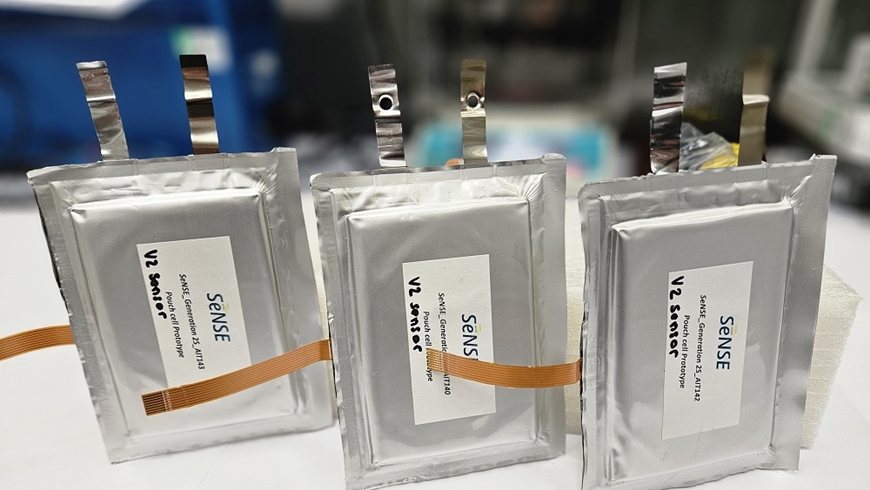
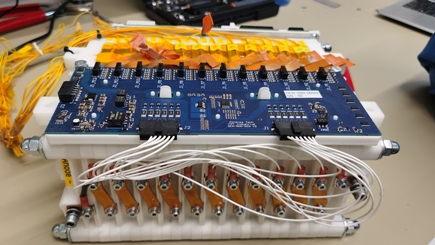
The SeNSE project, which concluded early in 2024 after four years of intensive collaboration, aimed to address critical challenges in battery production. From material development to scaling and integration into battery cells, the teams covered nearly the entire value chain. The result is a pouch cell roughly the size of a smartphone, designed for practical use in electric vehicles (EVs). These cells were manufactured by the Austrian Institute of Technology (AIT) and integrated into ready-to-use modules by FPT Motorenforschung AG, part of the Iveco Group’s innovation center.
Key Innovations in Battery Design
Empa highlights that the SeNSE modules demonstrate several improvements over current batteries. The new design achieves higher energy density, a more favorable environmental footprint, fast-charging capabilities, and enhanced fire safety—all while maintaining cost-effectiveness. The cathode of these cells contains a reduced amount of cobalt, a critical step toward making battery production more sustainable. Additionally, the anode replaces much of the graphite with silicon, further enhancing performance.
Challenges Remain on the Path to Commercialization
Despite these advancements, the prototype cells still face challenges, particularly in stability. Project leader Corsin Battaglia notes that scaling up laboratory developments to pilot scale has been achieved, but transitioning to large-scale production—such as in a gigafactory producing multiple gigawatt-hours annually—would require further scaling by a factor of 1000. While the team is optimistic about the progress, they acknowledge that full commercialization remains several years away.
Exploring Beyond Lithium-Ion Batteries
Looking ahead, Battaglia reveals that Empa is also investigating battery technologies that could surpass lithium-ion in sustainability, safety, and energy density. These next-generation batteries are still in the research phase, but the potential breakthroughs could revolutionize the EV industry within the coming decades.
Collaboration Across Europe
The SeNSE project involved leading academic institutions, including the University of Münster, the Helmholtz Institute Münster, Coventry University in the UK, and the Center for Solar Energy and Hydrogen Research Baden-Württemberg (ZSW). Industrial partners included Northvolt, FPT Motorenforschung AG, French start-ups Solvionic and Enwires, and chemical company Huntsman. Empa researcher Ruben-Simon Kühnel emphasized the importance of collaboration: “We have founded a joint cluster for battery research, and we regularly exchange ideas and results.”
Future Horizons: Cobalt-Free High-Voltage Cells
The coordinators of SeNSE and other battery research projects have launched a new Horizon Europe initiative called IntelLiGent. This project focuses on developing cobalt-free high-voltage cells for electric cars, building on the progress made in SeNSE.