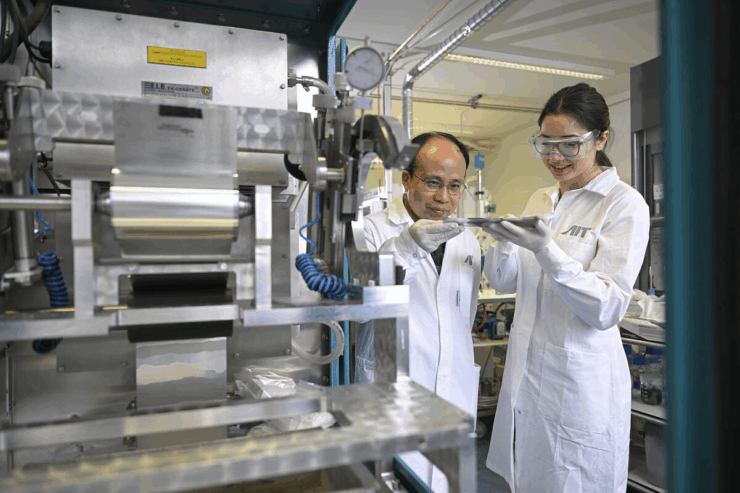
As the global electric vehicle (EV) industry continues to grow, advancements in battery technology are considered the key driver for the sector’s evolution. SK On, one of the leading battery suppliers worldwide, is betting on solid-state battery development, hoping to leverage its advantage in pouch-cell technology to lead the way in the upcoming battery competition. The company has already established strong partnerships with major automakers, including Mercedes-Benz, Ford, Volkswagen, and Hyundai, positioning itself as a significant player in the global battery market.
The Potential and Challenges of Solid-State Batteries
Solid-state battery technology is becoming one of the most talked-about developments in the battery industry. Compared to traditional lithium-ion batteries, solid-state batteries replace the liquid electrolyte with a solid electrolyte, promising higher energy density, faster charging, longer lifespan, and better thermal stability. On paper, the advantages of solid-state batteries are compelling, but commercializing this technology will take years, or even decades, to transition from the lab to production-ready vehicles.
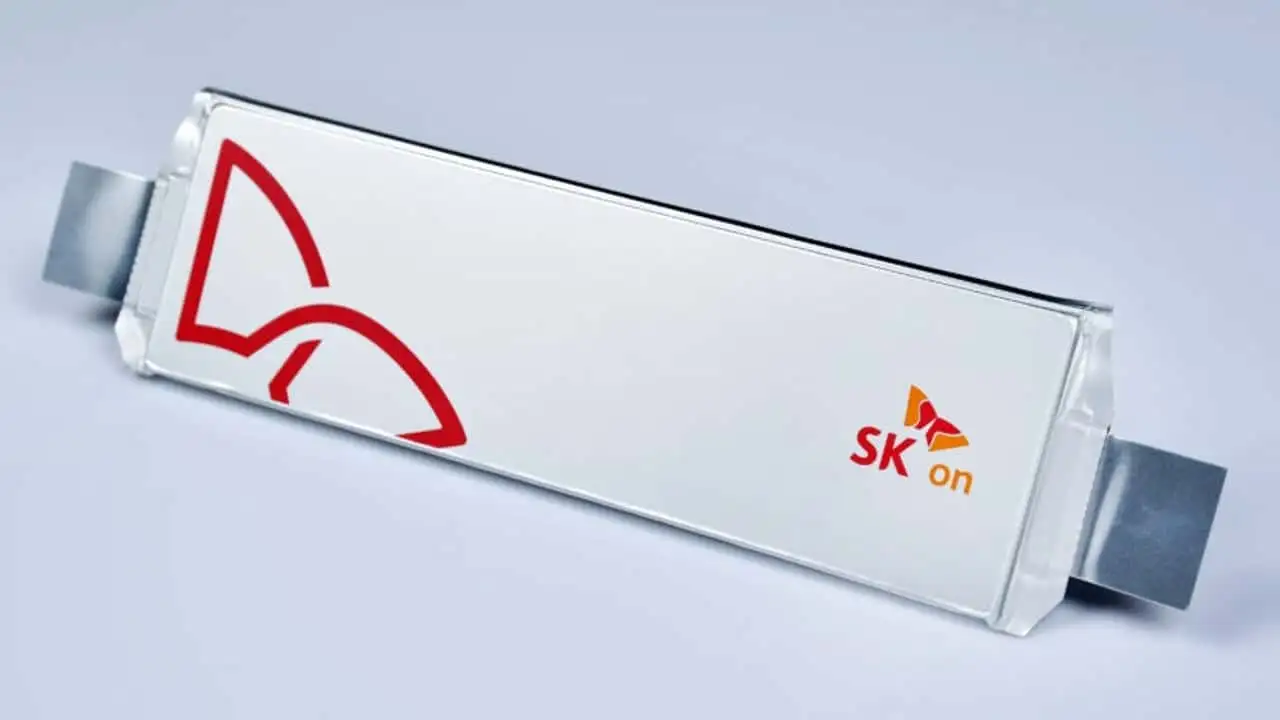
SK On is optimistic about this future. In a recent interview with Bloomberg, Park Kisoo, the company’s R&D head, emphasized that solid-state batteries will first be applied in pouch-type cells, where SK On already has a technological edge. He believes that this technological advantage could help the company outperform Chinese competitors when solid-state batteries finally hit the market.
Competition from Chinese Battery Manufacturers
Despite SK On’s confidence, Chinese battery makers have already gained a lead in the semi-solid-state battery technology space, which is considered a bridge to fully solid-state batteries (ASSBs). Chinese electric vehicle company Nio has already deployed semi-solid-state batteries in its EVs, becoming one of the first adopters of this technology. Last week, MG Motor announced it would be the first automaker to integrate semi-solid-state batteries into an affordable mass-market EV, the MG4. Additionally, Western automakers are also joining the race. Mercedes-Benz has installed semi-solid-state batteries from U.S. startup Factorial in an EQS sedan for testing, and Stellantis plans to use Factorial’s battery in a prototype Dodge Charger Daytona EV next year. BMW is ahead of the pack, demonstrating an all-solid-state battery in its i7 test vehicle in Germany this May.
SK On’s Technological Advantage and Strategic Deployment
While facing stiff competition, SK On has several advantages to build on. The company not only excels in pouch-cell technology but is also innovating in thermal management. SK On is developing immersion cooling technology, which will significantly enhance the thermal management of batteries, applicable not only in electric vehicles but also in AI data centers and energy storage systems.
Additionally, SK On boasts a large manufacturing footprint and a global production network, which allows the company to scale up its technological advancements efficiently. SK On’s joint venture with Ford, BlueOval SK, is already building three large-scale battery plants in Tennessee and Kentucky. The U.S. government has backed these projects with a $9.6 billion loan, the largest loan ever awarded under the Advanced Technology Vehicles Manufacturing program. This investment will help SK On enhance its global presence and prepare for the future of battery technology.
The Future Outlook for Solid-State Batteries
Although solid-state batteries are not expected to be commercialized for several years, SK On and other manufacturers are preparing for the eventual breakthrough. As semi-solid-state batteries gain traction and research into solid-state batteries advances, the electric vehicle market will see a significant shift in battery technology. SK On’s commitment to leading this transition, backed by its technological expertise and massive global production capabilities, positions the company to take advantage of the solid-state battery revolution when it arrives.
Through its investments in innovation, partnerships with leading automakers, and extensive factory network, SK On is well-positioned to capitalize on the future of battery technology. While solid-state batteries may still be a long way from widespread commercial use, SK On is laying the groundwork for the moment the breakthrough finally happens, which could transform the EV industry and global energy storage solutions.
Conclusion
Solid-state batteries are expected to revolutionize electric vehicle battery technology in the coming years. While the commercial adoption of this technology is still in the distant future, companies like SK On are preparing for the inevitable shift. With its technological leadership in pouch-cell batteries, massive investment in R&D, and strategic partnerships with major automakers, SK On is positioning itself as a front-runner in the coming wave of innovation. As solid-state batteries continue to evolve, they will bring about a new era for the electric vehicle industry and the global energy storage market.