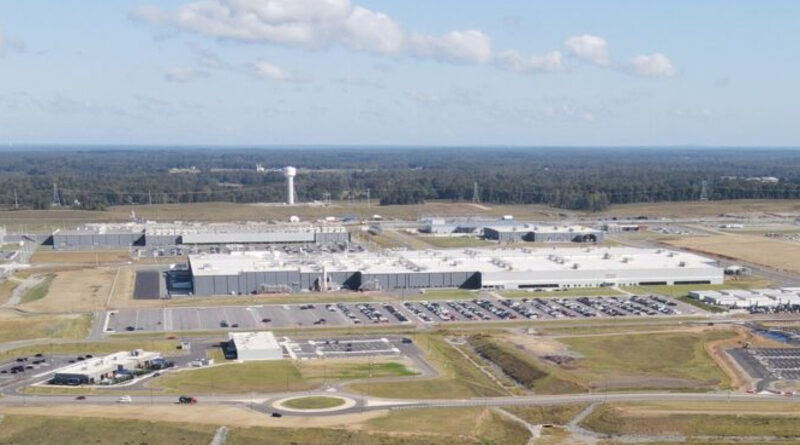
Toyota Motor officially launched production at its new battery manufacturing facility in Liberty, North Carolina on November 12, 2025, marking a pivotal moment in the company’s electrification strategy. The $13.9 billion plant represents Toyota’s first battery production facility outside Japan and its eleventh manufacturing site in the United States.
Major Investment in US Manufacturing
Alongside the plant opening, Toyota announced plans to invest an additional $10 billion in US operations over the next five years. This commitment brings the company’s total investment in the United States to nearly $60 billion since beginning operations approximately 70 years ago.
“Today’s launch of Toyota’s first U.S. battery plant and additional U.S. investment up to $10 billion marks a pivotal moment in our company’s history,” said Ted Ogawa, CEO of Toyota Motor North America. “Toyota is a pioneer in electrified vehicles, and the company’s significant manufacturing investment in the U.S. and North Carolina further solidifies our commitment to team members, customers, dealers, communities, and suppliers.”
Facility Specifications and Capacity
The Liberty facility spans 1,850 acres and houses 14 battery production lines dedicated to manufacturing lithium-ion batteries. At full capacity, the plant can produce 30 gigawatt-hours of batteries annually, serving Toyota’s expanding portfolio of electrified vehicles.
The production lines are divided into two categories: four lines dedicated to hybrid electric vehicles (HEVs) and ten lines for both hybrid electric and battery electric vehicles (BEVs and PHEVs). The facility currently employs approximately 2,500 workers and will eventually create up to 5,100 new jobs.
Vehicle Applications
Batteries produced at the North Carolina plant will power several Toyota models, including the Camry hybrid, Corolla Cross hybrid, and RAV4 hybrid. The facility also supports production of a yet-to-be-announced all-electric three-row SUV, which will be the first fully electric vehicle manufactured by Toyota in the United States.
Currently, the plant ships hybrid battery modules to Toyota’s assembly facilities in Kentucky and to Mazda Toyota Manufacturing in Alabama. According to company statements, the batteries are approximately 80 percent complete when they leave the North Carolina facility.
Multi-Pathway Electrification Strategy
Toyota’s approach differs from some competitors who have focused primarily on fully electric vehicles. Ted Ogawa emphasized the company’s strategy: “We know there is no single path to progress. That’s why we remain committed to our multi-pathway approach, offering fuel-efficient gas engines, hybrids, plug-in hybrids, battery electronics and fuel cell electronics.”
This strategy appears aligned with current market trends. Toyota has sold more than 6.6 million hybrid, plug-in hybrid, fuel cell, and battery electric vehicles in the US since 2000. The company currently controls more than half of the hybrid vehicle market in the United States, according to Motor Intelligence data. Through the third quarter of 2025, Toyota’s US vehicle sales increased 9.9 percent to more than 1.3 million vehicles.
Political and Economic Context
US Transportation Secretary Sean Duffy attended the opening ceremony, stating: “Under President Donald Trump’s leadership, America is open for business. Toyota’s move to expand production in North Carolina is the latest show of confidence in this administration’s efforts to reshore manufacturing, generate new, great paying jobs, and inject billions of dollars into the economy.”
The plant was originally announced in December 2021 during the Biden administration’s push to onshore battery production for hybrid and electric vehicles. In January 2025, the Trump administration rescinded EV tax credits and eliminated penalties that had incentivized EV sales, leading several automakers to adjust their electrification strategies.
Secretary Duffy also indicated that the administration plans to propose easing fuel economy standards, stating that prior rules were too aggressive. In January, he signed an order directing the National Highway Traffic Safety Administration to rescind fuel economy standards issued under President Joe Biden for the 2022-2031 model years.
Community Impact and Workforce Development
North Carolina Governor Josh Stein attended the launch ceremony, stating: “This groundbreaking investment will create more than 5,000 new jobs for North Carolinians and will strengthen our commitment to leading the way in both the automotive supply chain and the clean energy economy.”
Toyota has committed to workforce development through educational initiatives. The company announced a $2.7 million grant from the Toyota USA Foundation to expand its Driving Possibilities STEM education program in Guilford County Schools and the Asheboro City School District. This represents the second phase of the program in the region.
“This incredible gift will provide our students and their families with life-changing opportunities,” said Wendy Poteat, president and CEO of shift_ed, a nonprofit organization coordinating the North Carolina Driving Possibilities program.
The completed facility will include amenities for employees beyond standard manufacturing equipment, featuring on-site childcare, a pharmacy, a medical clinic, and a fitness center.
Renewable Energy Commitment
Toyota has stated its commitment to powering the North Carolina facility entirely with renewable energy. The company selected the location partly based on the availability of renewable energy from Duke Energy. This aligns with Toyota’s broader goal of achieving carbon neutrality in its vehicles and global operations by 2035.
Production Timeline and Future Expansion
Toyota North Carolina began shipping batteries in June 2025, with the official production launch ceremony held in November. Additional production lines are scheduled to launch through 2030 as the facility scales to full capacity.
Don Stewart, president of Toyota North Carolina, stated: “We’re excited to see this innovative facility come to life and to provide cutting-edge careers for more than 5,000 North Carolinians. Today’s celebration would not be complete without thanking our team members. Their dedication, commitment, and resolve have truly led us to this historic moment.”
The facility represents Toyota’s strategic positioning in the evolving automotive market, balancing hybrid vehicle production with preparation for increased electric vehicle demand while maintaining flexibility in its product portfolio.