1. Bangkok sets the stage for a rapid-charge revolution
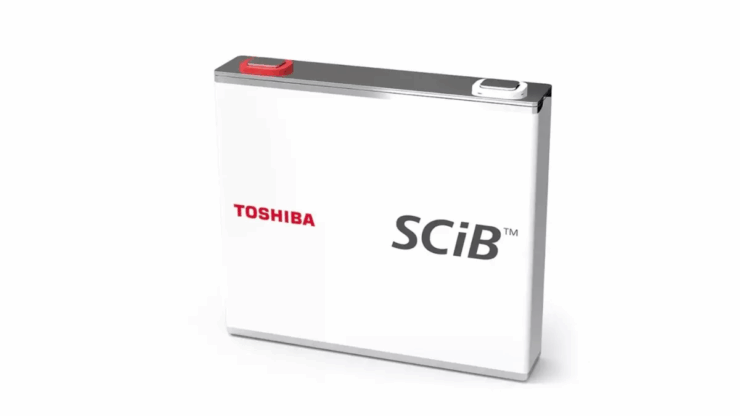
From 2–4 July 2025, Asia Sustainable Energy Week (ASEW) will transform Bangkok’s Queen Sirikit National Convention Center into the region’s largest clean-energy showcase. Toshiba Corporation has reserved Booth G51 to highlight its SCiB™ lithium-ion battery, billed as a “versatile building block” for low-carbon transport, logistics, and stationary storage across Southeast Asia.
2. Inside the chemistry: why LTO matters
SCiB departs from the graphite anodes found in most lithium-ion cells. Instead, it uses lithium-titanium-oxide (LTO), a spinel structure that allows lithium ions to intercalate rapidly without forming destructive dendrites. That design delivers three marquee specifications:
- 80 % state-of-charge in six minutes
- Cycle life exceeding 20,000 full depth-of-discharge cycles
- Outstanding thermal stability—critical in Southeast Asia’s tropical climate
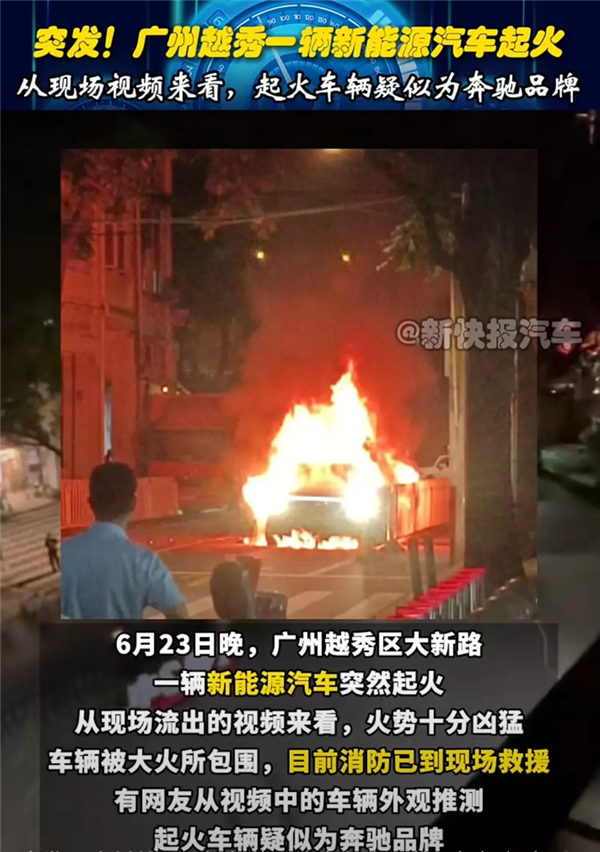
Toshiba says the cell keeps internal temperature spikes below the threshold for thermal runaway even during repeated fast-charge events, directly addressing regional fire-safety concerns.
3. Battery-as-a-Service (BaaS): Bangkok’s motorcycle-taxi pilot
To translate spec sheets into street-level impact, Toshiba and local partner Naturenix have launched a Battery-as-a-Service trial for motorcycle-taxi drivers on Bangkok’s congested roads. Instead of purchasing an entire powertrain, riders rent SCiB packs, swap them when depleted, and pay only for the energy they use. Early results point to:
- Near-zero downtime: a swap takes under two minutes versus hours of slow charging.
- Lower total cost of ownership (TCO): drivers avoid high upfront battery costs.
- Enhanced safety: LTO’s heat tolerance mitigates Bangkok’s year-round 35 °C road temperatures.
4. Beyond two wheels: delivery vans, ports, and coastal vessels
SCiB’s high-power density and rapid-charge capability are also migrating into:
- Electric delivery vans that recharge during brief depot stops, maximizing route cycles.
- Port terminal tractors and container handlers that juice up while cargo is unloaded.
- Coastal workboats and ferries that top off batteries during passenger turn-arounds.
By shrinking charge windows, operators can cut fleet sizes or extend daily duty cycles, both of which reduce per-kilometer costs and greenhouse-gas emissions.
5. A look back: prototype city bus proves scalability
In late-2024 Toshiba and partners debuted a 12-meter electric city bus powered by next-generation SCiB modules. During field tests the pack hit 80 % SOC in ten minutes, enabling rapid “flash-charging” at end-of-line terminals. Transit agencies estimated:
- Fewer battery packs per bus (lower capital expenditure)
- Shorter layovers (higher vehicle utilization)
- Improved fire safety compared with graphite cells, easing depot-siting rules.
The bus trial validated SCiB’s scalability from 20 Ah cells to multi-hundred-kilowatt-hour traction packs—a critical proof-point for heavy-duty markets.
6. Manufacturing and supply-chain outlook
Toshiba’s principal SCiB factory in Kashiwazaki, Japan, is ramping toward 10 GWh annual capacity by 2027. The company is scouting Southeast Asian locations for module assembly, citing lower logistics costs and easier compliance with local-content rules. Analysts note, however, that LTO cells require titanium precursors not yet mined at scale in the region, making feedstock diversification a near-term priority for Toshiba and regional governments.
7. Economics: weighing cost against life-cycle value
While LTO cells cost roughly 20–30 % more per kilowatt-hour than nickel-rich NMC chemistries today, three factors narrow the gap:
- Ultra-long cycle life—20,000 cycles translates to as much as four million kilometers for a taxi or delivery van.
- Deep-charge tolerance—usable SOC range of 0–100 % eliminates the 10–15 % “buffer” many operators reserve in higher-energy but fragile chemistries.
- No active cooling system—LTO’s stability reduces the need for complex, power-hungry thermal management.
A forthcoming TCO report from the Bangkok BaaS trial will quantify these savings for fleet operators.
8. Safety and regulatory impact
Lithium-ion incidents aboard ferries and buses have pushed Southeast Asian regulators to tighten battery-safety rules. SCiB’s benign thermal characteristics help operators comply with emerging standards on:
- Maximum cell surface temperature during fast charge
- Resistance to external short-circuit and crush events
- Limited off-gas volume under abuse
Toshiba is lobbying ASEAN transport ministries to recognize LTO cells as a lower-risk category, potentially reducing certification costs.
9. Stationary storage and grid services
Beyond mobility, SCiB’s long cycle life positions it for frequency regulation and microgrid applications where batteries cycle dozens of times per day. In port cities prone to brownouts, container terminals can pair fast-charging yard equipment with SCiB-based battery banks to shave peak demand and cut diesel-generator hours.
10. Looking ahead: aerospace ambitions and R&D roadmap
Toshiba’s Energy Systems division is sharing superconducting know-how with Airbus UpNext to explore liquid-hydrogen-cooled electrical propulsion. Although that research targets zero-emission flight by 2050, SCiB-inspired advances—high-power output at low resistance, rapid charge acceptance, and extreme-temperature resilience—could inform aviation-grade batteries in the 2030s.
Nearer term, Toshiba engineers are working on:
- Higher voltage LTO chemistries to reach 200 Wh kg⁻¹ while retaining cycle life.
- Module-level fire sensors using fiber-optic temperature arrays.
- Second-life pathways that redeploy retired mobility batteries into stationary storage.
11. What success in Bangkok would mean for the region
If the motorcycle-taxi pilot proves SCiB’s economics, similar BaaS hubs could roll out in Jakarta, Manila, and Ho Chi Minh City—cities where two- and three-wheeled vehicles handle up to 80 % of daily passenger trips. Rapid-charge packs would let drivers maintain earnings without long charging queues or battery-ownership debt, accelerating urban air-quality gains and CO₂ reductions.
12. Challenges to watch
- Cost dilution: Scaling LTO production and sourcing titanium at competitive prices remain hurdles.
- Competition: Chinese LFP and sodium-ion batteries are racing toward similar fast-charge claims at lower cost per kWh.
- Infrastructure: Fast-charging or swap stations need robust grid connections; rural routes could lag without policy support.
- Proof of durability: Real-world data must confirm the lab-rated 20,000-cycle life under Southeast Asia’s heat, humidity, and vibration.
Conclusion: a pivotal moment for fast-charge technology
Toshiba’s SCiB battery lands in Bangkok at a pivotal juncture: Southeast Asian governments are pledging net-zero timelines, fleet owners are seeking ways to cut fuel and maintenance costs, and consumers are wary of battery fires and slow charging. By pairing six-minute refuels with a 20-year service life, SCiB offers a compelling—but not yet guaranteed—roadmap to widespread electrification. The Bangkok pilot, data shared at ASEW 2025, and subsequent deployments will reveal whether LTO’s premium can be offset by longer life, better safety, and lower downtime. Fleet operators and grid planners across the region will be watching closely as Toshiba’s six-minute-charge battery steps into the spotlight.