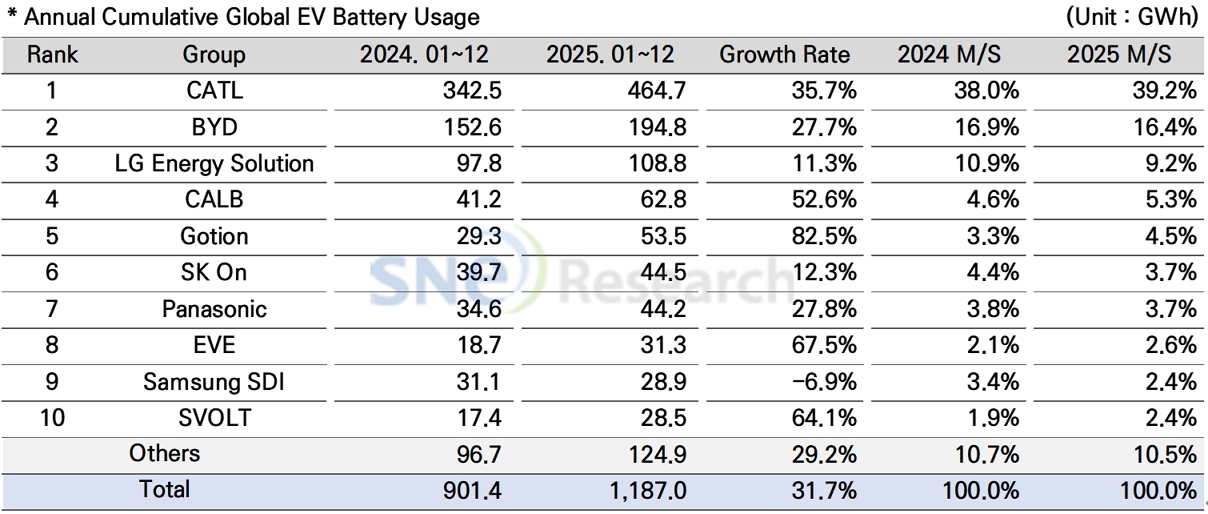
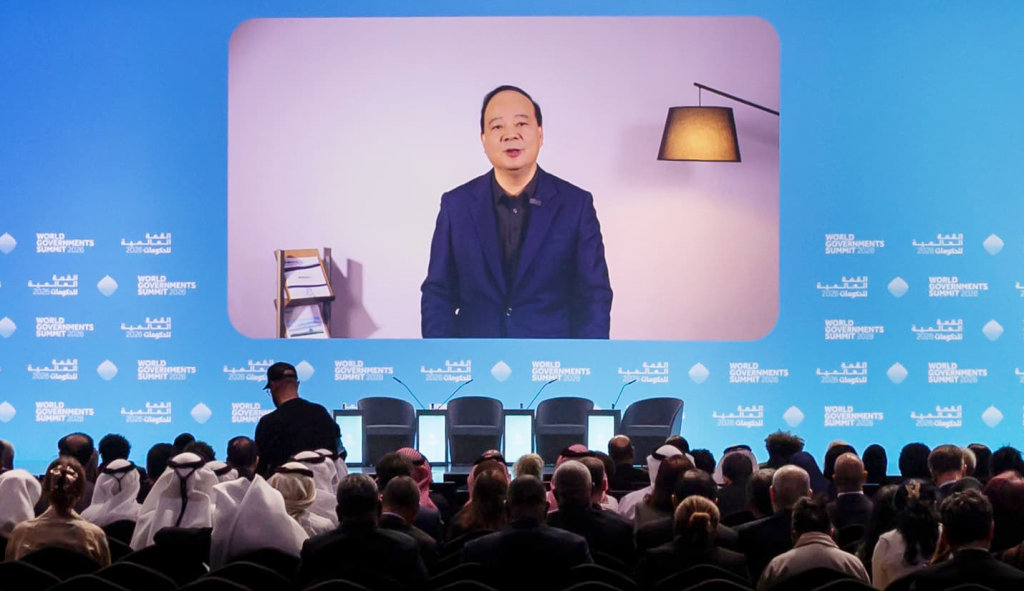
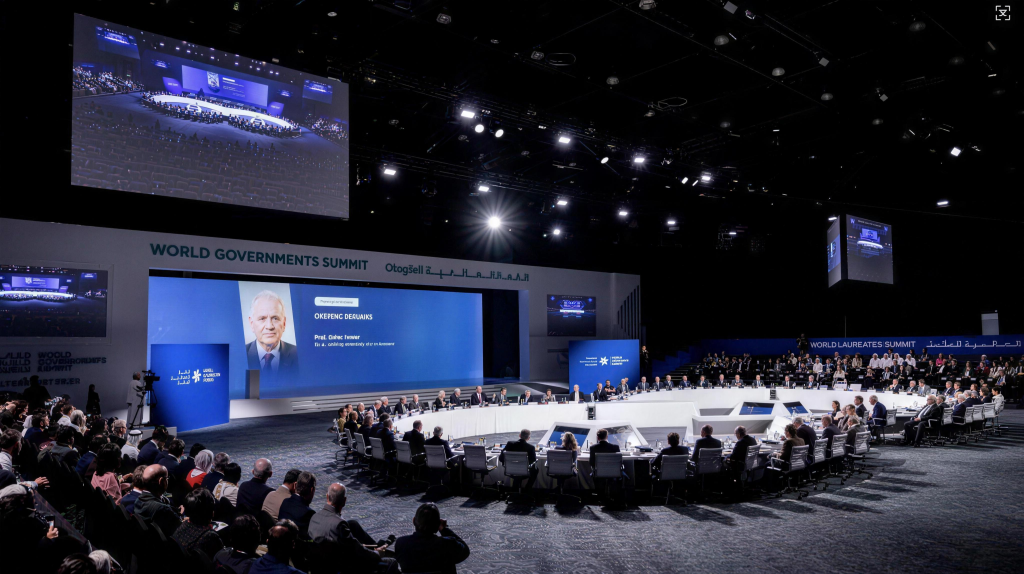
DUBAI, UAE, February 3 – At the inaugural joint summit of the World Laureates Forum (WLS) and the World Government Summit (WGS), Dr. Robin Zeng, Chairman of CATL, was invited to deliver a keynote speech alongside Nobel Laureate in Physics, Steven Chu.
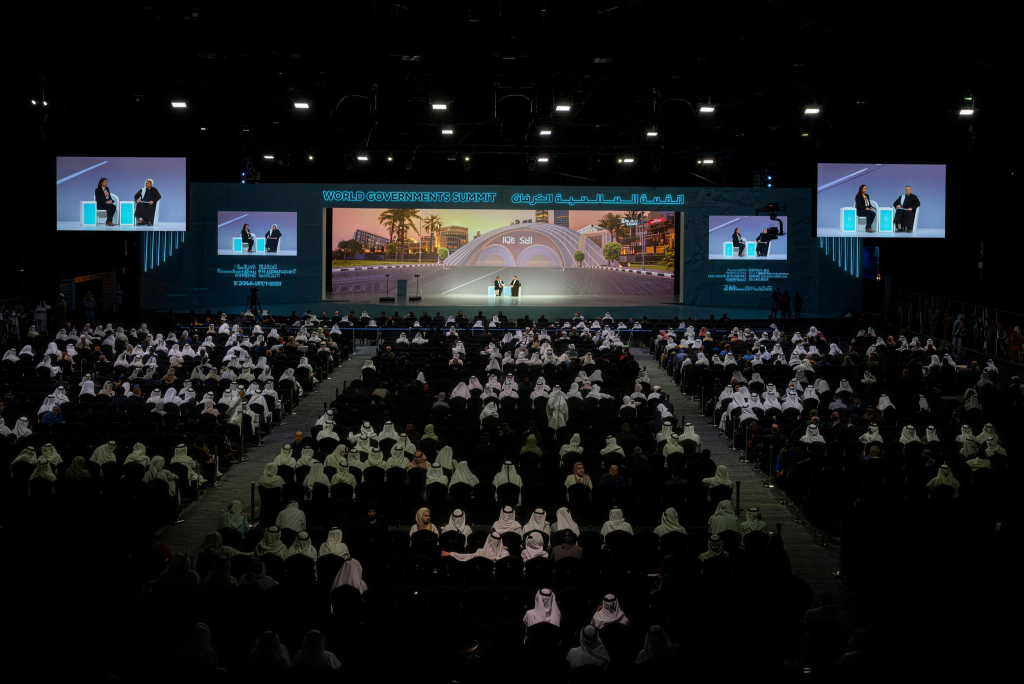
The summit gathered 71 top scientists, nearly 40 heads of state, and over 500 government ministers to discuss future challenges and solutions for humanity. As the sole representative of Chinese entrepreneurs at this year’s WLS, Dr. Zeng shared CATL’s insights and actions in driving the global energy transition, focusing on the development of zero-carbon technologies and industrial practices.
Zero-Carbon Technology Driving Renewables Past Market Tipping Points
Dr. Zeng stated that humanity is undergoing a revolutionary energy transformation, moving from an era of exploring and extracting fossil fuels to a new era of harvesting energy from wind farms and solar power stations and storing it in batteries. Technological advancements have made sustainable energy solutions commercially viable, and CATL is working to ensure renewable energy possesses true economic competitiveness across a wide range of scenarios.
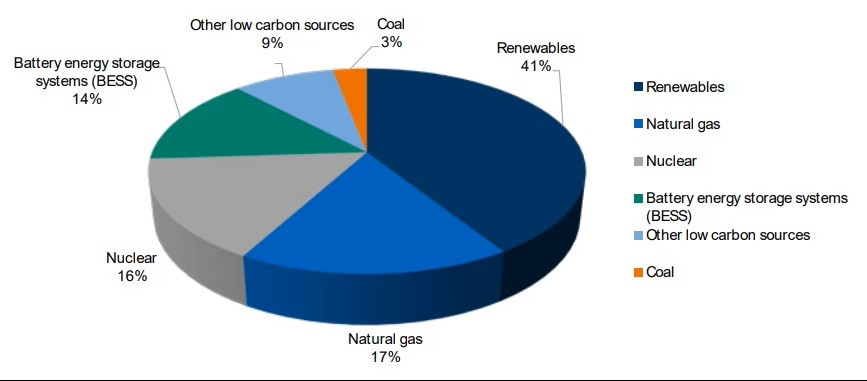
In the field of Zero-Carbon Mining, “Solar + Storage” systems supported by CATL have been deployed in remote mines in Chile and the Democratic Republic of the Congo, reducing electricity costs to approximately one-quarter of that of diesel generators. In the Zero-Carbon Industry sector, CATL’s energy storage solutions are providing reliable power to local cement plants in Pakistan; when combined with photovoltaics, this has cut electricity costs by half. Meanwhile, in California, USA, a zero-carbon power system is taking shape. Large-scale energy storage has effectively alleviated the “duck curve” issue caused by high penetration of renewable energy. In 2025, the state’s grid operated on 100% clean energy for over 1,800 hours.
Three Characteristics of the Future Sustainable Energy System
Dr. Zeng predicted that the future energy system will be defined by three key terms: “Distributed,” “Intelligent,” and “Recyclable.”
A distributed power system, incorporating renewable generation and advanced battery storage, will replace many centralized fossil fuel systems that rely heavily on large power plants and extensive grids, particularly in areas with weak grid infrastructure. CATL’s innovative high-voltage grid-forming energy storage technology effectively addresses the stability challenges of power systems with a high proportion of new energy. Currently, CATL is utilizing this technology to build the world’s first zero-carbon park directly connected to 100% green power in China.
Future energy systems will also be more intelligent, with advanced AI-driven scheduling and optimization effectively balancing energy supply and demand. In Shanghai, CATL’s energy storage system utilizes AI technology to efficiently schedule volatile energy demands for SenseTime’s AI data center, significantly enhancing energy management efficiency.
Finally, the circular economy will be key to realizing zero-carbon energy. Unlike fossil fuels, the materials in a zero-carbon energy system can be recycled. Currently, CATL has achieved recovery rates of 99.6% for nickel and cobalt and 96.5% for lithium, representing the highest levels in the industry. Furthermore, CATL has launched the “Global Energy Cyclic Community (GECC)” and is working with NGOs and industry colleagues to promote circular economy practices across the sector.
2030: The Dawn of the Sustainable Energy Era and the Power of Cooperation
Dr. Zeng predicts that with continuous progress in zero-carbon technologies, 2030 will mark the beginning of the sustainable energy era. While basic scientific R&D remains the source of transformation—creating possibilities for this new era—engineering and manufacturing will determine the speed of its realization. Over the past decade, CATL has invested more than 80 billion RMB in R&D, resolving scientific challenges in frontier fields such as condensed matter batteries, solid-state batteries, and perovskite solar cells, and is committed to pushing innovative scientific achievements from the laboratory to large-scale application.
Dr. Zeng emphasized that addressing global warming is superficially a climate issue, essentially an energy issue, but fundamentally a development issue. The most effective way to solve this is by allowing advanced technology and experience to flow globally and achieving win-win outcomes through international cooperation. CATL is actively promoting global technology sharing, such as through its Licensing Royalty Service (LRS) model, which helps partners build their own battery factories. This model is currently being advanced in the United States in partnership with Ford.
Dr. Zeng also pointed out a major challenge facing the global energy transition: excessive regulation of buildings and equipment in some overseas markets, which drives up the manufacturing costs of new energy products. Therefore, he proposed that some overseas countries could establish “Zero-Carbon Special Economic Zones.” By referencing building and equipment regulatory standards that have been successfully verified in China, these zones could promote advanced energy technologies in a more efficient and economical manner.
As a global leader in innovative technology, CATL is dedicated to driving the development of the new energy industry through technological innovation. As Dr. Zeng emphasized in his speech:
“To tackle global warming, we need to act immediately to build a sustainable energy system. This requires technological breakthroughs, courage, and wisdom. As a pioneer in the energy transition, CATL is willing to work more closely with the scientific community, governments, enterprises, and all colleagues committed to this mission, joining hands to create a zero-carbon energy future.”