October 10 – Swedish battery manufacturer Northvolt, once heralded as a key player in Europe’s green energy transition, is facing severe challenges that threaten its future and, by extension, Europe’s ambitions for a home-grown electric vehicle (EV) battery industry. Founded in 2016, Northvolt was positioned to drastically reduce Europe’s reliance on China for EV batteries while contributing to the EU’s plan to become carbon neutral by 2050. However, recent events, including production failures, mass layoffs, mysterious employee deaths, and the loss of a major contract, have cast serious doubts on the company’s ability to fulfill these expectations.
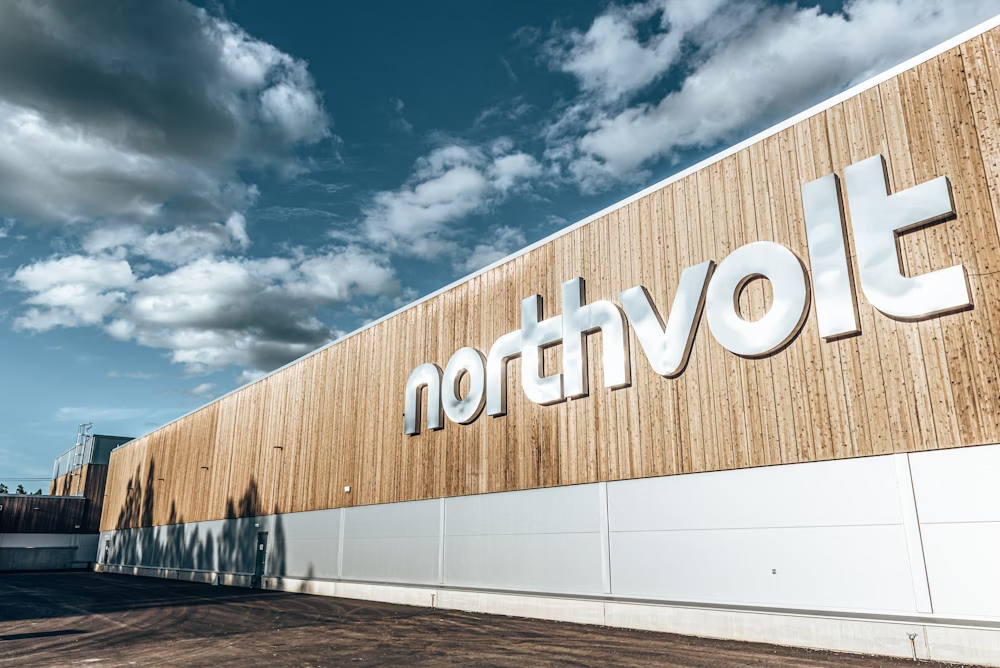
Northvolt’s initial promise was to produce the world’s greenest lithium-ion battery, powered by renewable energy and composed of 100% recycled nickel, manganese, and cobalt. The company received massive financial backing from investors, car manufacturers, and lenders, with total investments reaching an estimated €5.3 billion. Major automakers like Volvo, Volkswagen, and BMW signed on, hoping to benefit from a European battery supplier that could offer sustainability and innovation.
However, the once-shining startup has seen its plans unravel. In December 2023, Swedish business daily Dagens Industri published a leaked financial report revealing that Northvolt’s flagship gigafactory in Skellefteå was producing only 5% of its planned battery capacity. Originally designed for an annual production of 16 gigawatt-hours (GWh), by mid-2024 the plant was producing at an annualized rate of less than 1 GWh. In mid-September, the plant was producing about 60,000 battery cells per week, with a target of 100,000 cells by the end of the year. The plant’s production shortfall, combined with rising financial pressures, has created significant uncertainty.
Adding to the company’s woes, Northvolt was forced to cancel several planned expansions, including a new facility in Sweden. Instead, it is now seeking external investors for a plant in Poland. The company has also decided to stop producing cathode active materials (CAM), a critical component of batteries, and is now turning to Asian suppliers to meet its needs.
Perhaps most concerning are the mysterious deaths of three employees at the Skellefteå plant, prompting a police investigation. In January 2024, a 33-year-old employee was found dead in his bed after working a shift at the plant. Just one month later, a 19-year-old worker was found dead under similar circumstances. The third case involved a 60-year-old man who collapsed on his balcony after returning home from work in June. The investigation is ongoing and is expected to conclude by the end of the year.
The workplace environment at Northvolt has also come under scrutiny. Reports emerged of employees being exposed to toxic waste and dangerous gases without proper safety equipment. One worker, Siri Almqvist, revealed that a colleague suffered severe health issues, including frequent nosebleeds and the loss of fingernails, due to unsafe working conditions. Since 2019, 26 serious workplace accidents have been reported at the Skellefteå plant, according to an investigative report by Dagens Nyheter.
These challenges culminated in a significant restructuring of the company. In September 2024, Northvolt announced it would lay off 1,600 employees—about 20% of its workforce in Sweden. Around the same time, the company revealed it would postpone its planned initial public offering (IPO) until 2025, citing the need to stabilize its operations and production capacity.
The financial toll has been severe. Northvolt, once seen as Europe’s best chance to develop a competitive and sustainable battery industry, is now grappling with debt and diminishing investor confidence. In June 2024, BMW canceled a €2 billion battery cell order, citing delivery delays. Analysts warn that Northvolt’s troubles could jeopardize future gigafactories and joint ventures across Europe.
CEO Peter Carlsson, a former Tesla executive, has publicly acknowledged the company’s difficulties but remains optimistic about its future. In a statement, he said, “The recent production records at Northvolt Ett show that we’re on the right track, but the decisions we make today, regardless of how tough they are, are necessary for Northvolt’s future.”
Yet industry experts are not so sure. Christian Sandström, an associate professor at the Jönköping International Business School, said, “Northvolt has gone from zero to zero,” referring to the company’s rapid rise and equally swift decline. He also expressed concerns that Northvolt may soon declare bankruptcy, becoming the latest casualty in Europe’s quest to build a green battery industry.
While Northvolt continues to seek a financial lifeline from investors and lenders, its struggles raise fundamental questions about whether Europe can develop a self-sustaining electric vehicle battery supply chain. For now, the once-bright future of Europe’s green battery dream seems increasingly uncertain.