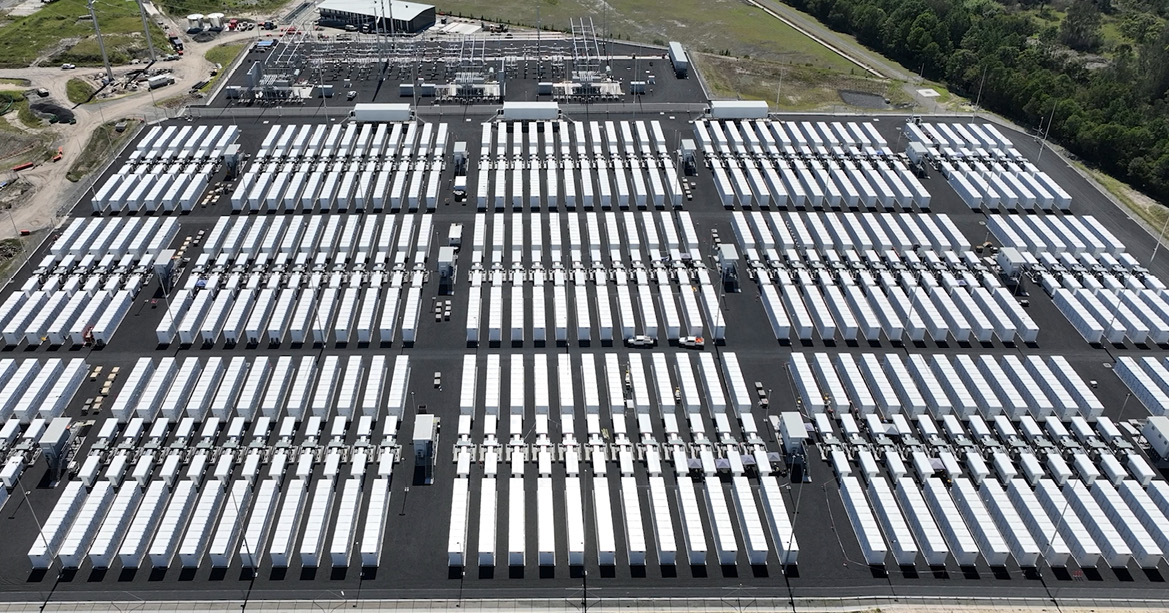
Yan Yishu, a Hong Kong-based analyst at UBS Securities, stated at a media briefing on November 13 that AI artificial intelligence data center-fueled power demand growth in the U.S. is likely to drive a “boom cycle” for energy storage over the next five years. As fluctuations from wind and solar generation increase, the grid needs more battery energy storage systems to balance power supply and demand.
Global Energy Storage Demand Set to Surge
According to UBS Securities forecasts, global energy storage demand could increase 40% year-on-year in 2026. Yan emphasized: “The demand for AI data centers in the U.S. is very robust, but electricity is the biggest bottleneck.”
Data shows that U.S. data centers consumed 183 terawatt-hours of electricity in 2024, accounting for 4% of the country’s total electricity consumption. This figure is projected to jump 133% to 426 terawatt-hours by 2030. Nvidia forecasts that global AI data center infrastructure spending could surpass 3-4 trillion dollars annually by 2030, leading to an additional 110 gigawatts of electricity demand in the U.S. and 170 gigawatts globally.
Over the next five years, renewables are the only power-generating segment expected to grow significantly in the U.S. Because wind and solar produce power intermittently, the grid needs more storage facilities to capture this electricity and ensure stable supply.
U.S. Market: Opportunities and Challenges
The U.S. market is key for Chinese energy storage manufacturers, who currently hold about 20% market share in the U.S., one of the highest-margin markets. However, the foreign entity of concern (FEOC) requirements in President Trump’s One Big Beautiful Bill pose the biggest risk for Chinese exports to the U.S.
The bill places strict restrictions on Chinese-owned or controlled companies, requiring that energy storage projects cannot benefit from material assistance from prohibited foreign entities if they want to receive tax credit support. This has prompted Chinese companies to accelerate exploration of alternative markets.
Emerging Markets Become New Growth Engine
Yan stated that emerging markets in the Middle East, Latin America, Africa, and Southeast Asia could see growth rates of 30% to 50% or more. These regions are becoming new engines for global energy storage market growth, providing Chinese energy storage companies with diversified market opportunities.
BloombergNEF data shows that despite policy uncertainty, global energy storage additions are expected to grow 35% in 2025, reaching 94 gigawatts (247 gigawatt-hours), excluding pumped hydro. By 2035, annual additions are projected to reach 220 gigawatts/972 gigawatt-hours, with a compound annual growth rate of 14.7%.
Chinese Market Reforms Drive Storage Development
In the Chinese market, the push to implement market-based pricing for renewables will give a further boost to energy storage projects. Independent storage projects profit by charging up when prices are low and selling power when prices are high.
Yan indicated that a peak-valley electricity price difference of 0.4 yuan per kilowatt-hour (approximately $0.06) is enough to make independent storage projects profitable. The industry generally considers a peak-valley price difference of 0.7 yuan/kWh as the economic threshold for user-side energy storage.
Currently, multiple Chinese provinces have peak-valley price differences exceeding this standard. Guangdong Province’s Pearl River Delta region leads the nation with a maximum peak-valley price difference of 1.351 yuan/kWh, up 7.3% year-on-year, significantly promoting user-side energy storage development.
UBS anticipates that Chinese provinces are likely to introduce capacity payments, which compensate battery owners to be available when needed, to further incentivize energy storage. This mechanism has already been implemented in pumped hydro storage, with an average capacity price of 507.61 yuan/kW.
Market Outlook and Investment Opportunities
Global electricity consumption continues to grow, driven not only by AI data center expansion but also by global economic electrification, industrial reshoring trends, and growing energy demand in developing nations. The International Energy Agency projects that global energy consumption will increase at a rate of about 4% per year until 2027, equivalent to Japan’s annual electricity usage.
Chinese energy storage companies are actively adapting to market changes. Major battery manufacturers including CATL, BYD, and EVE Energy continue to benefit from domestic market growth and overseas expansion. These companies develop products specifically for the energy storage market, driving continuous optimization of storage battery chemistry systems.
Analysts note that despite trade policy uncertainty, the long-term growth trend of the energy storage industry remains strong. As the proportion of renewable energy continues to increase, energy storage systems’ strategic position as a key component of grid stability will continue to rise. For investors and industry participants, closely monitoring regulatory policy changes and market pricing mechanism reforms will be key to seizing opportunities in this trillion-dollar market.