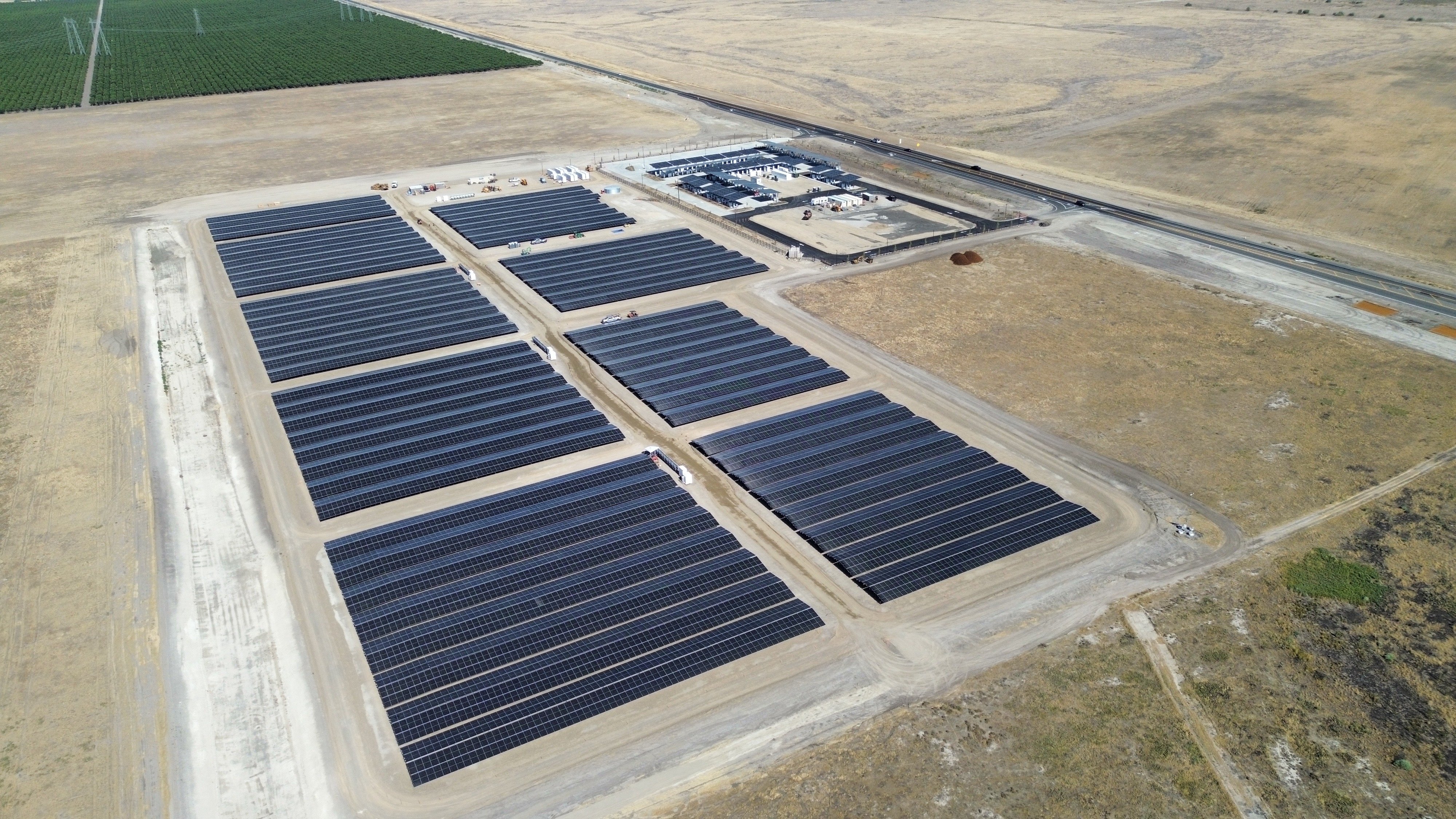
Tesla recently announced that its “Oasis Project” Supercharger station in Lost Hills, California, has completed full certification and is now officially operational, becoming the largest Tesla Supercharger station to date worldwide. The site features 164 charging stalls operating entirely on solar power and large-scale energy storage systems, marking a new era of sustainable electric vehicle charging infrastructure.
Phased Construction Sets Industry Speed Record
According to Max de Zegher, Tesla’s Director of Charging for North America, Europe, the Middle East, Africa, and Asia Pacific, this massive charging station project broke ground in October 2024, with the first phase completed in just eight months. On July 4, 2025, the initial 84 Supercharger stalls were activated, providing crucial charging support during the Independence Day holiday travel peak. Now, after approximately one year of construction, the remaining 80 charging stalls have been fully activated, bringing the station’s total to 164 stalls. While the final count is slightly lower than the initially planned 168 stalls, it still sets a new record for Tesla’s charging network.
The charging station spans over 30 acres (approximately 12.14 hectares) and is strategically located along Interstate 5, positioned at the midpoint between the San Francisco and Los Angeles metropolitan areas. This geographical placement was no coincidence but rather based on Tesla’s precise forecasting of future charging demand.
Perfect Integration of Solar and Energy Storage Systems
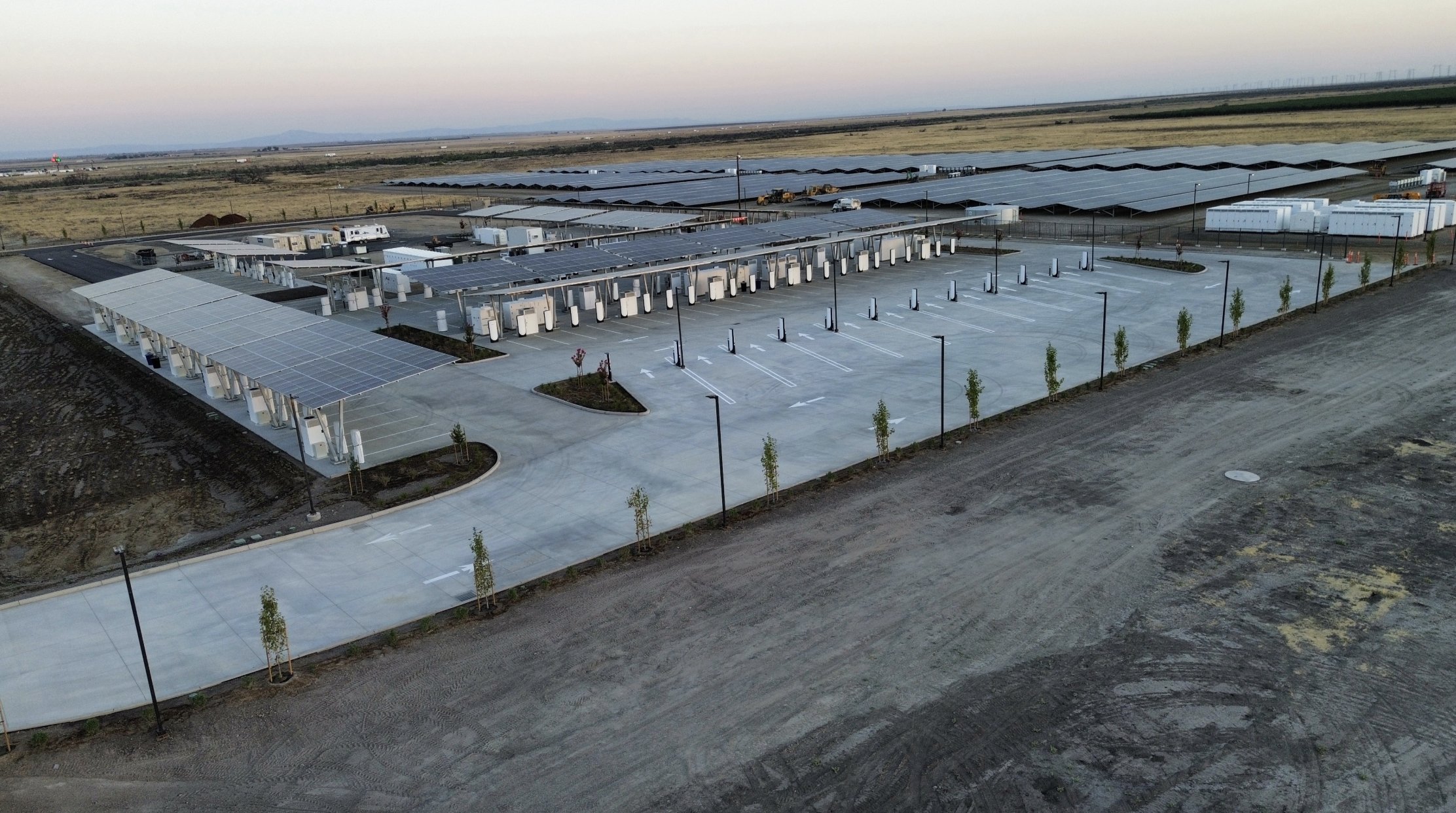
The most striking feature of the Lost Hills Supercharger station is its near-complete energy self-sufficiency. The site is equipped with a solar photovoltaic system with a total installed capacity of 11 MW. Solar panels are installed not only on canopies over charging spaces but also deployed extensively on open land behind the charging station. This design both provides shade protection for vehicles and maximizes solar power generation efficiency.
Megapack Energy Storage System: The Key to 24/7 Charging
To ensure round-the-clock stable operation of the charging station, Tesla deployed 10 Megapack large-scale energy storage units with a total storage capacity of 39 MWh. These industrial-grade energy storage devices are Tesla’s flagship products manufactured at the Lathrop, California factory, with each Megapack equipped with an independent inverter system capable of rapidly responding to charging demand changes.
The Megapack energy storage system plays a crucial role in this project. During the day, when solar power generation exceeds the charging station’s real-time demand, excess electricity is stored in the Megapacks; at night or during cloudy conditions, these storage devices release energy to ensure continuous and stable charging station operation. This “integrated solar-storage” design concept allows the charging station to operate almost entirely independent of the traditional power grid.
According to de Zegher, while the charging station maintains a small grid connection (approximately 1.5 MW according to early reports), this is primarily intended for future expansion needs. In the vast majority of cases, the site achieves truly off-grid operation. “For almost every day of the year, it’s 100% sunshine powering the cars,” de Zegher stated. This means that even when California’s grid fails during heat waves or wildfires, the Lost Hills charging station can continue normal operations, providing EV owners with genuine energy independence.
Charging Performance and User Experience
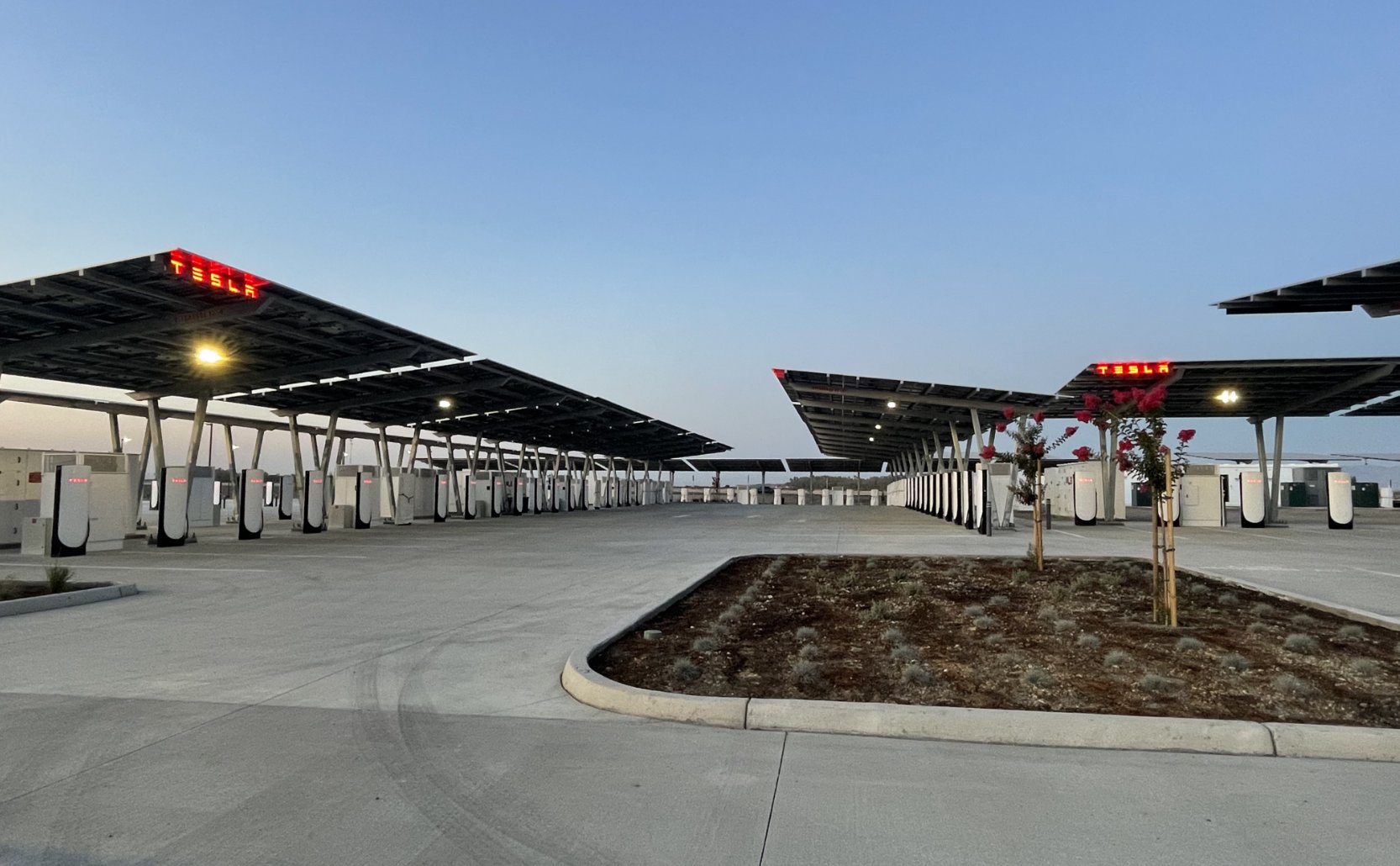
Each charging stall utilizes Tesla’s latest V4 Supercharger technology, with individual stalls capable of delivering up to 325 kW of power. This means compatible vehicles can add approximately 200 miles (about 322 kilometers) of range in roughly 15 minutes. The charging station also features 12 pull-through charging spaces specifically designed for electric vehicle users towing RVs or trailers, a design that has been especially popular following the Tesla Cybertruck launch.
Based on calculations assuming an average charging time of 20 minutes per vehicle, the site could theoretically service over 1,000 electric vehicles daily. The charging station is also equipped with dedicated lounges, providing drivers with comfortable rest areas during charging waits.
Innovative Solution to Charging Infrastructure Bottlenecks
De Zegher explained the urgency of building this large off-grid charging station on social platform X: “Our forecasts showed a severe charging infrastructure deficit along the San Francisco – Los Angeles corridor for the 2025 holidays and beyond, creating extreme urgency to bring more Superchargers online.” However, securing a grid connection in time would have been impossible.
In some parts of California, new electrical facilities require cumbersome approval processes, and grid upgrades can take months or even longer. By adopting a self-built solar power generation and energy storage system solution, Tesla gained complete control over the project timeline, successfully completing the entire process from groundbreaking to commissioning in under eight months.
This innovative model not only solved the problem of grid capacity limitations but also provided new insights for the sustainable development of electric vehicle charging infrastructure. When California’s grid experiences failures during heat waves or wildfires, the Lost Hills charging station can maintain normal operations, providing EV owners with true energy independence.
Deep Integration of Clean Energy and Electric Transportation
The Lost Hills project’s annual power generation is estimated at approximately 20 GWh, equivalent to the annual electricity consumption of about 1,700 American households. During periods of ample sunlight, the solar system’s power generation can reach seven times the capacity of the grid connection, fully demonstrating the tremendous potential of renewable energy applications in the transportation sector.
This project validates Tesla CEO Elon Musk’s vision proposed since 2016—that most Supercharger stations in the future will operate independently of public utility companies. By integrating solar panels, Megapack energy storage systems, and V4 charging hardware, Tesla has proven the viability of this business model at scale.
Continued Expansion of the Charging Network
The activation of the Lost Hills Supercharger station comes during a period of rapid expansion for Tesla’s charging network. As of November 2025, Tesla’s global Supercharger network has surpassed 75,000 charging stalls, adding a record 4,000 fast chargers in the third quarter alone, with average daily charging sessions reaching 587,000 during the same period, highlighting the rapid growth in global electric vehicle charging demand.
More notably, Tesla’s Supercharger network no longer serves only Tesla owners. With the North American Charging Standard (NACS) being adopted by major automakers including Ford, GM, Volkswagen, and Stellantis, an increasing number of non-Tesla electric vehicles are becoming compatible with the Supercharger network. This month, Volkswagen electric vehicles became the latest brand to gain access to Supercharger stations, further expanding the network’s service coverage.
Future Outlook and Industry Impact
Tesla has hinted that similar solar-powered “Oasis”-level charging stations may be replicated in other high-traffic areas in the future. This model is particularly attractive in regions with abundant sunlight, ample land resources, but limited grid capacity, such as the southwestern United States.
According to reports, Tesla is planning to build a second 168-stall Supercharger station in Coalinga, California, and is developing a large site with 200 charging stalls in Florida. These projects may similarly employ solar and energy storage technology, further improving Tesla’s sustainable charging network layout.
The Lost Hills project not only sets a new benchmark for Tesla but also provides important reference for global electric vehicle charging infrastructure development. It demonstrates that the deep integration of renewable energy, energy storage technology, and electric transportation is not only technically feasible but also commercially sustainable. As global electric vehicle penetration continues to rise, clean energy-driven charging ecosystems like this may become an important direction for industry development.
It’s worth noting that the full activation of this charging station coincided with the American Thanksgiving holiday, providing crucial charging support during the holiday travel peak. For EV owners traveling between northern and southern California, the activation of the Lost Hills Supercharger station undoubtedly greatly enhances the convenience and reliability of long-distance travel.
From a 2016 vision to 2025 reality, Tesla has spent nearly a decade turning the dream of solar-powered charging stations into reality. The Lost Hills “Oasis Project” is not only the world’s largest Supercharger station but also a milestone in the application of integrated solar-storage technology in transportation infrastructure. The project successfully validates the perfect combination of large-scale energy storage systems with renewable energy, pointing the way forward for a green future in the electric vehicle industry.
Tesla’s demonstrated vertical integration capabilities in this project—from solar panels to Megapack energy storage systems to V4 charging hardware—have set a benchmark that other charging network operators will find difficult to match. As global energy transition accelerates and electric vehicle penetration continues to rise, large-scale charging infrastructure like Lost Hills that can operate independently of traditional power grids may become an important component of future sustainable transportation ecosystems.