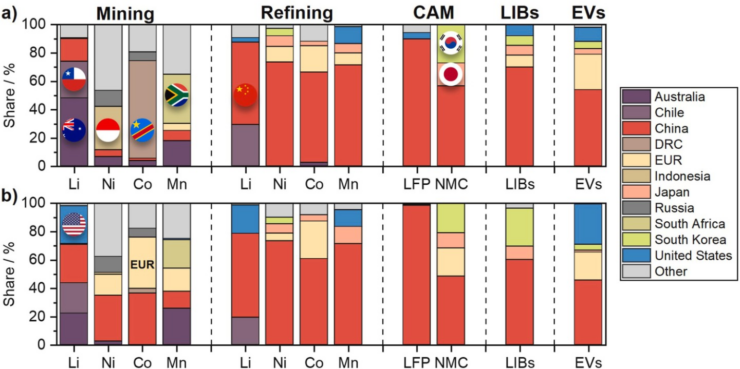
The electric vehicle (EV) revolution is accelerating across Europe, and Chinese battery manufacturer Contemporary Amperex Technology Limited (CATL) is at the forefront of this transformation. With its ambitious plans to expand production in Hungary and secure major supply deals with European automakers, CATL is poised to challenge South Korean battery-makers like LG Energy Solution and SK On, who have long dominated the market. This shift not only reflects the growing influence of Chinese companies in Europe but also highlights the broader geopolitical dynamics shaping the global EV industry.

1. CATL’s Strategic Expansion in Europe
In a move that underscores its commitment to capturing a larger share of the European EV market, CATL is ramping up its production capacity. The company is currently finalizing plans for a $7.3 billion battery plant in Hungary, which will have an annual capacity of 100 gigawatt-hours (GWh). This facility, expected to begin mass production later this year, marks CATL’s second major European manufacturing hub after its plant in Germany.
The Hungarian plant is strategically located to serve CATL’s key clients, including Mercedes-Benz, BMW, Stellantis, and Volkswagen. These automakers are increasingly turning to CATL for cost-effective battery solutions, particularly its lithium iron phosphate (LFP) batteries, which offer longer lifespans and lower costs compared to traditional nickel-based batteries.
2. Gaining Traction with Major Automakers
CATL’s growing influence in Europe is evident in its partnerships with leading automotive brands. Mercedes-Benz, for instance, has chosen CATL as a primary supplier for its EQ series of electric vehicles. Similarly, Volkswagen has committed to sourcing batteries from CATL for its expanding ID系列车型. These deals not only highlight CATL’s technological prowess but also reflect the shifting priorities of European automakers, who are under increasing pressure to meet stricter emissions regulations.
In addition to these partnerships, CATL is leveraging its expertise in battery recycling and sustainability to further differentiate itself. By offering end-of-life battery management solutions, the company is positioning itself as a leader not just in production but also in the circular economy of EV components.
3. The Impact on South Korean Competitors
While CATL’s expansion bodes well for its European clients, it spells challenges for South Korean battery-makers like LG Energy Solution and SK On. These companies, which have long enjoyed a dominant position in the global EV battery market, are now facing increased competition from Chinese manufacturers.
The competitive landscape is further complicated by geopolitical tensions between the US and China. Earlier this year, the U.S. Department of Defense labeled CATL and other Chinese tech firms as potentially linked to the Chinese military, raising concerns about their supply chain security. These developments have encouraged European automakers to diversify their battery suppliers, creating opportunities for CATL while putting pressure on South Korean manufacturers.
4. Geopolitical and Regulatory Factors Shaping the Market
The growing influence of Chinese battery companies in Europe is also a reflection of broader geopolitical shifts. As tensions between the U.S. and China escalate, particularly over issues like semiconductor technology and supply chain dominance, European countries are seeking to reduce their reliance on American tech firms while balancing their economic ties with China.
In this context, Hungary has emerged as a key player in Europe’s push to become a leading hub for EV production and battery manufacturing. The country’s government has offered significant policy incentives, including consumer subsidies and investment benefits, to attract CATL and other manufacturers. These efforts are part of Hungary’s broader ambition to position itself at the center of Europe’s EV supply chain.
Meanwhile, the European Union’s regulatory framework is further driving demand for electric vehicles. The EU’s decision to ban the sale of new internal combustion engine vehicles by 2035 has created a massive opportunity for battery manufacturers like CATL, as automakers scramble to meet the deadline.
5. Challenges and Opportunities Ahead
Despite its rapid expansion, CATL faces challenges in Europe, including supply chain disruptions and regulatory hurdles. The EU’s recent imposition of tariffs on Chinese-made EVs, ranging from 17% to 35.3%, could complicate CATL’s plans to increase exports to the region. However, ongoing negotiations between Chinese automakers and European officials suggest that a compromise may be reached, potentially smoothing the path for CATL’s growth.
For South Korean competitors, the challenge lies in adapting to this new competitive landscape. While LG Energy Solution and SK On have been working to expand their own production capacities in Europe, they will need to innovate and diversify their offerings to retain market share.
6. Conclusion: The Future of EV Batteries
As CATL continues to build its presence in Europe, the company is setting a new standard for battery innovation and sustainability. Its success in the region not only underscores the growing importance of China in the global EV industry but also highlights the dynamic interplay between technology, regulation, and geopolitics in shaping the future of mobility.
With its ambitious production plans and strategic partnerships, CATL is well-positioned to lead the next phase of the EV revolution. Whether South Korean competitors can adapt to this new reality—and whether European automakers will continue to embrace Chinese suppliers—will be among the key questions as the industry moves forward.
CATL’s expansion in Europe signals a paradigm shift in the global EV battery market, with significant implications for both South Korean competitors and the broader geopolitical landscape. As the competition heats up, one thing is clear: the future of electric vehicles is being shaped by innovation, strategy, and the shifting tides of international relations.