Investigation Results: A Preventable Human-Made Disaster
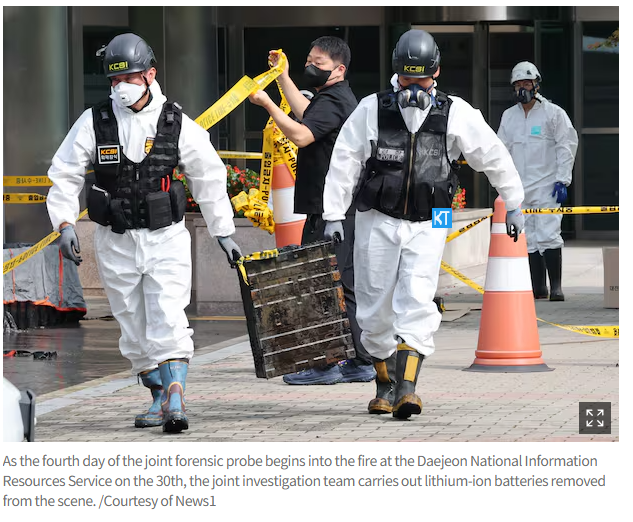
On November 25, 2025, the Daejeon Metropolitan Police Agency’s special investigation team delivered shocking findings: the September 26 fire at the National Information Resources Service (NIRS) data center was entirely caused by severe worker negligence. This 22-hour inferno not only destroyed millions of dollars worth of equipment but resulted in the permanent loss of 858 terabytes of government data, marking the worst disaster in South Korea’s digital history.
Fatal Operational Mistakes
According to the police investigation, the direct causes are staggering:
Critical Power Management Failure
- Workers cut the main power supply but failed to disconnect auxiliary power connected to the Uninterruptible Power Supply (UPS) battery system
- Battery racks remained energized while workers began physical dismantling
- On-site workers had no understanding of the basic safety requirement to discharge batteries before work
Complete Absence of Safety Measures
- Workers wore no insulating protective clothing
- Tools used were not insulated
- No basic firefighting equipment or emergency plans were present at the scene
Deadly Consequences of Missing Training The most infuriating finding: An experienced site manager from a private company had thoroughly demonstrated proper procedures, including how to cut power to battery racks. However, the subcontracted workers who actually performed the job were deployed without ever receiving this briefing, sent to work in complete ignorance of the risks.
National Forensic Service’s Critical Findings
Technical analysis by the National Forensic Service overturned initial assumptions:
- Definitively ruled out battery thermal runaway as the cause
- Korea Conformity Laboratories (KCL) reenactment tests showed marked differences between thermal runaway patterns and actual fire patterns
- Confirmed the fire resulted from electrical failure due to improper handling, not battery quality issues
19 People Face Criminal Charges: Full Accountability Chain Exposed
Categories of Charged Individuals
Management Responsibility (4 officials)
- Head of National Information Resources Service
- Director in charge
- Head of Team
- On-site management supervisor
These officials are charged with occupationally caused fire due to poor management and oversight. Investigation reveals they failed to ensure critical safety procedures were executed at key facilities.
Contractor Responsibility (10 people)
- Construction company representatives and workers
- Supervision firm employees
- Individuals involved in illegal subcontracting
Violations include:
- Violating the Electric Construction Business Act through multilayer illegal subcontracting
- Falsifying employee records to hide illegal subcontracting
- Deploying unqualified personnel for high-risk operations
The Illegal Subcontracting Chain
The investigation exposed a shocking chain of illegal subcontracting:
- Two companies won the battery relocation project contract
- Winners didn’t participate in actual work, subcontracting to third parties
- Third-party companies subcontracted again to two other small companies
- Final work performed by completely unqualified temporary workers
This cascading subcontracting not only violated laws but resulted in complete absence of safety accountability.
Catastrophic Consequences: South Korea’s Digital “Pearl Harbor Moment”
Unprecedented Data Loss Scale
858TB of Data Permanently Gone
- Eight years of work by 125,000 civil servants destroyed
- G-Drive cloud storage system completely destroyed with zero backups
- Government’s absurd admission that the system was “too large” to back up
Chain Reaction of System Failures
647 Government Systems Simultaneously Offline
- 96 systems directly destroyed by fire
- 551 systems forcibly shut down as preventive measure
- 119 emergency call system’s geolocation capabilities lost
Critical Service Disruptions Affecting Citizens
- Identity verification systems paralyzed, affecting banking and airport services
- Postal financial services interrupted
- Government24 portal website inaccessible
- Civil servant internal system Onnara completely paralyzed
Painfully Slow Recovery
Recovery status as of early October:
- Only 157 services restored after two weeks (24% recovery rate)
- Just 30.6% recovery rate after one month
- Complete recovery estimated to take at least 4 weeks
Technical Details: Fatal Vulnerability of 11-Year-Old Batteries
Battery Condition
The lithium-ion batteries involved were manufactured by LG Energy Solution:
- Installed August 2014, used for over 11 years
- Exceeded 10-year recommended lifespan by over a year
- Though passing safety inspection in June 2025, aging cells proved extremely vulnerable during relocation
Fire Development Timeline
20:20 – Workers begin power disconnection procedure 21:00 – One battery cell fails catastrophically 21:05 – Thermal runaway chain reaction begins, temperatures exceed 160°C (320°F) 21:30 – All 384 lithium battery modules engulfed in flames Next day 18:30 – Fire finally controlled after 22 hours
Firefighting Challenges
Fire departments faced an impossible dilemma:
- Deployed 101 firefighters and 31 fire vehicles
- Couldn’t use water-based suppression systems that would destroy the data center
- Forced to rely on carbon dioxide suppression, painfully slow against lithium fires
Structural Problems: The Missing Disaster Recovery System
No True Redundancy
Despite South Korea having three data centers in Daejeon, Gwangju, and Daegu:
- Over 1/3 of systems concentrated at Daejeon site
- Lacking “active-active” architecture for real-time failover
- Sites operate independently, unable to backup each other
The Price of Budget Cuts
- 2025 disaster recovery budget only 3 billion won, cut by 61%
- Cloud center in Gongju, South Chungcheong Province idle for 13 years after construction
- 25.1 billion won IT infrastructure budget for 2024 went unspent
International Impact: Global Wake-Up Call for Data Center Safety
Lithium Battery Risk Reassessment
This incident triggered global reevaluation of lithium battery use in data centers:
- Lithium batteries projected to claim 38.5% of data center battery market by end of 2025
- UK’s Openreach issued emergency directive for 48-hour removal of all lithium batteries
- Multiple countries reviewing data center battery safety standards
Damage to South Korea’s Tech Powerhouse Image
For a nation ranking fourth in the 2025 Global Innovation Index, this incident is deeply embarrassing:
- The Hankyoreh newspaper called it “a flabbergasting disaster in a country that calls itself an IT powerhouse”
- International observers question how such fundamental mistakes could occur in technologically advanced South Korea
- Exposed severe vulnerabilities in South Korea’s digital infrastructure
The Human Toll of Tragedy
Beyond technical and economic losses, the incident caused human casualties:
- One worker suffered first-degree burns to face and arm
- A 56-year-old senior official overseeing restoration efforts died by suicide
Lessons and Reflections
Systemic Failure in Safety Management
Problems exposed by this incident include:
- Weak regulatory enforcement – Safety procedures existed only on paper
- Rampant illegal subcontracting – Broken responsibility chains
- Severe training deficiencies – Unqualified personnel in critical positions
- Missing emergency plans – Lack of effective disaster recovery planning
- Insufficient investment – Critical infrastructure budgets slashed
Unheeded Previous Warnings
In October 2022, SK C&C’s Pangyo data center fire caused by UPS batteries paralyzed 32,000 servers, affecting 52 million people. The government promised stronger oversight, but similar disaster recurring three years later proves lessons were never truly learned.
Future Outlook: The Long Road to Rebuilding Trust
Emergency Reform Measures
The South Korean government has announced:
- Comprehensive infrastructure inspection across all government agencies
- New data center safety standards establishment
- Mandatory implementation of active-active backup systems
- Strengthened contractor oversight
Long-term Impact
This incident’s effects will persist for years:
- Rebuilding lost 858TB of data nearly impossible
- Public trust in government digital services severely damaged
- May slow South Korea’s digital transformation progress
- Serves as warning bell for global data center industry
Conclusion
The Daejeon data center fire is not merely a technical accident but the inevitable result of management negligence, regulatory failure, and insufficient investment converging. While 19 individuals face criminal charges, we must reflect more deeply: In the digital age, how do we ensure critical infrastructure safety? How do we prevent human negligence from causing catastrophic consequences?
This incident, dubbed South Korea’s “digital Pearl Harbor,” has taught the world an expensive lesson through 858TB of permanently lost data and inconvenience to tens of millions of citizens. It reminds us that while pursuing technological advancement, we must never neglect basic safety management. Because sometimes, one worker’s negligence is enough to paralyze an entire nation’s digital systems.
Key Investigation Findings Summary
Direct Cause: Workers failed to disconnect auxiliary power to UPS battery racks despite cutting main power, performed work without insulation protection or proper tools, and had no understanding of battery discharge requirements.
Root Causes:
- Illegal multilayer subcontracting violated Electric Construction Business Act
- Trained personnel’s safety briefings never reached actual workers
- 11-year-old batteries exceeded lifespan but remained in service
- No disaster recovery system despite being “IT powerhouse”
Criminal Accountability: 19 people charged including:
- 4 NIRS officials for management negligence
- 10 construction/supervision personnel for violations
- Companies falsified records to hide illegal subcontracting
Impact Scale:
- 858TB government data permanently lost (8 years of work)
- 647 systems offline (96 destroyed, 551 shut down)
- 125,000 civil servants’ work destroyed
- Recovery rate only 24% after two weeks
Technical Findings:
- Not thermal runaway but electrical failure from improper handling
- Fire burned 22 hours, destroying 384 battery modules
- Firefighters couldn’t use water, relied on slow CO2 suppression
- Temperatures exceeded 160°C during chain reaction
Systemic Failures:
- No active-active backup architecture
- Disaster recovery budget cut 61%
- Cloud backup center idle for 13 years
- Previous 2022 warning from similar fire ignored
This human-made catastrophe has become a defining moment for global data center safety standards and a harsh reminder that in our interconnected digital world, basic safety negligence can trigger national-scale disasters.