LONDON/STOCKHOLM, October 11, 2024 — Swedish battery manufacturer Northvolt, once seen as Europe’s leading hope in electric vehicle (EV) battery production, is seeking to sell its excess stockpile of battery-making materials. This move, confirmed by three sources familiar with the matter, comes as Northvolt attempts to stabilize its finances after facing multiple challenges, including production slowdowns, competition from China, and recent job cuts.
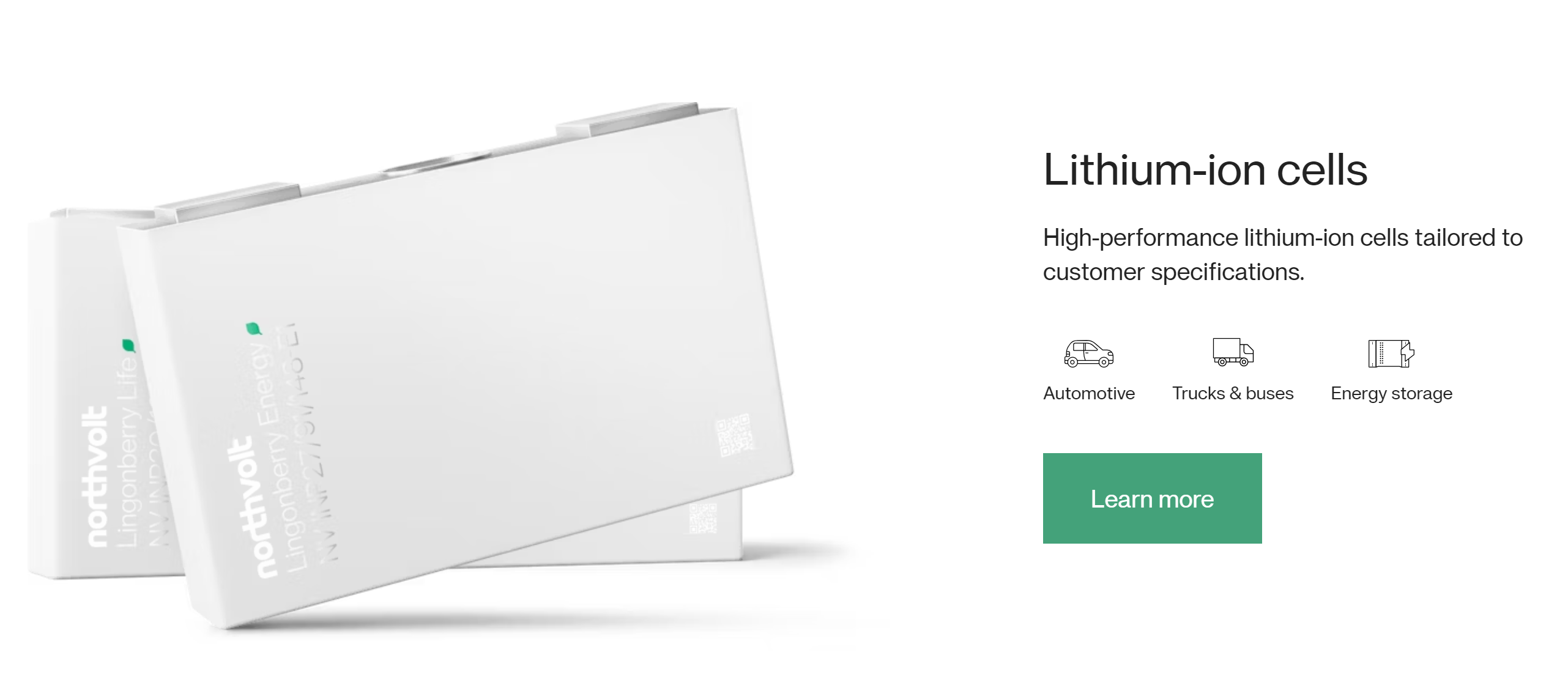
In September, the company announced it would be reducing its workforce by 20% and scaling down its operations, marking a significant shift from its ambitious goals of becoming a vertically integrated battery manufacturer. Originally set to manage everything from material production and battery manufacturing to recycling, Northvolt will now concentrate primarily on large-scale battery cell production.
The Need to Sell Stockpiled Materials
One of the company’s cost-cutting measures involves halting the production of cathode active materials (CAM) at its gigafactory in Skellefteå, Sweden. As a result, materials like nickel sulfate and lithium hydroxide, previously reserved for battery production, are now deemed redundant. According to one source, Northvolt is looking to sell off these materials to raise much-needed cash.
A second source added that the urgency of the sale stems from the relatively short shelf-life of these raw materials. Nickel sulfate and lithium hydroxide both degrade over time, especially as they absorb moisture, which can render them unsuitable for battery manufacturing.
Despite these challenges, Northvolt maintains that it remains committed to a vertically integrated battery strategy. A spokesperson for the company stated, “Since producing our first battery cell at Northvolt Ett in 2021, we have collaborated with external partners for cathode active materials. We do not comment on our overall supply chain strategy, but we continue to push forward with our production goals.”
Financial Pressures and Competition
The potential sale of battery materials underscores the growing financial pressure on Northvolt, which reported a $1.2 billion loss in 2023. In addition, in July 2024, CEO Peter Carlsson admitted that the company had been too aggressive in its expansion plans. This aggressive growth led to production issues, lower-than-expected demand for EVs in Europe, and increased competition from Chinese battery manufacturers.
The company’s financial strain was further highlighted when BMW canceled a $2 billion order earlier this year, citing delays in battery production. While Northvolt has received more than $10 billion in equity and debt financing from major backers such as Volkswagen, Goldman Sachs, and Blackrock, the company has been actively seeking additional funding to address its short-term cash needs.
In September, Northvolt suspended plans for a significant expansion at its Skellefteå factory and filed for bankruptcy protection for the unit in charge of the expansion. The head of Northvolt Ett, its flagship production facility, stepped down shortly after these announcements, raising concerns about the company’s leadership stability.
Urgent Need for Cash and Short-Term Funding
As of this week, Northvolt is in talks with investors and lenders to secure approximately 200 million euros ($218 million) in short-term funding, according to sources close to the matter. This funding is expected to come from a combination of customer pre-orders and loans, as shareholders, customers, and lenders all discuss various forms of financial support.
Truck manufacturer Scania, a major shareholder in Northvolt, is said to be spearheading the talks. However, BMW, which owns a 2.8% stake in the company, is not involved in the current fundraising efforts. A spokesperson for BMW confirmed that the company has no plans to change its investment in Northvolt but declined to comment further.
While Northvolt has made significant progress in raising cash in recent weeks, it is unclear how long the additional funds will sustain the company. A source indicated that the 200 million euros under discussion might not be sufficient for the long-term, but it would provide a temporary financial buffer.
Industry-Wide Implications
Northvolt’s financial struggles are a significant blow to Europe’s broader ambitions of creating a homegrown EV battery industry. The company was once considered a leader in the race to build EV batteries, well ahead of European competitors like Norway’s Morrow Batteries and Freyr, as well as the Automotive Cells Company (ACC), a joint venture between Stellantis and Mercedes-Benz.
Despite Northvolt’s setbacks, a spokesperson for the German economy ministry stated that the company remains committed to building a factory in Heide, Germany, with the help of EU-approved state aid. The spokesperson added, “The current issues are more directly related to Northvolt’s operations in Sweden, and do not affect the Heide project.”
As global demand for EVs has slowed, so has the demand for the lithium and nickel that power their batteries. Lithium hydroxide, once trading at over $80,000 per metric ton in 2022, has now dropped to around $10,000 per ton. Nickel sulfate, used in the production of lithium-ion batteries, remains stable at around $15,000 to $16,000 per ton, but its future demand remains uncertain.
In the coming weeks, Northvolt’s ability to raise funds and sell its surplus materials will be crucial in determining the company’s future and its role in Europe’s EV battery landscape.