Facing the challenge of slowing global electric vehicle market demand, South Korean battery manufacturing giant LG Energy Solution is strategically pivoting toward the Energy Storage System (ESS) market. CEO Kim Dong-myung made this strategic direction clear when speaking to the press on October 30, ahead of the 5th Battery Industry Day hosted by the Korea Battery Industry Association.
Kim stated at the event venue in Gangnam-gu, Seoul: “Due to uncertainties in automotive battery demand caused by various circumstances, we are focusing on the North American ESS market. Next year’s business direction will remain the same.” This statement came against the backdrop of LG Energy Solution’s third-quarter operating profit declining 38.7% year-on-year.
ESS Capacity Expansion Exceeds Expectations
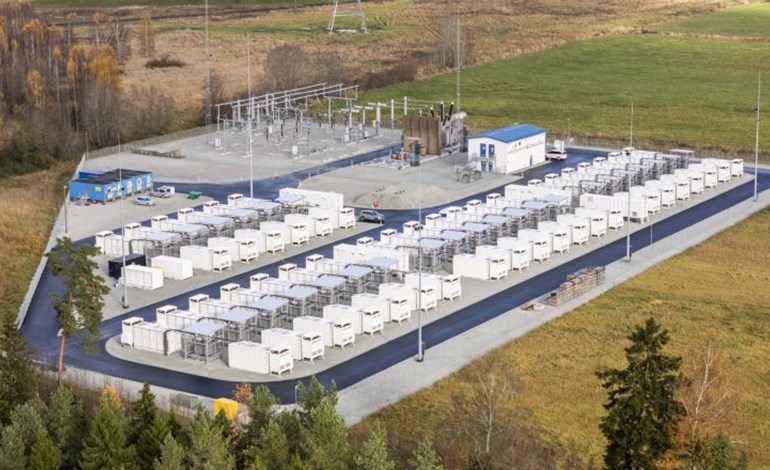
During the third-quarter earnings call held the same day, LG Energy Solution announced plans to increase ESS production capacity to 30 gigawatt-hours (GWh) by the end of next year by additionally converting electric vehicle battery production lines. However, Kim revealed in his interview that global ESS annual capacity could exceed this figure.
“It could exceed what was announced during the earnings call,” Kim said, “This is because we have factories in Poland and China.” This suggests that, in addition to the standalone factory in Holland, Michigan, which began mass production of LFP batteries for ESS in June, electric vehicle battery factories in Wrocław, Poland, and Nanjing, China, could also be converted for ESS use.
CFO and Vice President Lee Chang-sil also hinted during the earnings call that part of the production lines at joint ventures with automakers, including the Stellantis joint venture in Ontario, Canada, could be converted for ESS use.
GM Joint Venture Faces Adjustments
Regarding foreign media reports that General Motors (GM) would halt operations at its Ultium Cells factory—a joint venture with LG Energy Solution—starting January 5 of next year to adjust electric vehicle production capacity, Kim responded: “This is a matter to be decided by the Ultium Cells board, and we are discussing it with GM to ensure smooth progress.”
LG Energy Solution posted third-quarter revenue of KRW 6.88 trillion, down 16.4% year-on-year, with operating profit of KRW 448.3 billion, down 38.7% year-on-year. The company attributed this performance to the EV market growth slowdown but noted quarter-on-quarter improvements through expanded sales to major European automakers, increased production in North America and Indonesia, and substantially growing grid-scale ESS business.
Market Strategy Transformation
To address strong demand momentum in the ESS market, especially in power grids, LG Energy Solution will actively respond to long-term, large-volume projects in North America, leveraging its stable production know-how and local supply capability to create opportunities for generating stable revenue. To enhance competitiveness, the company also plans to launch high-capacity LFP ESS batteries with energy density improved by 20%, along with advanced energy management and system integration software.
The company will start ESS battery production in the U.S. next year and is considering converting EV production lines in response to European market demand. When fully operational, the Arizona manufacturing complex’s average annual production capacity is expected to reach 53 GWh, including 36 GWh of cylindrical batteries and 17 GWh of LFP ESS batteries.
Positive Tariff Negotiations
Commenting on the Korea-U.S. tariff negotiations concluded the previous day, Kim stated: “It is not bad news. We believe we can maintain our competitiveness.”
LG Energy Solution has been actively pursuing ESS deals recently, signing a five-year supply contract worth approximately KRW 1 trillion with Japan’s Omron Corp., and nearing finalization of another deal of similar scale with a major European solar company. In the U.S. market, the company secured ESS contracts worth over KRW 5 trillion with energy companies such as Terra-Gen LLC and Excelsior Energy Capital between November 2024 and March 2025.
As global EV market growth slows, global battery makers are looking to the rapidly expanding ESS sector to diversify revenue streams. LG Energy Solution’s strategic transformation not only reflects changing market conditions but also demonstrates the company’s flexibility and foresight in addressing industry challenges.