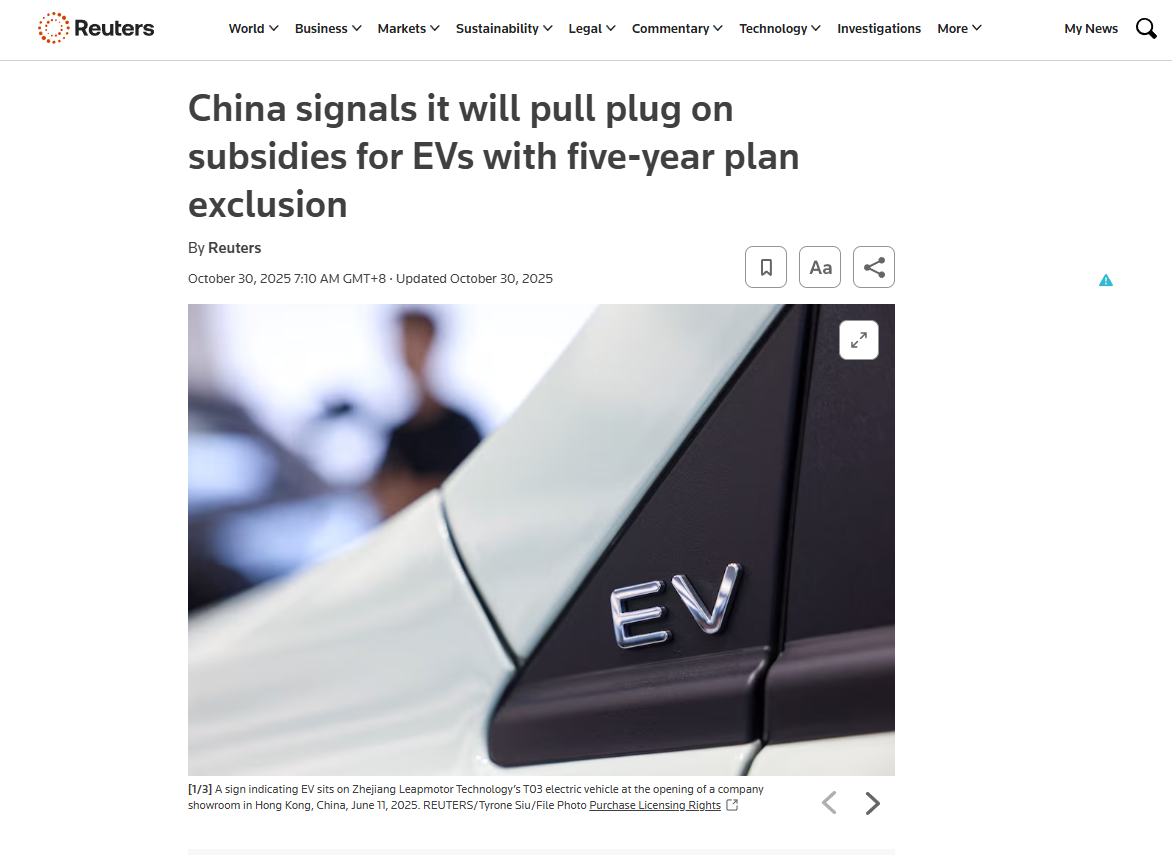
According to recently released policy documents, Chinese policymakers have excluded electric vehicles from the strategic industries list in the 2026-2030 five-year development plan. This marks the first time in over a decade that the EV industry has been removed from the national strategic industries roster, signaling a new phase for China’s electric vehicle sector.
Rationale Behind the Policy Shift
Analysts indicate that this adjustment demonstrates Beijing’s belief that the EV industry has matured and no longer requires the same level of financial support, with future development to be increasingly determined by market forces. According to the above content, Dan Wang, China Director at consultancy Eurasia Group, explicitly stated: “It’s an official acknowledgement that electric vehicles no longer need prioritized policies. Electric vehicle subsidies will fade.”
In the previous three five-year plans, new energy vehicles (NEVs) – including electric vehicles, plug-in hybrids, and fuel cell vehicles – were consistently listed as strategic emerging industries, encouraging Chinese authorities to invest billions of dollars to support automakers in producing EVs and encourage consumers to purchase them. According to statistics, between 2009 and 2022, the Chinese government spent more than 200 billion yuan (approximately $28 billion) on EV subsidies and tax breaks.
Overcapacity Challenges Emerge
This rapid growth and support has also resulted in domestic Chinese brands producing more vehicles than the market can absorb, as the industry strives to meet production targets influenced by government policy rather than consumer demand. According to the document content, data from research firm Jato Dynamics shows that 93 of 169 automakers operating in China have market shares below 0.1%.
According to data disclosed at the China Electric Vehicle 100 Forum in 2025, existing fuel vehicle capacity is at least 30 million units, while the 20 million units of new energy vehicle capacity already built are mostly newly constructed, with oil-to-electric conversion absorbing only 2-3 million units of fuel vehicle capacity . Based on this data, it can be inferred that China’s automotive industry is facing severe structural overcapacity challenges.
Market Competition Will Intensify
According to the document content, Professor Tu Xinquan, Dean of the China Institute for WTO Studies at the University of International Business and Economics, noted: “From the country’s point of view, it is no longer necessary to pay too much attention (to NEVs), or it may lead to greater overcapacity.”
This policy shift means that EV companies must face the reality of more brutal market competition. In the first half of 2025, only 11 of 17 listed Chinese automakers were profitable. Based on this data, it can be inferred that more companies may face elimination in the future.
Accelerated Subsidy Phase-Out Process
Chinese policymakers have stated for years that their ultimate intention was for the industry to stand on its own feet, gradually ending years-long major subsidies and tax break programs for the NEV sector. According to the documents, China ended a national purchase subsidy scheme for EV consumers at the end of 2022 and intends to phase out purchase tax rebates by 2027, although some Chinese auto industry associations are lobbying for the latter to be done at a gentler pace.
Companies Need to Find New Pathways
According to the above content, Cui Dongshu, Secretary-General of China’s Passenger Car Association, stated that the plan indicated Chinese policymakers would take more targeted measures versus the previous broad approach, to wean the industry off government support. Analysts predict that the government will press EV makers to focus more on delivering more innovative products and curb production of lower-quality vehicles.
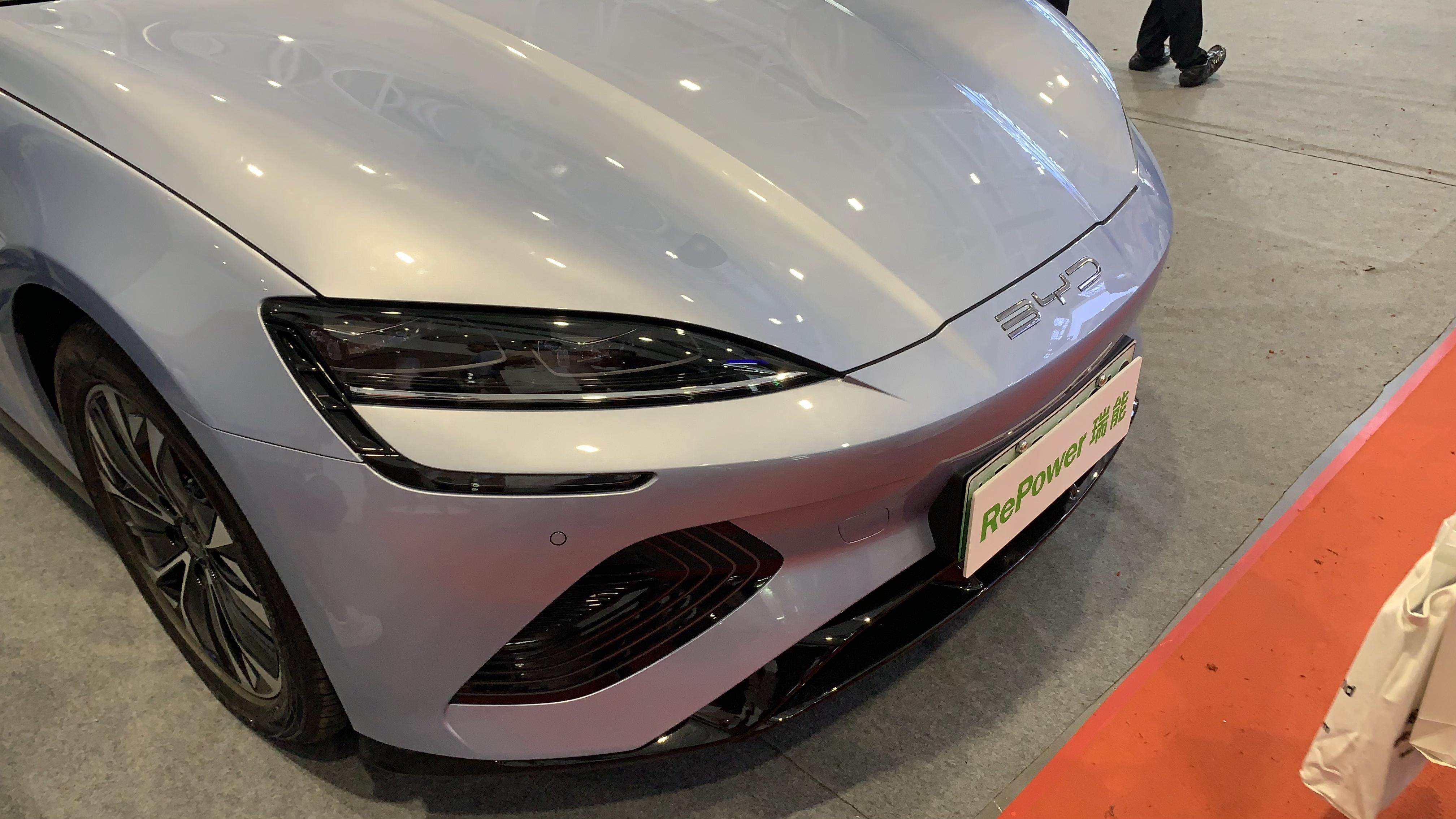
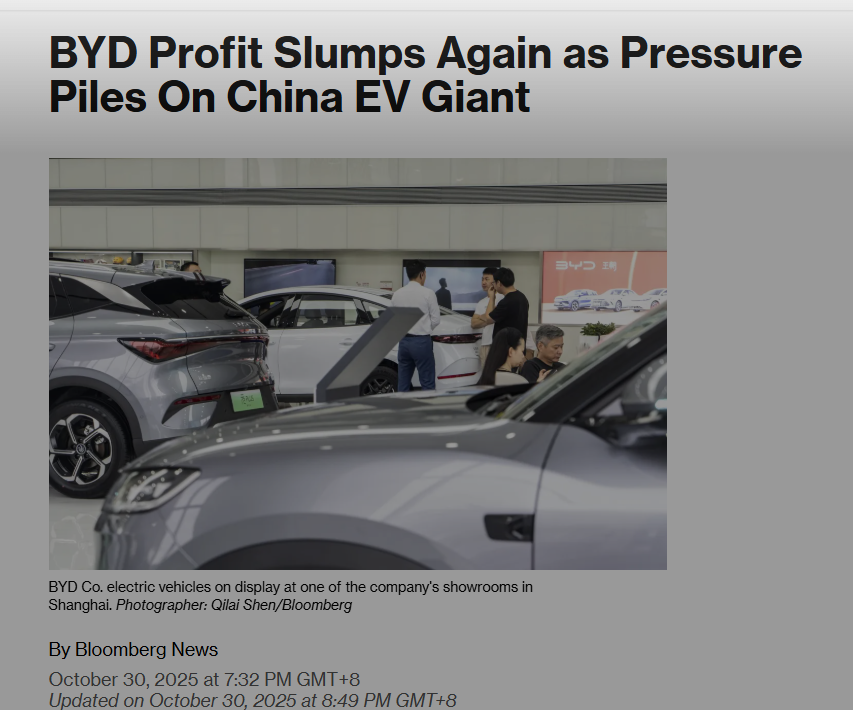
Shaochen Wang, a research analyst at Counterpoint, pointed out that automakers would need to build sufficiently prominent core strengths to gain a foothold in the Chinese market, the world’s largest. For instance, brands like BYD and Leapmotor have strengthened their cost advantages by enhancing supply chain integration capabilities and launched more cost-effective products; meanwhile, Xiaomi and brands under HIMA (Huawei Intelligent Mobility Alliance) have attracted consumers with their strong brand influence and leading intelligent features.
Industry Importance Remains High
According to the document content, an anonymous Chinese policy adviser emphasized that EVs not being classified as an emerging strategic industry “is not to say they’re not important — they absolutely are. Just look at our exports, the source of profits for the entire auto sector, the boost to the industrial chain, and our global leadership. NEVs are undoubtedly important.”
Based on this content, it can be inferred that the Chinese government’s move does not represent abandonment of the EV industry, but rather a reallocation of resources to other technology areas requiring breakthroughs, while allowing the already mature EV industry to face market testing. According to predictions by Ouyang Minggao, academician of the Chinese Academy of Sciences, the NEV market share is expected to exceed 40% in 2025 and surpass 50% in 2026, gradually becoming the dominant force in the automotive market.
This policy adjustment marks a major transition for China’s EV industry from government-led to market-driven development, with the sector entering a new phase of survival of the fittest. Whether companies can survive and thrive in this transformation will depend on their technological innovation capabilities, cost control levels, and market competitiveness.