ION Storage Systems, a frontrunner in next-generation solid-state batteries, has made a decisive move toward mass commercialization with its recent investment in an advanced ceramic sintering furnace. The furnace, located at the company’s Beltsville, Maryland facility, will increase ION’s annual ceramic production capacity by nearly 1,000 times, giving it the infrastructure to scale to hundreds of megawatt-hours (MWh) in future production. This strategic investment marks a significant inflection point for the company, which has been building a foundation to meet the fast-growing demands of energy-hungry industries such as consumer electronics, electric vehicles (EVs), aerospace, and grid-level energy storage technology.
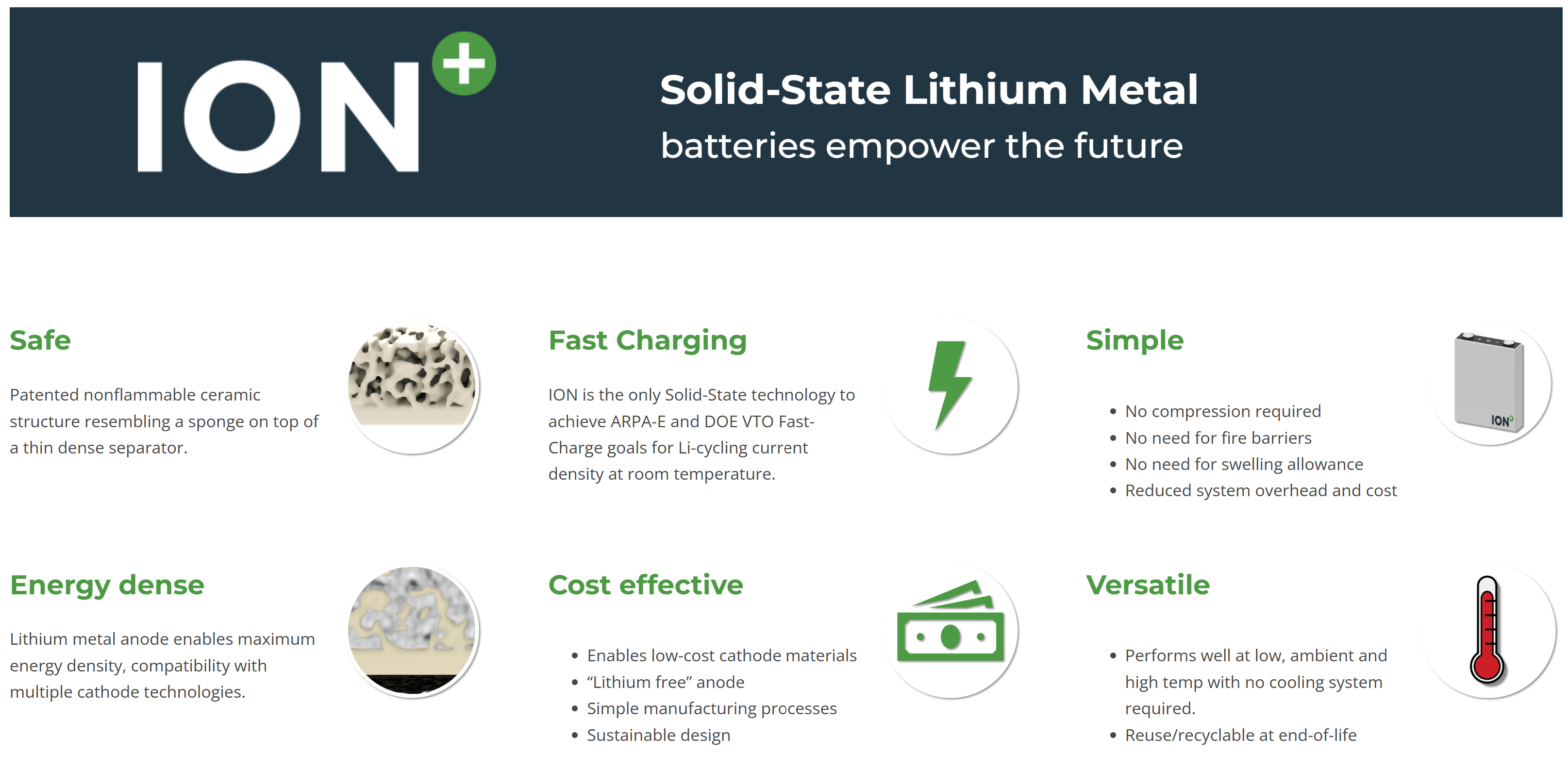
At the core of ION’s innovation lies its proprietary ceramic electrolyte, which enables a compressionless, anodeless, and three-dimensional (3D) architecture. This architecture represents a paradigm shift from conventional solid-state battery designs that require external pressure to maintain contact between battery layers. ION’s approach eliminates the traditional limitations associated with high-pressure packaging, making its solid-state batteries safer, more scalable, and easier to integrate into a wide variety of form factors.
Unlocking Scalable Production Capabilities
The newly installed pilot sintering furnace is more than a piece of industrial equipment—it is a catalyst for scaling up ION’s patented solid-state battery platform. Sintering, a high-temperature thermal process essential for densifying and strengthening ceramic materials, is critical to producing the high-quality ceramic electrolytes at the heart of ION’s solid-state battery cells.
Dr. Greg Hitz, Co-Founder and Chief Technology Officer of ION Storage Systems, emphasized the importance of this investment:
“I am excited for our new sintering furnace, as it gives us a clear path to reach commercial scale as well as serve as the launchpad for future expansion,” said Hitz. “We will have the infrastructure in place to deliver our current footprint as well as expand to large-format solid-state batteries, accelerating our ability to meet growing demand from OEMs, integrators, and government partners across market segments like consumer electronics and EV.”
This furnace not only increases throughput but also allows for precise control over sintering variables like temperature gradients and dwell times. These refinements are crucial for maintaining consistency in the ceramic microstructure and achieving the performance metrics demanded by high-performance battery cells.
The Technology Behind the Scale-Up
ION’s solid-state battery architecture is a key differentiator in a crowded market. Traditional solid-state batteries typically employ pressure-assisted assembly methods, where external compression is used to ensure contact between the solid electrolyte and electrodes. This method complicates manufacturing, limits flexibility in cell design, and introduces safety risks related to mechanical stress and thermal instability.
In contrast, ION’s compression-free design allows for modular stacking of battery cells without compromising performance. This not only simplifies the assembly process but also enhances the safety profile of the batteries by reducing the risk of mechanical failure and short circuits. By removing the anode and adopting a 3D ceramic structure, ION achieves improved energy density, thermal stability, and longevity—key performance attributes in modern battery applications.
The new furnace is specifically tailored to optimize these unique structural requirements. It will help ION fine-tune the microstructural properties of its ceramic components, such as grain size, porosity, and mechanical strength, ensuring consistent output as the company scales.
A Platform for Diverse Markets
ION’s battery platform is designed with flexibility and manufacturability in mind, making it ideal for a broad range of markets. Whether it’s powering next-generation smartphones, enabling lightweight aerospace applications, or providing resilient grid storage, ION’s ceramic electrolyte platform stands out due to its anodeless structure and modular format.
The scalable infrastructure introduced by the new pilot furnace supports rapid prototyping and volume manufacturing for these diverse use cases. The system is also designed for adaptability, allowing ION to develop and validate large-format solid-state battery cells in response to the surging demand from the electric vehicle sector.
Additionally, the investment supports ION’s ongoing customer sampling program. As more OEMs and integrators express interest in next-gen battery chemistries, ION will be better positioned to deliver sample cells for validation, pilot programs, and early-stage integration.
Commercialization Roadmap and Industry Impact
The sintering furnace installation follows the successful production of multi-layer solid-state battery cells on ION’s semi-automated pilot line—a critical milestone validating the manufacturability of its design. These multi-layer cells represent the next step in achieving commercial-grade battery packs capable of outperforming traditional lithium-ion technology in energy density, lifecycle, and safety.
Dr. Hitz commented further:
“As we continue to prove out both performance and scalability, this new production capability will allow us to meet our customers’ demand head-on. It’s the next step in our mission to power a limitless future with long-lasting, safe, and practical batteries.”
By investing in pilot-scale production today, ION is creating a foundation that enables fast transition into full-scale gigafactory operations tomorrow. The modular nature of its architecture and the scalability of its manufacturing process give the company a competitive edge in meeting the evolving requirements of commercial and government customers alike.
Moreover, ION’s progress is aligned with global efforts to develop safer and more sustainable energy storage systems. Solid-state batteries have long been considered the “holy grail” of battery technologies due to their non-flammable electrolytes and potential for high energy densities. ION’s developments bring this vision closer to commercial reality.
Looking Ahead
ION’s sintering furnace is a bold declaration of intent in a competitive landscape where innovation and scalability often determine long-term viability. With its ceramic solid-state platform gaining momentum, the company is poised to play a pivotal role in the transition to cleaner, safer, and more efficient battery systems.
As the demand for solid-state batteries grows, fueled by electrification and decarbonization efforts across the globe, ION Storage Systems is well-positioned to emerge as a leader—not just in battery innovation, but in reliable, scalable, and forward-looking battery manufacturing scale-up.