According to insider information, Tesla is planning to launch four versions of its 4680 battery cells featuring dry-coated cathodes, each designed for different purposes and models, with a market release anticipated by 2026.
The 4680 cylindrical cell with dry-coated electrodes was first presented during Tesla’s Battery Day in 2020. The first Tesla production vehicles featuring 4680 cylindrical cells are now available in the USA, although they still utilize conventional wet-coated anodes and cathodes. For instance, the Cybertruck is reported to have a hybrid variant with a dry-coated anode and wet-coated cathode. Recently, there have been reports that Tesla aims to mass-produce its first 4680 cylindrical cells with dry-coated electrodes before the end of 2024, using them in customer vehicles. The first of these cells has already been tested in a prototype Cybertruck.
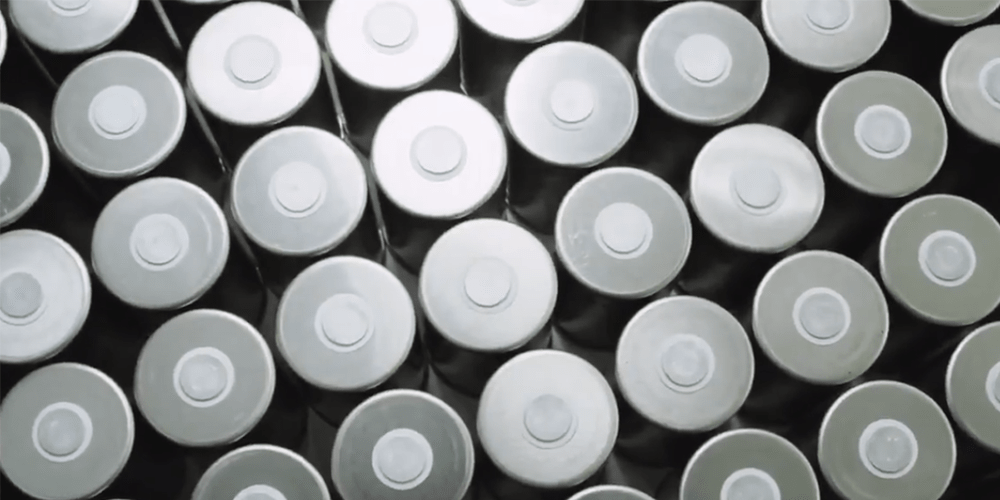
The portal The Information has now learned additional details about the fully dry-coated versions of the 4680 cylindrical cells (46mm diameter, 80mm height). According to the report, four variants are planned, codenamed NC05, NC20, NC30, and NC50, each designed for different applications.
The NC05 is described as the “workhorse” of the battery family. This variant is expected to be used in the upcoming Robotaxi (scheduled for presentation on October 10), as well as in the Cybertruck and Semi. This suggests that the cell is designed for a long service life. In comparison, the NC20 is expected to deliver more energy and will be used in another drive variant of the Cybertruck, an e-SUV, and future Tesla models.
According to The Information, the two premium versions, NC30 and NC50, will incorporate silicon components in the anode—this addition of silicon enhances the battery’s properties compared to pure graphite anodes. There is discussion of an unspecified mixture of silicon and carbon. The NC30 is intended for the Cybertruck and a sedan, while the NC50 is designed for performance vehicles, such as the second-generation Tesla Roadster, should it eventually hit the market.
Until now, battery electrodes have been coated using the wet process. In this method, a powdered mixture of active materials is combined with solvents and other chemicals to form a paste, which is then thinly applied to a carrier film. In the subsequent step, the electrodes are dried in large ovens, which is both energy-intensive and costly. Thus, the liquid is only required for the application step. With dry coating, this is no longer necessary, eliminating the need for expensive ovens. This change not only reduces energy costs in battery production but also minimizes the space required for manufacturing. Since these steps in battery production occur in specialized clean rooms with high-precision climate control, reducing the size of these clean rooms can also significantly decrease construction and operational costs.
While this process seems straightforward in theory, development has encountered challenges. In the summer of 2024, it was noted that the cells had “not yet reached the performance and cost levels Tesla had hoped for.” At that time, The Information reported that Musk had instructed the battery team to reduce costs by the end of the year and to develop “one of the most important innovations” by then—likely referring to the dry coating of the cathode.
The 4680 dry-coated batteries from Tesla are expected to enhance the energy density and performance of electric vehicles while reducing production costs, further solidifying Tesla’s leadership position in the EV market.