Introduction: The Role of Batteries in Electric Vehicles
In the realm of electric vehicles (EVs), the battery is often considered the heart of the vehicle. It determines the range, charging time, and overall efficiency of the car. However, despite their importance, details about battery design and composition are rarely disclosed by manufacturers. This lack of transparency has led to curiosity about how leading EV brands like Tesla and BYD approach battery technology.
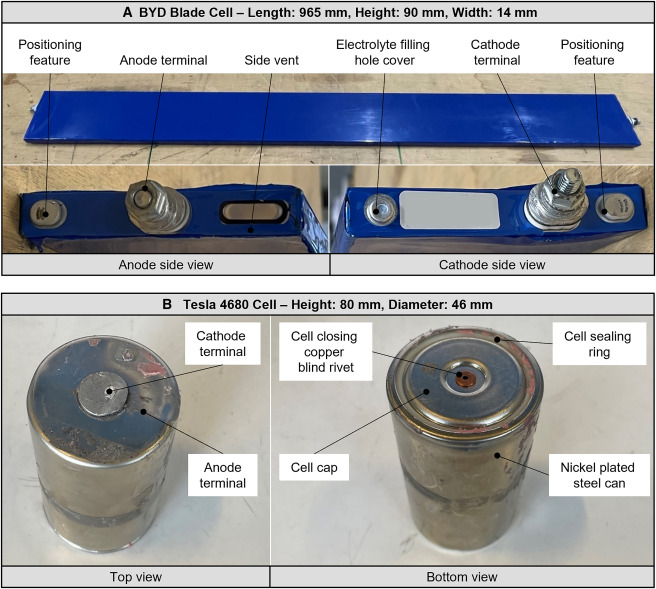
In a recent study conducted by engineers at RWTH Aachen University in Germany, researchers decided to delve into the intricacies of battery design by dissecting batteries from Tesla and BYD. Their findings revealed significant differences in how these two industry giants approach battery technology, offering valuable insights into their unique strategies for optimizing performance and efficiency.
The Study: Comparing Tesla and BYD Batteries
The study focused on two specific battery cells: the Tesla 4680 cell and BYD’s Blade Cell. Both batteries were analyzed for material composition, electrical performance, thermal management, and manufacturing processes. Here’s a breakdown of what was discovered:
1. Material Composition
One of the most surprising findings was that both batteries did not contain silicon in their anodes, despite its reputation as a key material for improving energy density. This omission suggests that Tesla and BYD are focusing on other strategies to enhance battery performance rather than relying solely on silicon.
- Tesla 4680 Cell: Known for its cylindrical design, the Tesla 4680 cell has been optimized for high energy density and fast charging. The study revealed that Tesla’s approach involves a novel binder formulation to hold active materials together, which contributes to its superior performance.
- BYD Blade Cell: BYD’s Blade Cell, on the other hand, uses a unique electrode stack design with laminated separators. This method ensures better structural integrity and thermal management, making it easier to handle at the pack level.
2. Charging and Discharging Rates
The study compared the charging and discharging rates of both batteries relative to their maximum capacity. A key difference was observed in how each battery managed heat during fast charging:
- Tesla 4680 Cell: The Tesla cell generated higher specific heating per volume, indicating that it may require more advanced thermal management systems to prevent overheating.
- BYD Blade Cell: In contrast, the BYD cell exhibited approximately half the specific heating of the Tesla cell. This suggests that BYD’s design inherently facilitates better thermal control, making it easier to manage at the battery pack level.
3. Manufacturing and Design
The study also shed light on the manufacturing processes and design philosophies behind each battery:
- Tesla: Tesla’s “tabless” design eliminates the need for conductive tabs, reducing internal resistance and improving energy transfer. This design choice is indicative of Tesla’s focus on maximizing efficiency and performance.
- BYD: BYD’s Blade Cell integrates its own cathode, anode, and electrolyte into a single structure, which simplifies assembly and reduces production costs. This approach reflects BYD’s emphasis on cost-effectiveness and scalability.
Key Findings: Tesla vs BYD Battery Designs
The research findings highlight the distinct approaches taken by Tesla and BYD in their battery designs:
- Performance-Oriented vs Cost-Efficient:
Tesla prioritizes high energy density and fast charging, while BYD focuses on volume efficiency and lower costs. This difference is evident in their respective cell designs and manufacturing processes. - Thermal Management:
BYD’s design inherently provides better thermal management, as evidenced by its lower specific heating during charging. In contrast, Tesla’s high-performance 4680 cell requires more robust thermal systems to manage heat. - Material Selection and Formulation:
Both companies have chosen different paths in material selection and formulation. While Tesla innovates with novel binders, BYD relies on its electrode stack design for structural integrity.
The Future of Battery Technology
As the EV industry continues to evolve, battery technology will play a pivotal role in determining the success of electric vehicles. The study by RWTH Aachen University provides valuable insights into how leading manufacturers like Tesla and BYD are innovating in this space:
- Sustainability: With increasing focus on sustainable energy storage, companies are exploring alternative materials and manufacturing techniques to reduce environmental impact.
- Cost Reduction: BYD’s approach to cost-efficient battery design highlights the importance of affordability in making EVs accessible to a broader audience.
- Performance Optimization: Tesla’s emphasis on high-performance batteries underscores the need for faster charging times and longer ranges to compete with traditional internal combustion engines.
Conclusion: A Glimpse into the Future of EV Batteries
The study conducted by RWTH Aachen University offers a fascinating glimpse into the contrasting approaches taken by Tesla and BYD in their battery designs. While Tesla focuses on cutting-edge technology for maximum performance, BYD prioritizes cost-effectiveness and scalability. These differences not only shape the current landscape of electric vehicles but also hint at future developments in battery technology.
As researchers and manufacturers continue to innovate, we can expect to see further advancements in battery design that address challenges like thermal management, energy density, and sustainability. Ultimately, these improvements will pave the way for more efficient, affordable, and environmentally friendly electric vehicles, driving the global shift toward sustainable transportation.