German-Australian joint venture Vulcan Energy has received approval from the city of Landau, Germany, to construct its commercial Lithium Extraction Plant (LEP) in the D12 industrial zone, marking a significant milestone as Europe’s first large-scale geothermal brine lithium extraction project enters the construction phase. The first phase of the project is planned to produce 24,000 tonnes of battery-grade lithium hydroxide annually, sufficient to meet the battery needs of approximately 500,000 electric vehicles.
World’s First Zero-Carbon Lithium Production Technology
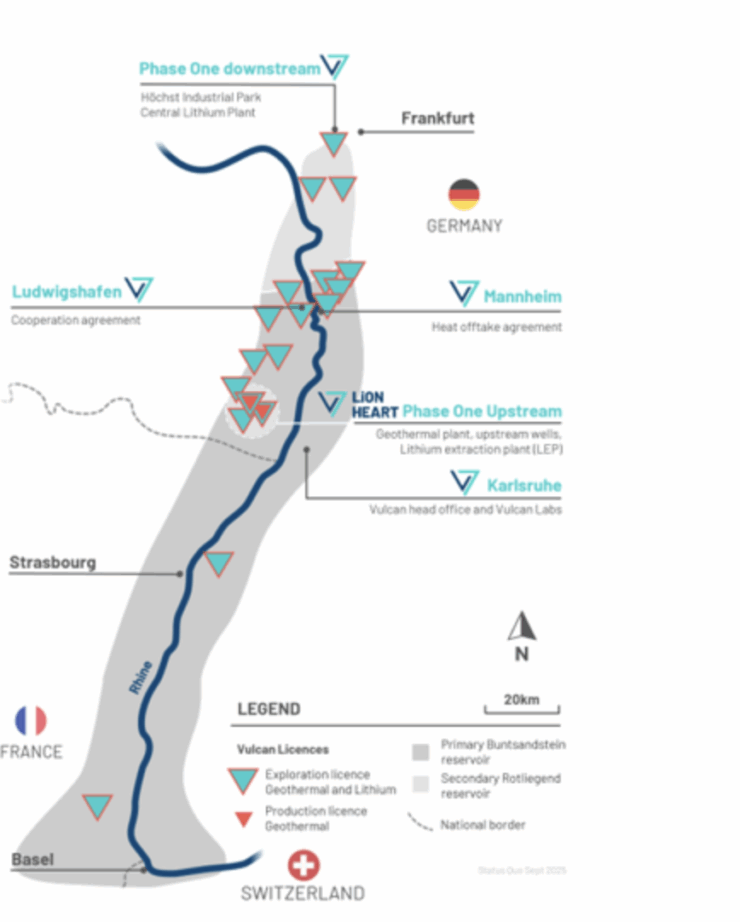
Vulcan Energy’s innovation lies in combining geothermal power generation with lithium extraction. The company extracts lithium from geothermal brine in Germany’s Upper Rhine Valley region, considered Europe’s largest geothermal lithium resource. The entire production process uses an intermediate heat exchanger system where heat from the geothermal brine is first transferred through heat exchangers to a closed-loop industrial water system, used for district heating and Organic Rankine Cycle (ORC) power generation. The cooled lithium-rich brine then enters the lithium extraction plant, where lithium is extracted using the company’s proprietary VULSORB® adsorbent technology. The lithium-depleted brine is then reinjected into the underground reservoir, completing the cycle.
According to Vulcan Energy, the process is carbon neutral over its life cycle and burns zero fossil fuels during lithium production. The extracted lithium chloride solution will be transported to the Central Lithium Plant (CLP) at the Industrial Park Höchst in Frankfurt for further processing into battery-grade lithium hydroxide.
Investment Scale and Government Support
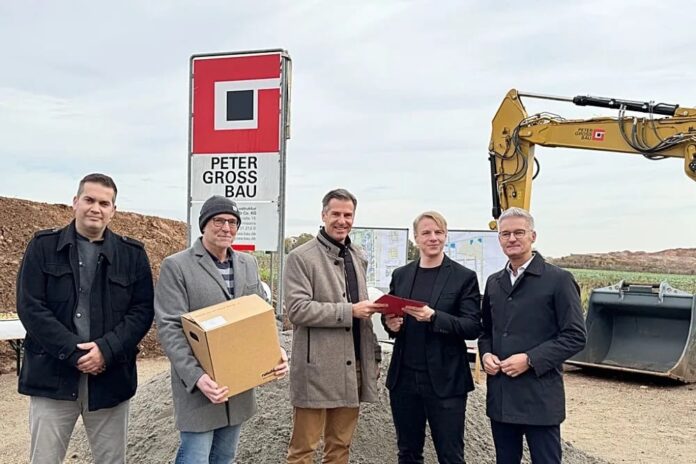
The total investment for the two facilities in Landau and Höchst is estimated at €690 million. The German federal government, along with the states of Rhineland-Palatinate and Hesse, is contributing €103.6 million in funding through the EU’s “Temporary Crisis and Transition Framework” under the “Resilience and Sustainability of the Battery Cell Manufacturing Ecosystem” program. In March 2025, the project was selected by the EU as one of 47 strategic projects under the Critical Raw Materials Act.
Four Major Customers Secured
To secure project financing, Vulcan Energy has signed long-term supply agreements with four major customers. The latest customer is mining giant Glencore, with an eight-year contract for 36,000 to 44,000 tonnes of lithium hydroxide.
The three previously signed customers include: LG Energy Solution will receive 31,000 tonnes over six years; Belgian materials technology company Umicore will receive 23,000 tonnes over the same period; and automaker Stellantis has the largest contract, securing 128,000 tonnes of lithium hydroxide over ten years.
Technology Validation and Commercialization Progress
Vulcan Energy already operates 1:50 scale pilot facilities in both Landau and Höchst. In April 2024, the Lithium Extraction Optimisation Plant (LEOP) in Landau successfully filtered lithium chloride from geothermal brine for the first time. In November 2024, the Central Lithium Electrolysis Optimisation Plant (CLEOP) at the Höchst industrial park processed this precursor material into battery-grade lithium hydroxide for the first time.
All major construction permits are now in place, including the building permits for the 30MW geothermal power plant and electrical substation received in June 2025, and land acquisition approval from the City of Landau received in September 2025. The company plans to commence construction after finalizing project financing in Q4 2025.
Strategic Significance
This project holds significant strategic importance for the European battery industry supply chain. The EU has been committed to reducing dependence on imported critical raw materials and establishing a domestic supply chain. Vulcan Energy’s Managing Director and CEO, Cris Moreno, stated that the project will provide a sustainable, domestic, and cost-effective source of lithium for the European battery and automotive industries, supporting the EU’s goal of reducing critical raw material dependencies.
According to the plan, the Landau facility will have the capacity to produce 275 GWh of power and 560 GWh of heat annually in addition to lithium products. The planned modular construction approach will lay the foundation for future expansion phases across the Upper Rhine Valley Brine Field.