According to a report by the Korea Economic Daily on November 3, American electric vehicle manufacturer Tesla has reached a major supply agreement with South Korea’s Samsung SDI to procure over 3 trillion won (approximately $2.11 billion) worth of energy storage system batteries over the next three years. This news has attracted widespread industry attention, marking a crucial step in Tesla’s supply chain expansion for its energy storage business.
Focus on Energy Storage, Not Electric Vehicles
Contrary to market expectations, the batteries covered in this agreement will not be used for Tesla’s electric vehicle production lines. According to reports, Samsung SDI will supply batteries specifically for Tesla’s energy storage system products, including the utility-scale Megapack large-scale storage units and the Powerwall storage systems designed for residential and commercial users.
This positioning highlights Tesla’s strategic emphasis on its energy storage business. Tesla’s energy storage division has experienced rapid growth in recent years, with Megapack deployment rates even exceeding electric vehicle delivery growth. Multiple countries and regions have signed long-term energy storage project contracts with Tesla, including Australia, Japan, Ireland, and California in the United States.
Official Statements Remain Cautious
Although the information originates from an unnamed source in South Korea’s battery industry, official statements from both parties have been relatively cautious. Samsung SDI responded to media inquiries stating that “nothing has been decided yet,” while Tesla has not commented on the news. Such responses are common before formal announcements of major commercial agreements.
Industry analysts note that if the agreement is finalized, this would be the first large-scale supply collaboration between Samsung SDI and Tesla, and would also become one of Samsung SDI’s largest energy storage system orders to date.
Accelerating Supply Chain Diversification Strategy
Behind this cooperation agreement lies Tesla’s ongoing supply chain diversification strategy. Currently, Tesla’s energy storage products primarily rely on Chinese suppliers, including batteries from CATL and BYD. However, with U.S. tariffs imposed on Chinese products, Tesla urgently needs to expand its non-Chinese supplier base.
In addition to Samsung SDI, Tesla has previously signed a major lithium iron phosphate (LFP) battery supply agreement with another Korean battery manufacturer, LG Energy Solution, for energy storage systems. Meanwhile, Tesla is also advancing its own LFP battery manufacturing capabilities in the United States to partially offset its dependence on Chinese supply.
Samsung SDI’s Technical Capabilities
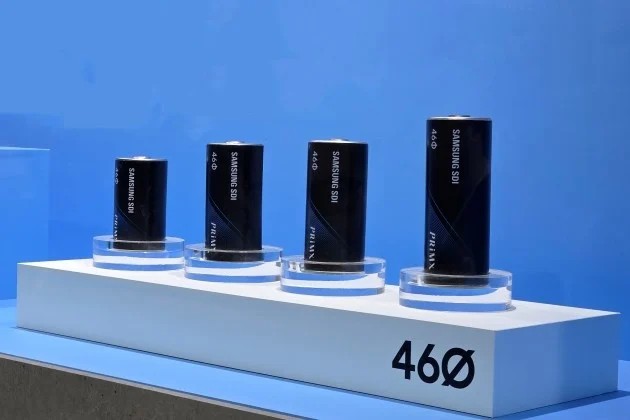
As one of the world’s major battery manufacturers, Samsung SDI already supplies batteries to several automakers including BMW, Stellantis, and Rivian. The company’s high-density lithium-ion batteries feature strong safety performance and long service life, earning a solid reputation in the industry.
Notably, Samsung SDI is accelerating its business expansion from electric vehicle batteries into the renewable energy sector. The company is also developing next-generation solid-state battery technology, which could potentially replace current lithium-ion batteries in the future.
According to reports, Samsung SDI plans to convert some of its LFP battery production lines at its joint venture facility with Stellantis in Indiana, USA, for ESS production, with an expected annual capacity of approximately 10 gigawatt-hours of energy storage batteries for Tesla.
Explosive Growth in the Energy Storage Market
Tesla CEO Elon Musk has repeatedly stated that Tesla’s energy business could eventually surpass its automotive business in scale. As countries worldwide advance their carbon neutrality goals, the intermittent nature of renewable energy generation has highlighted the importance of large-scale energy storage systems—solar power cannot generate electricity at night, and wind power depends on wind conditions, making battery storage systems key to solving this problem.
Data from the International Energy Agency indicates that to achieve net-zero emissions targets, global grid-scale battery storage capacity needs to grow at least 50-fold by 2040. Against this backdrop, Tesla’s energy storage business faces enormous market opportunities.
According to industry insiders, the main bottleneck for Tesla’s energy storage business is not insufficient demand, but rather limited battery supply. This makes energy storage Tesla’s only truly production-constrained business segment. The collaboration with Samsung SDI will help Tesla break through capacity constraints and accelerate production expansion at its California Megafactory and new Shanghai facility.
Market Reaction and Investment Value
Following the news, stock prices for both Tesla and Samsung SDI rose. For Tesla, this deal means improved supply chain stability and deepened business diversification; for Samsung SDI, it means securing a long-term stable major customer and consolidating its global position in competition with LG Energy Solution and CATL.
Investment analysts believe that battery storage companies are receiving market attention similar to artificial intelligence companies, as both are core components of future technology infrastructure. With increasing Tesla orders, Samsung SDI is expected to achieve stable revenue growth.
Although the deal has not yet received final official confirmation, the industry widely believes that this collaboration holds strategic significance for both parties and reflects how battery storage is moving from a supporting role to center stage in the global clean energy transition.