A new study commissioned by Breakthrough Energy has analyzed Spain’s energy sector and highlighted that more than 5% of the country’s renewable energy generation could face economic curtailment between 2025 and 2030. Economic curtailment occurs when the running costs of generators exceed the wholesale electricity market prices payable for their power sold, leading operators to reduce power output or risk losing money.
Spain has set an ambitious goal of having renewables account for 81% of total electricity generation by 2030, almost double the 42% share it recorded in 2022. This would require a significant increase in installed renewables capacity, with a target of 76GW of solar PV capacity and 61GW of wind by the end of the decade. The country also aims to increase its energy storage capacity from 9GW to 18GW and expand its electrolysers capacity from 4GW to 10GW.
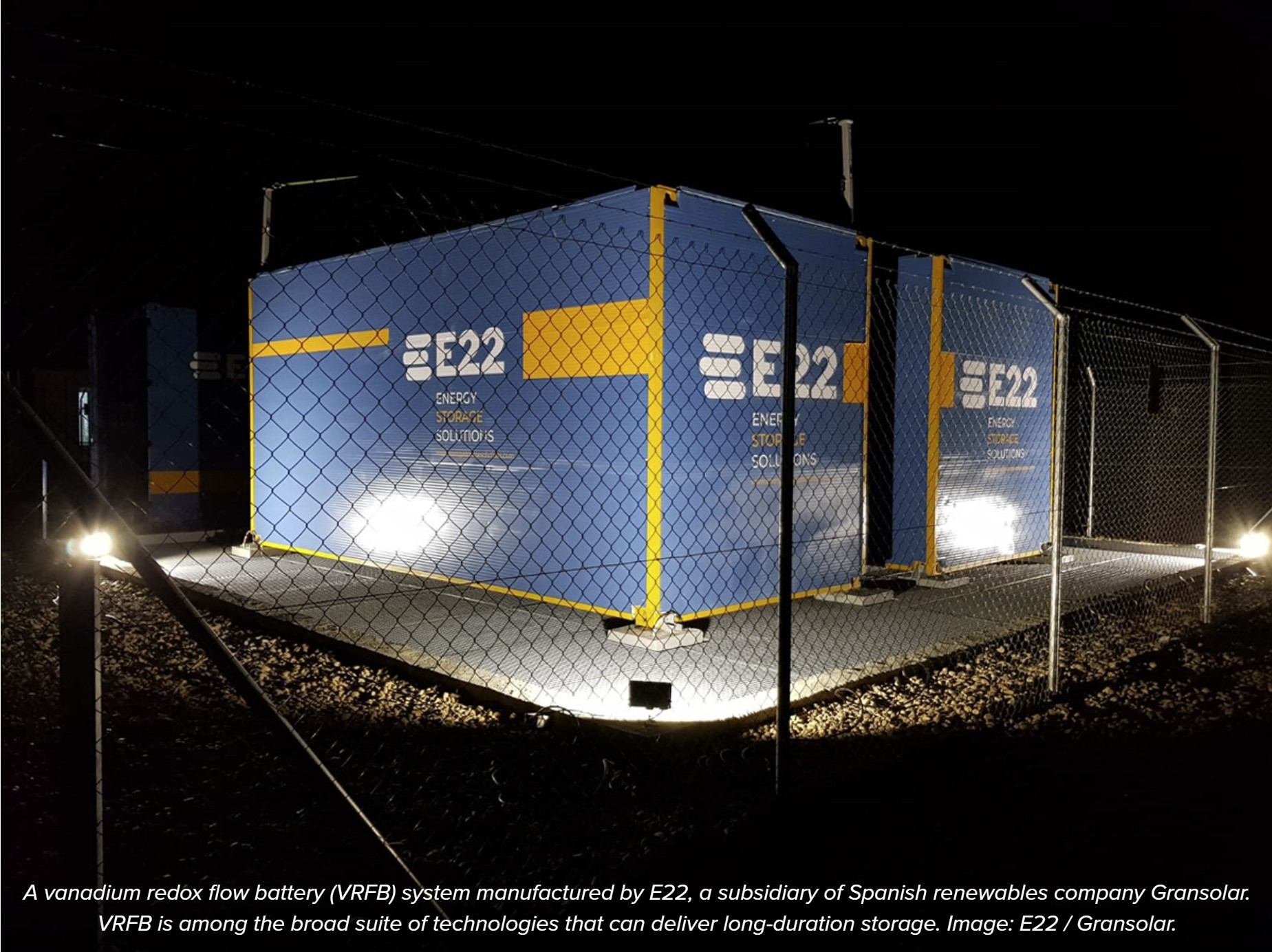
The study conducted by Aurora Energy Research suggests that long-duration energy storage (LDES) could be a crucial solution to reducing the need for economic curtailment and achieving Spain’s renewable energy goals. LDES technologies, which have a storage and discharge duration of between eight hours and four days, could help balance the growth of renewable energy capacity on the grid and eliminate economic curtailment by 2035. The study also shows that 15GW of LDES could offer a cost advantage of around €1 billion between 2025 and 2050.
However, LDES technologies currently face challenges in finding a path to market in Spain, which is a common barrier in many regions. The country’s current energy storage target of 18GW by 2030 does not include consideration of long-duration needs. One argument against LDES is that many of the technologies are still more expensive than shorter duration lithium-ion batteries. However, Aurora Energy Research believes that cost declines for LDES can be achieved with the scale-up of manufacturing and deployment.
To support the deployment of LDES, the study emphasizes the need for a comprehensive policy and regulatory framework in Spain. It suggests that such a framework is necessary to avoid curtailment of renewable generation, provide key grid services, and facilitate the decarbonization of the industrial sector. The study also cites similar conclusions from studies in the UK and other territories, highlighting the importance of market and regulatory support for LDES technologies.
In conclusion, the analysis of Spain’s energy sector indicates that long-duration energy storage could be a vital tool in achieving the country’s ambitious renewable energy targets and reducing economic curtailment. However, to fully realize the potential of LDES, Spain needs to establish a supportive policy and regulatory framework that enables its deployment.
According to a recent study commissioned by Breakthrough Energy, Spain’s energy sector is facing the challenge of economic curtailment for more than 5% of its renewable energy generation between 2025 and 2030. Economic curtailment occurs when the operational costs of renewable generators exceed the market prices for the electricity they produce, leading to a reduction in power output or financial losses.
In order to address this issue, Spain has set ambitious renewable energy targets, aiming for renewables to account for 81% of total electricity generation by 2030, nearly double the 42% share recorded in 2022. To achieve this, the country plans to increase its installed capacity of solar PV to 76GW and wind power to 61GW by the end of the decade. Additionally, Spain aims to expand its energy storage capacity from 9GW to 18GW and electrolysers capacity from 4GW to 10GW.
The study conducted by Aurora Energy Research suggests that long-duration energy storage (LDES) could play a crucial role in mitigating economic curtailment and facilitating the achievement of Spain’s renewable energy goals. LDES technologies, which have storage and discharge durations ranging from eight hours to four days, can help balance the intermittent nature of renewable energy generation and eliminate economic curtailment by 2035. The study indicates that deploying 15GW of LDES could result in a cost advantage of approximately €1 billion between 2025 and 2050.
However, the adoption of LDES technologies in Spain faces challenges, as there is currently no clear path to market for these technologies. The country’s energy storage target of 18GW by 2030 does not account for the long-duration storage needs. One argument against LDES is the perceived higher costs compared to shorter duration lithium-ion batteries. Nevertheless, the study suggests that with the scaling up of manufacturing and deployment, the costs of LDES can be reduced, similar to the cost declines observed in solar PV and battery storage.
To enable the deployment of LDES, the study emphasizes the need for a comprehensive policy and regulatory framework in Spain. Such a framework would not only help avoid the curtailment of renewable generation but also enable LDES to provide valuable grid services and support the decarbonization of the industrial sector at relatively low costs. Similar conclusions have been drawn in studies conducted in the UK and other regions, highlighting the importance of market and regulatory support for LDES technologies.
In conclusion, the analysis of Spain’s energy sector underscores the significance of long-duration energy storage in achieving the country’s ambitious renewable energy targets and addressing economic curtailment. However, to fully unlock the potential of LDES, Spain needs to establish a supportive policy and regulatory framework that facilitates the deployment and integration of these technologies.