The European Network of Transmission System Operators for Electricity (ENTSO-E) has published its Phase II technical report on grid-forming requirements, marking a pivotal moment for Europe’s electricity grid modernization. The comprehensive 79-page document lays the technical foundation for the upcoming Network Code on Requirements for Generators (NC RfG 2.0), which will introduce mandatory grid-forming obligations for new storage and renewable plants rated above 1 MW.
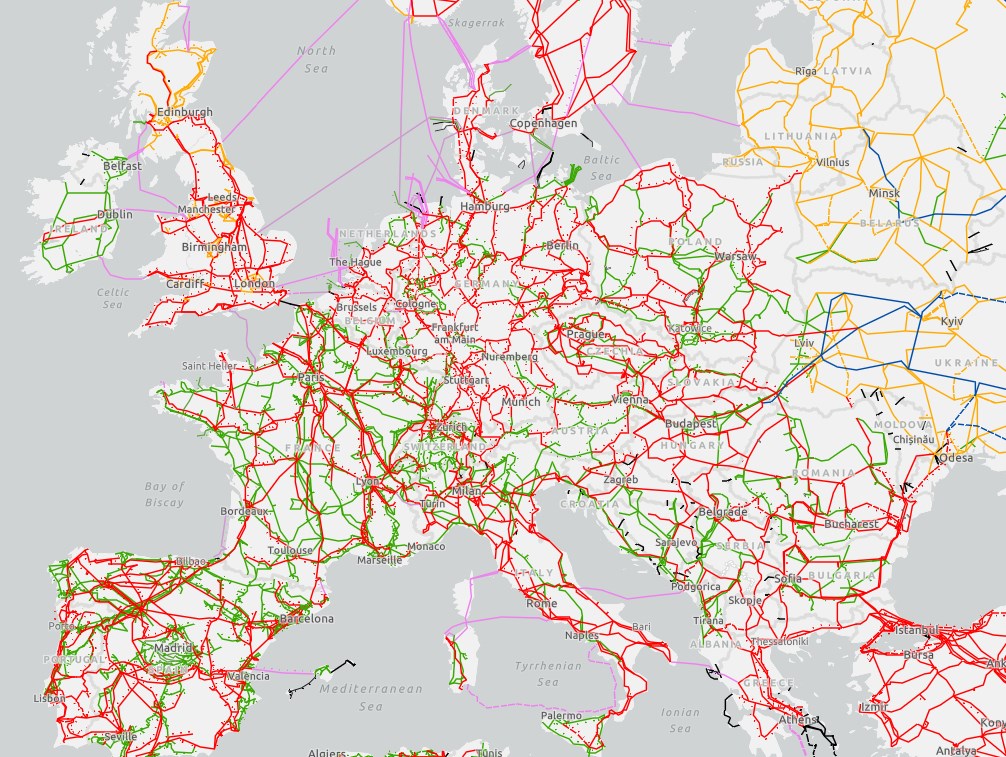
This landmark regulation signals a fundamental shift in how large-scale battery energy storage systems will interact with Europe’s electricity grid, moving from passive grid-following to active grid-forming technology.
Grid-Forming Becomes Mandatory for Large Storage
ENTSO-E’s Phase II technical report represents a crucial amendment to the forthcoming NC RfG 2.0 network code, which introduces binding grid-forming (GFM) requirements for new storage and renewable generation facilities with capacity exceeding 1 MW. A critical aspect of this regulation is that it applies only to new grid connections and substantial modifications of existing installations.
Once adopted by the European Commission as it finalizes NC RfG 2.0, ENTSO-E will publish an Implementation Guidance Document (IGD) to assist national regulators and grid operators. Each member state will then implement these requirements through their own regulatory approval processes and timeframes.
Storage Systems as Virtual Synchronous Generators
The report provides the technical clarity the industry needs to move forward. Storage systems must maintain stable voltage while grid frequency or phase shifts occur, deliver reactive current response almost instantaneously, and remain synchronized without external reference signals. Compliance testing will verify that storage plants can ride through voltage sags, step changes, and phase-angle jumps without losing stability.
The report specifies rigorous technical parameters that will reshape how battery storage systems are designed and operated:
- Current Response Time: Less than 10 milliseconds to reach 90% of expected value
- Damping Ratio: At least 5% for power oscillations
- Effective Impedance: Maximum values set based on voltage levels
The requirements are technology-agnostic, but ENTSO-E has established maximum impedance values and requirements that go beyond traditional droop control and frequency-watt functions. These specifications may favor systems capable of sustaining rapid bidirectional power changes, which could benefit high C-rate lithium-ion batteries, more modular power converters, and DC-coupled hybrid approaches. However, battery technology continues to evolve rapidly.
Defining and Measuring Synthetic Inertia
ENTSO-E maintains its definition of synthetic inertia, with compliance measured using mechanical starting time (T_M,PPM), calculated through a provided equation that is equivalent to the inertia constant of a synchronous machine. For storage systems, this means holding energy reserves capable of sustaining millisecond-scale frequency support, though the exact capacity to be reserved depends on multiple factors, as the grid operator notes.
The mechanical starting time is defined mathematically as:
T_M,PPM = (ΔP/P_Rated) / (d(f/f_Rated)/dt)
This metric relates the energy exchanged by the power park module with the AC network to its maximum capacity while grid frequency changes. It serves as a key parameter for both grid planning studies and sizing the inertial response expected during system operation.
For example, assuming a 2 Hz/s rate of change of frequency (RoCoF) and a T_M,PPM of 25 seconds, this would result in a 1 per-unit active power variation from steady state. For a 1 MW facility, this translates to a 1 MW power change.
Technical Requirements: Key Details
The technical specification’s core requirements include:
1. Voltage Source Behavior
Storage units must behave at their terminals as a voltage source behind an impedance (Thévenin equivalent source), characterized by internal voltage amplitude, phase angle, frequency, and internal impedance.
2. Effective Impedance Limits
At Power Generating Unit (PGU) Level:
- Low voltage terminals: ≤ 0.27 pu
- Medium voltage terminals: ≤ 0.35 pu
- High voltage terminals: ≤ 0.45 pu
At Power Park Module (PPM) Level:
- Medium voltage connection: ≤ 0.35 pu
- High voltage connection: ≤ 0.50 pu
- Extra high voltage connection: ≤ 0.50 pu
3. Disturbance Response
Upon inception of network disturbances (including voltage, frequency, and phase angle disturbances), systems must maintain grid-forming behavior within power and current limits.
4. Current Limitation Requirements
When reaching capability limits, units may limit their response while maintaining voltage source behavior. The system must remain connected without tripping and maintain stable operation.
International Experience Informs European Standards
The Phase II report specifically references developments and projects in Great Britain and Australia, which have already demonstrated that grid-forming batteries can deliver measurable system strength. The UK’s National Energy System Operator (NESO) published the GB Grid-Forming Best Practice Guide in April 2023 and Guidance Notes in September 2023, while the Australian Energy Market Operator (AEMO) released a Core Requirements Test Framework in January 2024.
These international experiences have provided valuable insights for the European framework, demonstrating the technical feasibility and operational benefits of grid-forming technology.
Implications for Battery Developers
For battery energy storage system developers, the report’s implications are immediate and significant. The report formalizes that storage systems and their associated power conversion systems (PCS) must perform voltage control, inertia response, and frequency regulation functions comparable to synchronous machines through grid-forming inverter functionality, including through grid disturbances.
Unlike traditional grid-following inverters, which simply track grid conditions, grid-forming units must actively create and maintain them. This represents a fundamental shift in control philosophy and technical requirements.
The requirements will affect:
- Inverter Design: Grid-forming capability must be built into the power electronics from the ground up
- Control Systems: Advanced control algorithms capable of maintaining voltage and frequency stability
- Energy Reserves: Capacity must be reserved to provide millisecond-scale frequency support
- Testing and Certification: New compliance testing procedures to verify grid-forming capabilities
Implementation Pathway and Transition Period
The Phase II report represents a well-established step in the EU’s process for enacting grid regulations. While non-binding, the framework is effectively final. Next, once NC RfG 2.0 is adopted by the European Commission (expected late 2025), these criteria will flow into national grid codes through each country’s regulatory approval and grid operator frameworks.
Member states may implement transitional periods depending on plant type to smooth the transition process and allow technical understanding and technological capabilities to keep pace with regulatory requirements. This graduated approach recognizes the practical challenges of implementing such significant technical changes across the European energy storage sector.
Compliance Verification Framework
The report outlines comprehensive testing procedures for verifying compliance:
Test Categories:
- Voltage Source Behavior: Including phase jump tests and islanding scenarios
- Synthetic Inertia Contribution: Evaluating inertial constant, power, and energy availability
- Current Capability Limits: Behavior during under/over-voltage events and severe RoCoF
- Controller Interactions: Impedance spectroscopy and closed-loop stability tests
These tests can be conducted using actual equipment, Hardware-in-the-Loop (HIL) simulations, or other approved methods, providing flexibility while maintaining rigorous standards.
Industry Outlook and Strategic Considerations
As Europe moves toward a 100% renewable energy system, grid-forming technology will play a critical role in replacing the mechanical inertia traditionally provided by synchronous generators. Through virtual inertia based on power electronics, grid-forming inverters can respond to grid disturbances within milliseconds, providing faster frequency support than conventional generators.
For the global battery storage manufacturing sector, particularly Chinese manufacturers targeting European markets, this new regulation means that large-scale storage systems exported to Europe will need to meet higher technical standards. Companies should begin technical preparations now to ensure products have grid-forming inverter functionality compliant with ENTSO-E requirements and appropriate test certification.
The regulation also creates opportunities for technology leaders who can demonstrate advanced grid-forming capabilities. As each European country implements these requirements, early movers in grid-forming technology may gain competitive advantages in what will become an increasingly sophisticated market.
Stakeholder Collaboration
The Phase II report was developed through extensive collaboration with key European stakeholders, including:
- CENELEC (European Committee for Electrotechnical Standardization)
- Energy Storage Europe Association
- EU DSO Entity
- SolarPower Europe
- WindEurope
- HTW Berlin (providing simulation studies)
This collaborative approach ensures the technical requirements reflect both system operator needs and industry capabilities, balancing grid stability requirements with technical and economic feasibility.
Looking Ahead
The adoption of mandatory grid-forming requirements marks a watershed moment for European energy storage. As the regulation moves through the European Commission approval process and into national implementation, the industry will need to:
- Upgrade existing product portfolios to meet grid-forming requirements
- Develop new testing and certification procedures
- Train technical staff on grid-forming technology and standards
- Update project planning to account for grid-forming capabilities
- Engage with national regulators on implementation timelines
The Phase II report provides the technical foundation for this transition, offering clear specifications that will enable consistent implementation across Europe while allowing for national variations based on specific system needs.
With Europe leading on mandatory grid-forming requirements, other regions may follow suit, potentially establishing a global standard for advanced grid-interactive energy storage systems.