Germany’s battery energy storage sector is experiencing unprecedented growth, with grid operators receiving connection requests in 2024 for systems totaling 400 GW of operational power and 661 GWh of storage capacity—representing a dramatic scaling up from the country’s current installed base.

The Federal Network Agency (Bundesnetzagentur, or BNetzA) announced that grid operators received 9,710 connection requests for battery energy storage systems (BESS) at medium and high voltage levels in 2024. This marks the first time the regulatory authority has published comprehensive data on large-scale battery storage applications.
The scale of pending applications is striking when compared to existing infrastructure. Currently, 921 large-scale battery systems operate in Germany with a total power capacity of 2.3 GW and storage capacity of 3.2 GWh. The requested capacity represents approximately 174 times the current operational power and 206 times the storage capacity.
Rapid expansion of battery storage market
Germany’s total BESS capacity increased by 50% in 2024, reaching 14.5 GW in operational power by July 2025. The growth has been driven primarily by residential installations, with approximately 11.5 GW out of 14.5 GW coming from household energy storage systems.
The residential sector continues to dominate the market. Nearly 600,000 new stationary battery storage systems were installed across Germany in 2024, with 580,000 being home systems. This brings the total number of installed battery storage systems to approximately 1.8 million nationwide.
The total storage capacity reached 19 GWh by year-end 2024, equivalent to the daily electricity consumption of two million two-person households, according to the German Solar Industry Association (BSW Solar).
Large-scale projects show strong momentum
The large-scale storage segment is experiencing even more dramatic growth rates. Approximately 100 new large-scale storage units with combined capacity of around 0.8 GWh were commissioned in 2024, representing a doubling of the previous year’s expansion of 0.3 GWh.
In 2024, grid operators issued approximately 3,800 connection commitments for applications submitted in 2024 and previous years, representing a combined operational power of about 25 GW and storage capacity of about 46 GWh.
However, BNetzA noted that connection commitments only obligate grid operators, meaning not all projects will necessarily be implemented. The gap between applications and approvals reflects both technical grid constraints and project viability considerations.
Supporting renewable energy integration
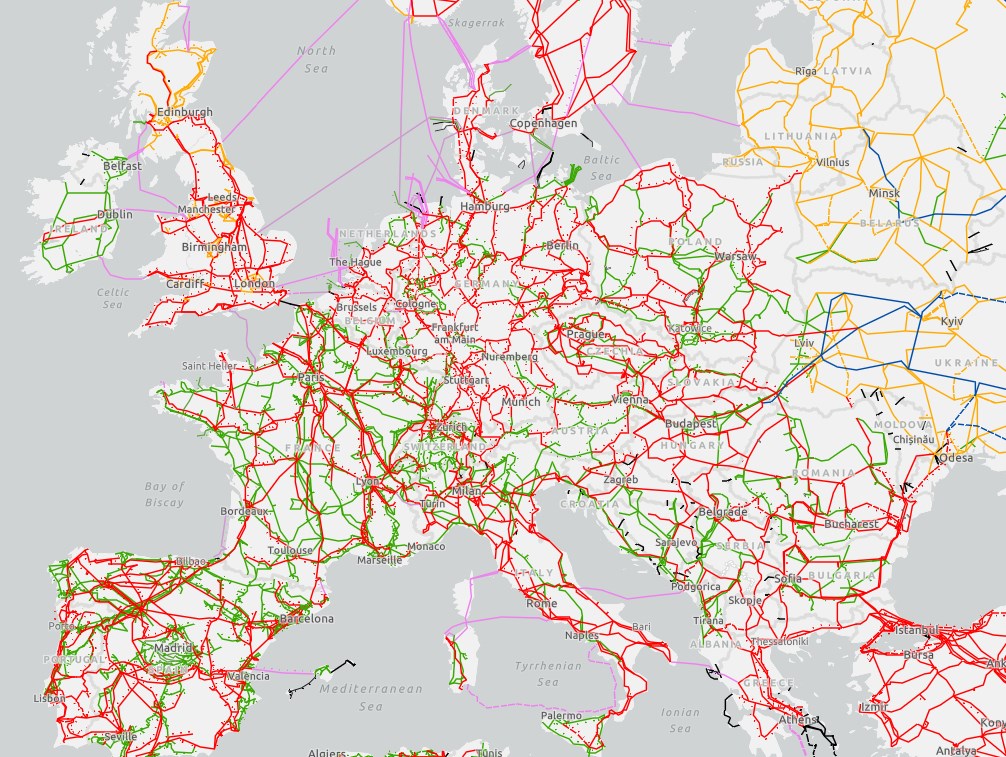
Germany’s expanding battery storage infrastructure plays a crucial role in the country’s energy transition strategy. The country’s solar power plants have a total capacity of 112 GW, creating significant demand for storage solutions to manage intermittent renewable generation.
Large-scale batteries help use renewable energy more efficiently and stabilize the grid at times of little solar or wind power output, reducing the need for grid extensions and backup power plants, BNetzA stated.
The agency emphasized that the market for battery storage is currently in a dynamic development process. The regulatory authority’s decision to publish connection request data for the first time reflects the sector’s growing importance to Germany’s electricity system.
Europe’s evolving BESS landscape
Germany has emerged as a key player in Europe’s battery storage market. The BESS dealmaking landscape in Europe has evolved dramatically over the past four to five years, with Germany and the Netherlands emerging as hotspots for optimization and offtake deals after Great Britain’s multi-year lead, according to analysis by energy market intelligence firm Pexapark.
In the first five months of 2025 alone, 11 BESS deals were announced in Germany, totaling 540 MWh. The growth is being driven by rapidly dropping battery prices and the possibility of profiting from electricity price fluctuations.
Average battery duration in deals tracked by Pexapark has increased from just one hour in 2020 to 2.3 hours in 2025, signaling a broader strategic shift from solely focusing on ancillaries to trading across the whole revenue stack.
Deal sizes are also growing exponentially, from an average of 75 MW across 20 deals with disclosed capacity in 2024 to 138 MW across 24 deals in 2025 as of May.
Market outlook and challenges
Industry projections indicate continued strong growth. According to analysis by energy consultancy Enervis commissioned by BSW Solar, around 7 GWh of new large-scale storage capacity will be added by 2026 to the 1.8 GWh already installed—a more than fivefold increase.
The expansion of large-scale storage systems is being driven primarily by the increasing dynamics of the electricity market and the price difference between low and high wholesale electricity prices, making it possible for storage systems to shift cheap solar power from times of high generation to times of high demand without additional subsidies, BSW stated.
However, challenges remain. Lacking grid access is a major obstacle for Germany’s energy transition technologies, energy industry associations warned. The volume of connection requests far exceeding approved connections highlights infrastructure constraints that must be addressed to realize the sector’s full potential.
With ancillary services defying saturation predictions and new revenue streams such as inertia coming up, continued momentum is expected in Europe’s largest and most liquid power market.