At the second Belt and Road Conference on Science and Technology Exchange in Chengdu, China, Dr. Robin Zeng, Chairman and CEO of Contemporary Amperex Technology Co., Limited (CATL), delivered a keynote speech that outlined an ambitious and collaborative roadmap for advancing global clean energy initiatives. His address reaffirmed CATL’s unwavering commitment to technological innovation, open collaboration, and deep integration with international markets to accelerate the world’s transition to a zero-carbon future.
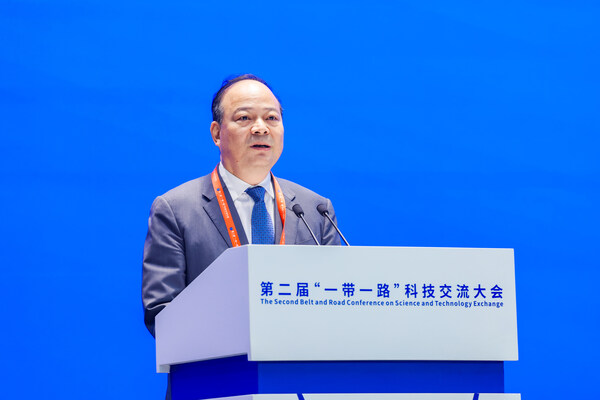
Dr. Zeng emphasized that global cooperation is central to overcoming today’s energy and climate challenges. “There are many ways we can cooperate,” he noted, highlighting CATL’s openness to co-building factories, forming joint ventures, and signing technology licensing agreements with partners worldwide. These cooperative strategies form the backbone of CATL’s long-term vision to build localized energy ecosystems and share its advanced battery technologies with emerging and developed economies alike.
Enabling the Energy Transition Through Localized Partnerships
A key focus of Dr. Zeng’s speech was CATL’s growing presence in Southeast Asia, a region rapidly emerging as a strategic hub for electric mobility. Countries such as Thailand, Malaysia, and Indonesia are experiencing exponential growth in EV adoption, and CATL is at the forefront of this transformation. The company has partnered with Arun Plus in Thailand, aiming to make the country the EV capital of Southeast Asia, and is co-developing a full supply chain in Indonesia—from raw material mining to battery recycling—to build a comprehensive, localized EV ecosystem.
This approach not only helps reduce logistics-related emissions but also ensures technology transfer and job creation in host countries. It reflects CATL’s broader commitment to aligning its global operations with local sustainable development goals.
Beyond Mobility: Zero-Carbon Tech for Broader Applications
CATL’s innovation extends beyond the automotive sector. The company is pioneering Zero-Carbon Tech solutions designed for grid-scale and industrial use, enabling renewable energy to be deployed more reliably and efficiently. A standout example is the 19 GWh battery energy storage system (BESS) powering Masdar’s AI + Zero-Carbon data center in the United Arab Emirates. This advanced energy storage system supports a self-sufficient microgrid, showcasing the crucial role of batteries in unlocking the full potential of intermittent renewable sources such as solar and wind.
CATL’s grid-forming storage technologies also cater to remote areas and off-grid industrial applications, providing stable electricity without reliance on fossil fuels.
Scaling Battery Circularity: Choco-Swap and Recycling Breakthroughs
Sustainability is core to CATL’s philosophy. Dr. Zeng announced CATL’s plan to deploy 1,000 Choco-Swap battery exchange stations by the end of 2025, with a long-term goal of reaching 10,000 stations in collaboration with automotive OEMs. Construction of the first station in Hong Kong is already underway, reflecting the company’s momentum in expanding battery-as-a-service models that support urban mobility and sustainability.
Additionally, CATL has made remarkable progress in battery recycling. In 2024 alone, the company processed 130,000 tons of waste batteries, using its proprietary recycling technologies to recover valuable materials for reuse in new battery production. This initiative plays a critical role in minimizing waste and building a circular battery economy.
Driving Industrial Decarbonization
Dr. Zeng introduced the concept of industrial decarbonization, referring to the deployment of new energy technologies to transform traditional, energy-intensive industries. One such example is hydrometallurgy, a cleaner alternative to traditional smelting for processing raw materials, significantly reducing carbon emissions in battery production.
Coupled with “new energy industrialization,” CATL aims to enable green growth and industrial upgrading in countries aiming to modernize their economies. This two-pronged approach supports both sustainable development and job creation, particularly in emerging markets.
Global Manufacturing Footprint and R&D Leadership
CATL is also reinforcing its global supply capabilities through major investments in overseas manufacturing. The company has established Europe’s largest battery manufacturing base in Hungary and is building a new plant in Spain in partnership with Stellantis. These facilities not only meet growing demand but also serve as centers for technological advancement and regional integration.
The company’s R&D investments—totaling nearly 20 billion yuan annually—and over 43,000 patents showcase its leadership in battery chemistry, materials science, and system engineering. CATL ranked second among all Chinese firms in international patent filings in 2024, underscoring its global technological footprint.
A Deeper Commitment to Sustainability and Innovation
In a powerful closing statement, Dr. Zeng reaffirmed CATL’s role as a global innovator and responsible corporate citizen. “We are eager to contribute—for humanity’s new energy’s sake, for sustainable development, and for building a community with a shared future for mankind,” he declared.
CATL’s listing on the Hong Kong Stock Exchange symbolizes not just capital market access but also a new phase of global engagement. The company is channeling these resources into expanding its talent pipeline, supplier ecosystem, and production capacity, while targeting carbon neutrality in its factories by the end of 2025 and full supply chain carbon neutrality by 2035.
Conclusion
Through a combination of international cooperation, localized development strategies, advanced battery innovation, and deep sustainability commitments, CATL under Robin Zeng’s leadership is laying the foundation for a truly global zero-carbon ecosystem. The company’s efforts across Southeast Asia, Europe, and the Middle East exemplify how energy storage and electric mobility are converging to shape a cleaner, more inclusive future.