December 9, 2024 — The rapid expansion of the electric vehicle (EV) market has led to increasing pressure on suppliers to lower prices, with some car manufacturers now demanding a 10% reduction in component costs. Cui Dongshu, Secretary-General of the China Passenger Car Association (CPCA), stated that the rapid growth of the new energy vehicle (NEV) sector, coupled with the quick pace of new product launches, has resulted in previously high component pricing, and gradual price reductions are a normal occurrence.
Cost Reduction Pressure on the EV Industry
According to Cui, “The sharp decline in raw material prices such as lithium carbonate and copper has led to a decrease in overall production costs.” He believes that car manufacturers requesting a 10% price cut from suppliers is a reasonable move and a natural part of the industry’s development. As the NEV sector matures, particularly with rapid technological advancements, car manufacturers are facing increasing pressure to reduce costs, especially in a highly competitive market.
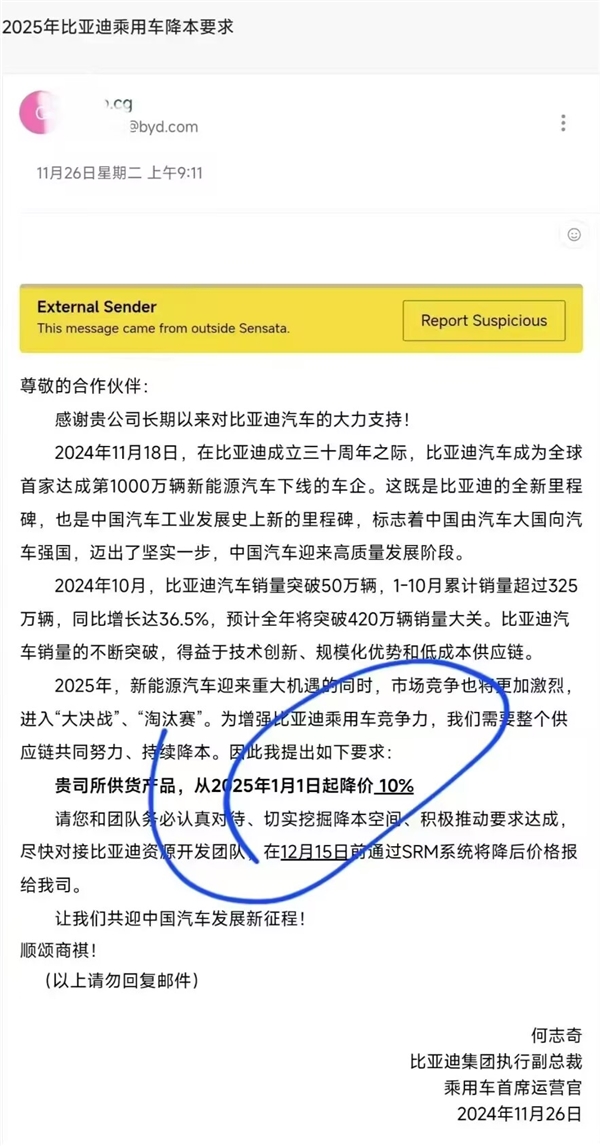
This pressure to reduce costs was evident when BYD, in a company memo issued in late November, set a clear goal for 2025. The memo, titled “Cost Reduction Requirements for BYD Passenger Cars in 2025,” announced a 10% price reduction demand for its suppliers, effective from January 1, 2025. This move signals BYD’s strong position in the market and also reflects its efforts to streamline its supply chain for cost-effectiveness.
How Car Manufacturers Are Responding: Negotiation and Strategy Adjustment
In response to BYD’s cost reduction request, Li Yunfei, General Manager of BYD’s Brand and PR Department, stated that annual negotiations with suppliers are common industry practices and not mandatory. Both parties can work together to reach an agreement. He emphasized that procurement strategies and pricing negotiations are part of the market rules and industry norms, with the goal of fostering mutually beneficial relationships.
Similarly, on November 25, SAIC Maxus issued a similar notice to its suppliers. Maxus pointed out that the increasing number of new vehicle launches and the supply-demand imbalance in the market were intensifying price competition, which would be difficult to quell in the short term. In response, car manufacturers and suppliers must proactively address these issues and jointly explore ways to reduce costs and enhance competitiveness.
The Link Between Procurement Strategy and Market Competitiveness
In an article by People’s Daily, it was pointed out that procurement is a critical aspect of business operations, and the processes of inquiry, quotation, comparison, and negotiation directly influence a company’s sales strategy, market competitiveness, and profit margins. By optimizing their procurement strategies, car manufacturers can reduce production costs and enhance overall competitiveness, aligning with the fundamental principles of industry development.
As the EV sector continues to grow and technologies improve, cost reductions are expected across the board. This shift will enable car manufacturers and suppliers to engage in more flexible negotiations, increasing the bargaining power of manufacturers while lowering costs. This trend is a positive sign of China’s growing competitiveness in the global EV market.
BYD’s Role in Industry-wide Cost Reduction
BYD has taken the lead in driving cost reductions in the NEV industry. Through its significant production and sales advantages, BYD has propelled cost reduction and efficiency improvements across its entire supply chain. This not only enhances BYD’s market competitiveness but also accelerates the global recognition of Chinese EVs.
Industry experts note that BYD’s ability to integrate its supply chain and reduce costs has made a significant impact on the domestic NEV industry. As BYD continues to reduce costs across its supply chain, it sets a valuable example for other companies in the sector.
Future Challenges and Outlook
As the global EV market continues to evolve, the competition between car manufacturers and suppliers will intensify. The key challenge for manufacturers will be to balance cost reductions with maintaining product quality and innovation. In the future, long-term cooperation and trust between car manufacturers and suppliers will be essential for navigating these challenges.