Incident Overview: When, Where, What Happened
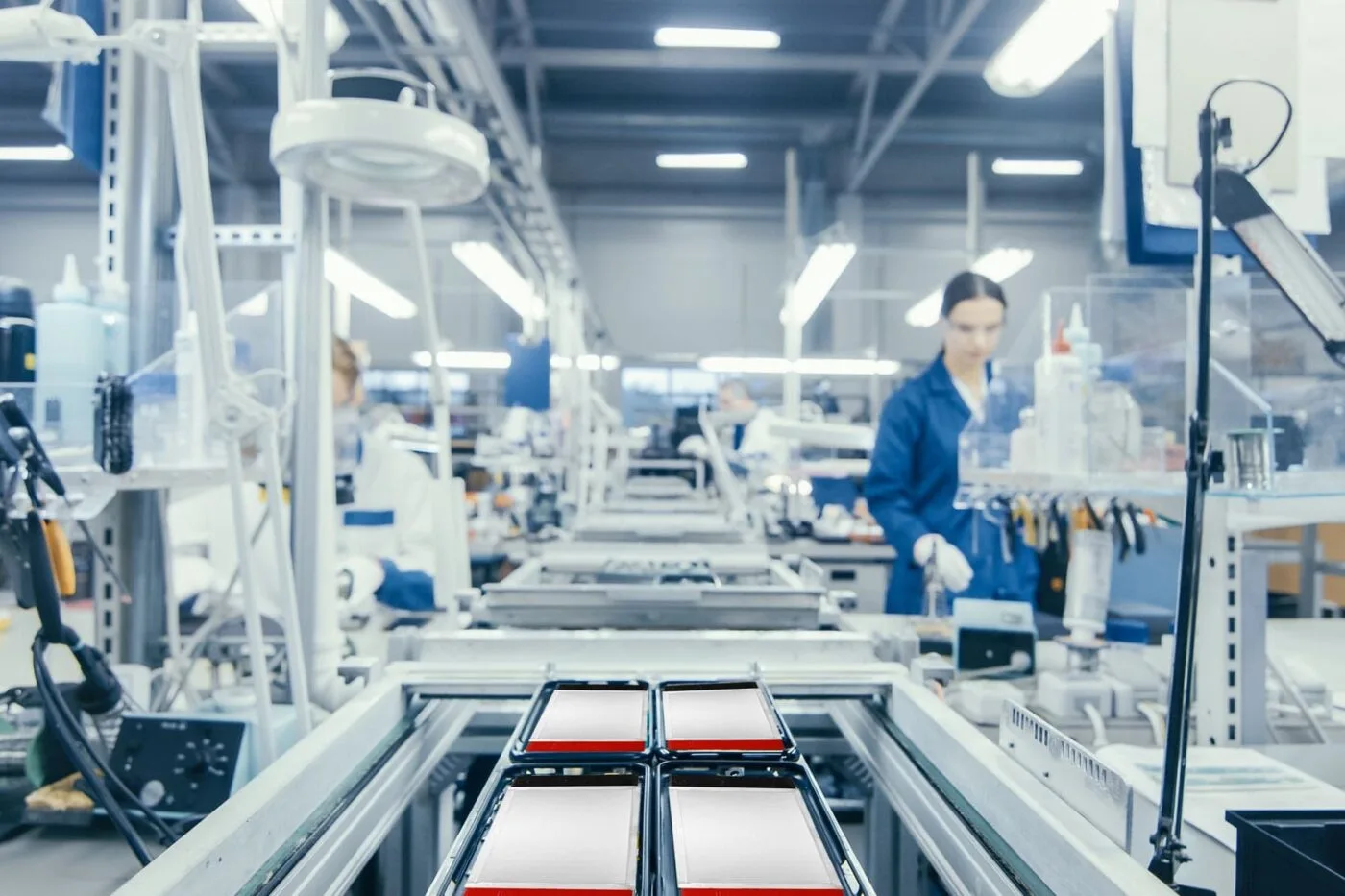
On Monday around 3 p.m. local time, a fire broke out inside Tesla’s Berlin Gigafactory in Grünheide, within the building where battery packs are produced. Employees, including those working in the drive unit assembly line located in the same facility, were evacuated. Firefighting efforts lasted several hours before flames were fully extinguished. Tesla later described the event as “a small fire in battery pack production.” Partial operations resumed the following day.
Cause and Scope of the Fire
Authorities reported that “several stacks of cells fell from the first-floor conveyor belt through a shaft into the ground floor,” igniting in the transport system. In total, 512 cells were affected—equivalent to about two-thirds of a full passenger car battery pack.
Safety Outcomes: Zero Injuries, Full Water Containment
No employees were injured. Environmental risks were also ruled out: the firefighting water was “completely contained within the building” and did not enter groundwater. A specialized cleanup contractor has been tasked with removing the firefighting water and decontaminating the site. Tesla followed its pre-agreed emergency plan with local water authorities.
Recovery and Production Status
Immediately after the fire, all production ceased. On Tuesday, operations resumed in stages: drive unit assembly restarted in the afternoon, while battery pack assembly remained shut down. Employees unable to perform regular duties participated in training sessions, including first-aid classes. This indicates that short-term production disruption is concentrated on the battery assembly line.
Cell Chemistry: LFP and NCM in Parallel
It has not been disclosed which type of cells were involved. The Berlin site uses both CATL’s LFP prismatic cells (for base Model Y variants) and LG Energy Solution’s NCM cells (for long-range versions). While LFP and NCM chemistries differ in thermal stability, the immediate trigger here was mechanical damage from falling cells, rather than the inherent chemistry. The root issue lies in conveyor and vertical shaft engineering controls.
Technical Analysis: Why Did a Drop Ignite the Cells?
Dropping cells can cause casing deformation, separator damage, or internal shorts. If combined with flammable residues such as lubricants, dust, or cable insulation, ignition risk rises sharply. The fact that the fire was contained within the transport system suggests that fire compartmentalization and early intervention worked—but also highlights the vertical shaft as a major vulnerability requiring redesign.
Compliance and Emergency Response: A “Close Call” Well Contained
Both fire and environmental agencies confirmed no external leakage and no injuries, and stated Tesla followed its emergency response plan. From a regulatory perspective, this qualifies as a “manageable process incident.” The outcome relied heavily on pre-installed firefighting water containment, underlining the importance of pre-coordination with local regulators.
Production Impact: Disruption but Contained
Drive unit assembly resumed, but pack assembly did not. In the short term, this could limit vehicle output if pack stock runs low. However, existing work-in-progress and buffer inventory may absorb immediate shocks. If downtime extends, Tesla could compensate with weekend shifts, slower takt times, or adjusted scheduling. At present, the incident looks like a temporary disruption, not a systemic halt.
Comparison to Previous Events
In 2024, the factory faced an arson attack on power lines causing a shutdown. That was an “external shock.” By contrast, this fire stemmed from internal logistics. Together, these events underscore the need for Tesla to defend against both external sabotage and internal process failures, building “multi-layer safety shields” into large-scale factories.
Implications for Supply Chain and Model Strategy
- Unified safety standards across chemistries (LFP/NCM) are needed, particularly in handling and storage.
- Automation redundancies—drop prevention, collision detection, pallet monitoring, and automatic shutdown interlocks—should be implemented.
- Vertical shafts must include fire stops and smoke/heat diversion to prevent vertical spread.
- Local inertization (e.g., nitrogen cabinets) in pre-assembly stages may be cost-effective.
Six Safety Engineering Recommendations for Pack Facilities
- FMEA re-analysis: model failures from drop, crush, puncture, and short-circuit, updating risk controls.
- Transport redundancies: install nets, buffers, or secondary supports to prevent free falls.
- Shaft redesign: fire partitions, linked detectors, and automatic suppression systems.
- Material safety: replace lubricants and cable coatings with higher flame-retardant grades.
- Standardized water containment: modular dikes, sealed drains, and mobile tanks, paired with frequent drills.
- Digital monitoring: sensors for force, vibration, or visual inspection to trigger auto-stop.
Economic and Market Implications
From an industry and market perspective, the fire is more of a “process noise” event than a structural threat. If Tesla quickly investigates, fixes, and reopens pack assembly, negative effects should fade within weeks. Past milestones at the Berlin plant suggest resilience despite external disruptions.
Four Key Follow-Up Questions
- Root Cause: Was it equipment failure, pallet misalignment, operator error, or control logic?
- Remediation: Will conveyor shafts be redesigned in the near term?
- Restart Plan: When will pack assembly resume, and will it restart at reduced speed with stricter inspection?
- Regulatory Oversight: Will agencies require additional testing (firewater handling records, VOC/heavy metal checks)?
Conclusion
This incident caused no injuries and no environmental damage, validating Tesla’s emergency controls. But the fact that 512 cells fell and ignited points to a clear weak link: automated vertical transport. For Tesla and the industry, the lesson is to break the chain of “drop → damage → ignition → spread” at every stage. Only then can such incidents be reduced to acceptable risk levels.