In a striking reflection of global supply chain dynamics, Asian nations—namely China, South Korea, and Japan—have continued their near-total dominance of the global EV battery mineral market. According to recent data released by Adamas Intelligence, battery manufacturers headquartered in these three countries collectively accounted for a staggering 94% of global raw material spending in newly sold electric vehicle (EV) battery packs during the first quarter of 2025.
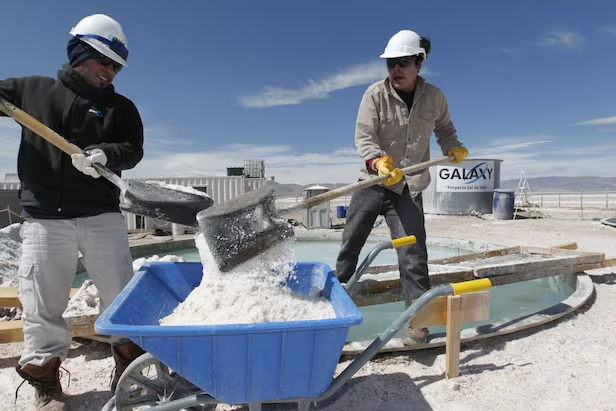
Despite a temporary slowdown in EV sales globally, these countries have continued to aggressively acquire and control critical battery minerals, including lithium, nickel, cobalt, and graphite—materials essential to manufacturing high-performance EV batteries. This strategic control positions Asia, and China in particular, at the heart of the future energy and mobility supply chains.
Breaking Down the Numbers
In Q1 2025, an estimated $3.01 billion worth of battery metals were consumed in battery packs installed in new EVs worldwide. Of this:
- China led with $1.635 billion in mineral purchases, accounting for 54.31% of the global share.
- South Korea followed with $918 million, or 30.50%.
- Japan was third, with $277 million, making up 9.20%.
Together, these three nations made up over 94% of global mineral procurement for EV batteries. The top four companies—China’s CATL and BYD, South Korea’s LG Energy Solution, and Japan’s Panasonic—alone were responsible for two-thirds of total purchases. These firms not only manufacture most of the world’s EV battery cells but also dictate the direction of raw material sourcing and strategic mining investments.
China’s Commanding Lead in Mineral Acquisition
China’s dominance is no accident. Through state-sponsored industrial policy, Chinese firms have secured stakes in 407 overseas mines producing lithium, cobalt, and nickel—the three most valuable materials for EV cathodes. This represents the largest mining footprint globally, and it has allowed China to build a formidable supply base, especially in Africa and South America.
Chinese state-owned enterprises (SOEs) such as China Minmetals, CMOC Group, and Ganfeng Lithium have been systematically acquiring majority stakes in strategic mining assets, ensuring long-term supply of raw materials for domestic battery makers. This strategy is backed by robust government funding and diplomatic support, making China the undisputed global leader in the upstream EV battery supply chain.
Moreover, China continues to dominate the lithium iron phosphate (LFP) battery segment, which is rapidly gaining popularity due to its affordability and thermal stability. While originally seen as a lower-energy alternative to nickel-based batteries, LFP is now widely used in mid-range EVs and energy storage systems. Chinese firms like CATL and BYD have scaled up LFP production faster than any global competitors and are now making significant inroads into international markets, including North America and Europe.
South Korea and Japan: Technological Strength, Strategic Weakness
South Korean and Japanese battery makers, by contrast, remain leaders in nickel-cobalt-manganese (NCM) battery technologies. NCM batteries offer higher energy density, making them ideal for performance-focused EVs. Companies like LG Energy Solution, Samsung SDI, and Panasonic are known for their technical excellence in this space and have forged partnerships with global automakers such as GM, Ford, Tesla, and Volkswagen.
However, both countries face serious challenges in securing raw material independence. South Korea, for instance, is over 90% dependent on China for battery precursor materials and graphite—a key anode material. Japan is in a similar position, albeit slightly better insulated through its long-standing relationships with private global trading firms.
According to a 2024 survey by the Korea Chamber of Commerce and Industry, China outpaces Japan and South Korea in mining stakes by an enormous margin. While China holds shares in 407 strategic mines, Japan holds stakes in just 31, and South Korea in only 15. This disparity highlights a major vulnerability in the long-term energy transition strategies of both countries.
Japanese firms, including Sumitomo Metal Mining and Mitsubishi Corp., typically rely on a blend of private sector investment and government-backed export credit agencies. South Korea’s battery ecosystem, meanwhile, is scrambling to diversify its sources of critical minerals by exploring partnerships in Australia, Indonesia, and Canada—but progress has been slow and often limited by geopolitical and financial constraints.
Strategic Consequences of Mineral Dependence
The concentration of mineral acquisition in Asia, particularly China, has strategic implications far beyond the battery industry. It gives China enormous leverage over the global energy transition and places Western automakers and governments in a vulnerable position. As clean energy policies accelerate worldwide, the race to secure battery minerals is turning into a national security issue.
For South Korea and Japan, the continued reliance on Chinese supply chains could undermine their competitiveness in the medium to long term. While they remain technological leaders today, their exposure to raw material risks could disrupt production, inflate costs, and reduce strategic autonomy in times of geopolitical tension.
To counteract this, South Korea and Japan are expected to increase investment in domestic mineral processing, sign long-term supply contracts with mining firms in resource-rich countries, and pursue recycling technologies to extract valuable materials from used batteries. These strategies are vital but will take years to yield significant results.
The West Lags Behind in Raw Material Acquisition
Notably absent from the top buyers and producers of EV battery minerals are Western countries, including the United States and the European Union. While U.S. and EU policymakers have acknowledged the urgency of building resilient and localized supply chains, their current capabilities remain underdeveloped.
The U.S. Inflation Reduction Act (IRA) has begun to spur domestic mineral development and EV manufacturing, but Asia’s head start in mineral acquisition is measured in decades, not years. Similarly, the EU’s Critical Raw Materials Act aims to reduce import dependencies, but the region is still heavily reliant on Asian imports for both raw materials and battery components.
This gap underscores the need for accelerated investment in mining, processing, and refining operations within Western territories, alongside strategic partnerships with like-minded allies in Africa, Australia, and South America.
Conclusion: Asia’s Stronghold Remains Unchallenged
Despite short-term fluctuations in electric vehicle demand, the long-term trajectory of the battery industry remains clear—and Asia is leading the charge. With China securing the upstream supply chain through mining, South Korea and Japan focusing on high-performance technologies, and all three nations investing heavily in battery R&D, the region is poised to shape the global EV landscape for years to come.
For automakers, policymakers, and investors around the world, this serves as a critical wake-up call. Without bold and coordinated action, Western economies risk being permanently sidelined in the most important industrial revolution of the 21st century: the race for clean mobility and energy security.