Congo Cobalt Export Restrictions Trigger Hydroxide Price Surge
In 2024, the Democratic Republic of Congo’s (DRC) cobalt export restrictions have driven sharp price increases in cobalt hydroxide, a critical raw material for electric vehicle batteries. As the world’s largest cobalt producer, the DRC accounts for over 70% of global cobalt production and suspended all cobalt exports in February before introducing a quota system in October, aiming to boost state revenues and tighten oversight.
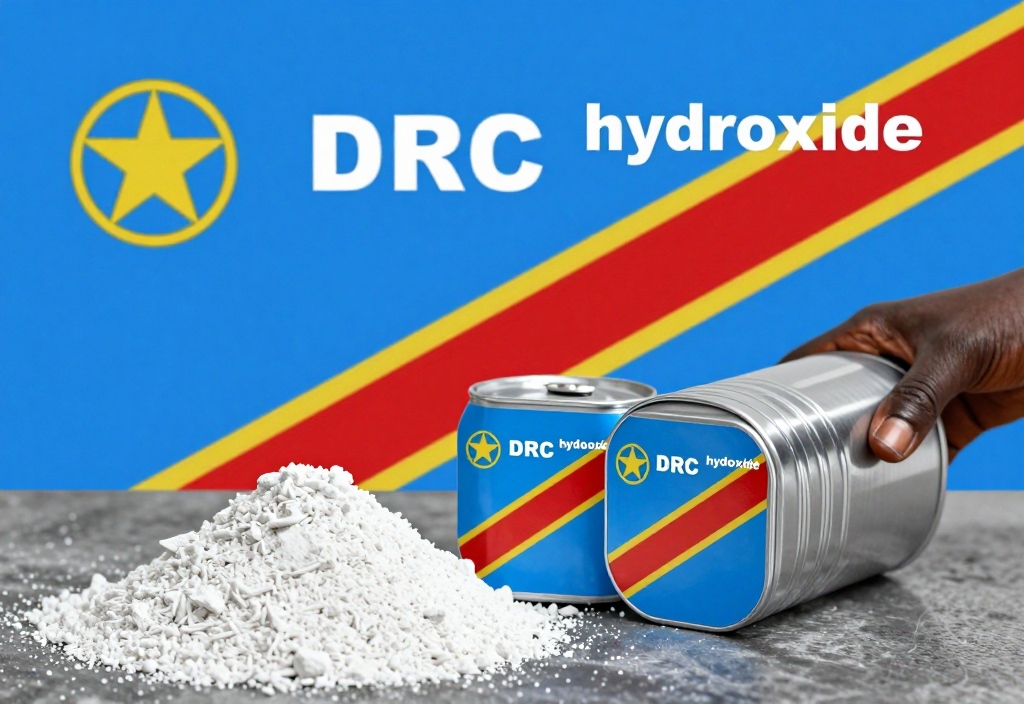
According to Reuters, payables for Congo’s hydroxide in China have jumped to 100% of the cobalt metal price, which currently trades around $24 per pound or $52,900 per ton, up from nine-year lows of around $10 per pound in February. This represents a price increase of over 140%.
Quota System Reshapes Global Cobalt Supply Chain
The DRC government’s quota system imposes strict volumetric controls on exports: total allocation of 18,125 tonnes for the remainder of 2025, and annual quotas of 96,600 tonnes for 2026-2027, representing less than 50% of 2024 production levels.
Industry sources reveal that new conditions require miners to pre-pay a 10% royalty within 48 hours and secure a compliance certificate. No shipments have moved since the ban was lifted in October as producers seek clarity and work to meet compliance rules.
Analysts at Macquarie noted that “cobalt is currently registering as 2025’s top price performer, but this has purely been driven by the introduction of export quotas by Congo which have caused an artificial market tightness, removing 160,000 to 170,000 tons from the market this year”.
Indonesian Cobalt Hydroxide Prices Rise in Tandem
For hydroxide produced in Indonesia, payables have jumped to 90% from 50% at the start of the year. Indonesia, as the second-largest cobalt producer, exceeded 30,000 metric tons of cobalt production in 2024, rising 82% year-over-year, with 89% coming from mixed hydroxide precipitate (MHP).
Indonesia’s cobalt output primarily comes from high-pressure acid leaching (HPAL) facilities that process nickel ore into mixed hydroxide precipitate for export. MHP typically contains 35-45% nickel and 3-6% cobalt, derived from laterite nickel ore.
Market Demand Slows Due to High Prices
Despite soaring prices, industry sources indicate market demand has begun to suffer. Three industry sources said demand for cobalt hydroxide slowed this month and that high payables are sidelining buyers. Two industry sources said some firms with cobalt hydroxide to sell were asking for a premium above the cobalt metal price.
Supply Constraints to Persist Through Early 2025
One source said there is some progress on getting exports moving, but that the significant amounts needed by China’s electric vehicle battery makers would not arrive until February or March next year.
China controls approximately 70-75% of global refining capacity, supplying Tesla, BYD and CATL, making any export delays potentially disruptive.
S&P Global commodity analysts noted that the new system’s quotas came in well below market expectations and could quickly tip the cobalt market into a structural deficit, unleashing sustained higher prices and risking demand destruction in the battery sector.
Understanding Cobalt Hydroxide Pricing Mechanisms
Cobalt hydroxide is produced in Congo and as a by-product of copper and nickel mining in Indonesia. These products are priced as a percentage of the underlying cobalt metal price, known as payables. Sellers of cobalt hydroxide have been raising their prices since Congo first suspended exports in February.
Historically, cobalt hydroxide payables stood at 61.5-62% in early 2020, remained persistently high in 2021 (averaging around 90%), and dropped to 46% by August 2023. The current 100% payables represent a historic high.
Industry Impact and Future Outlook
Extending these export restrictions could drive automakers to switch to battery chemistries that rely less on cobalt as supply dries up. This shortage could drive cobalt prices up, as well as the cost of the NCM battery chemistry.
The DRC government has established stringent compliance requirements with severe consequences for violations, creating what industry observers describe as a “use-it-or-lose-it” regime with permanent bans for quota violators. Congo’s cobalt production is estimated at more than 280,000 metric tons this year.
Analysts project continued price strength with potential to exceed previous bull market highs from 2022 if quota enforcement remains strict and alternative supplies cannot fill the gap.