In a sweeping move that has sent shockwaves through both the environmental and automotive sectors, U.S. President Donald Trump signed into law a set of resolutions passed by Congress—including one that blocks California’s ambitious plan to ban the sale of new combustion engine vehicles starting in 2035. This decision has sparked immediate backlash, with California and ten other states launching lawsuits against the federal government.
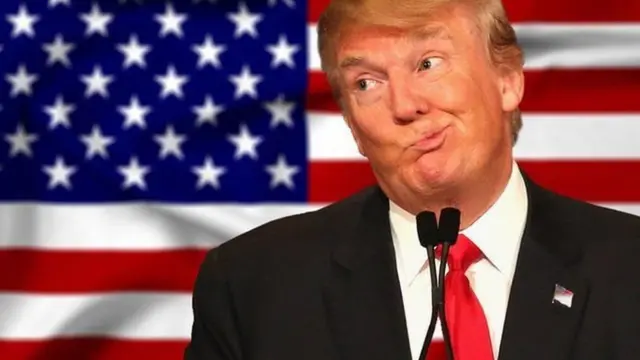
Trump’s signature not only halts California’s phase-out of combustion engine vehicles but also nullifies state-level regulations aimed at limiting emissions from certain classes of vehicles and nitrogen oxide emissions from trucks. The President denounced California’s rules as “a disaster for this country,” framing his actions as a necessary intervention to protect the U.S. auto industry.
“We officially rescued the U.S. auto industry from destruction by terminating the California electric vehicle mandate once and for all,” Trump declared in a public statement.
The California Zero-Emission Plan
California’s 2035 zero-emission vehicle (ZEV) plan was first outlined in 2020 through an executive order by Governor Gavin Newsom. The plan was formalized into binding regulation by the California Air Resources Board (CARB) in 2022. It called for the elimination of new gasoline-powered passenger vehicle sales by 2035, with limited exceptions.
Under the regulation, automakers could still sell plug-in hybrid electric vehicles (PHEVs), but these vehicles must offer a real-world electric-only driving range of at least 50 miles. Additionally, PHEVs could comprise no more than 20% of a manufacturer’s total vehicle sales in California; the other 80% would have to be pure battery-electric or hydrogen fuel cell vehicles.
This rule was backed by a waiver from the U.S. Environmental Protection Agency (EPA), allowing California—and by extension, other states that choose to adopt its standards—to enact stricter emissions regulations than those at the federal level. However, Trump’s recent action revokes this waiver, rendering such independent state-level emissions rules illegal moving forward.
Legal Challenge and State Response
Legal experts had warned as early as March that using the Congressional Review Act (CRA) to reverse the EPA waiver could be legally tenuous. Unsurprisingly, California, joined by ten other states including New York, Oregon, and Massachusetts, has filed a lawsuit in the U.S. District Court for the Northern District of California.
Governor Newsom did not mince words, calling Trump’s move “illegal” and an act of political sabotage motivated by loyalty to corporate polluters.
“The goal is to stop this latest illegal action by a President who is a wholly-owned subsidiary of big polluters,” Newsom said.
California Attorney General Rob Bonta echoed this sentiment:
“We made a promise that if the president attempted to illegally interfere with our clean air standards, we’d hold him accountable in court. Today, we are making good on that promise.”
Beyond Emissions: A Deeper Political Rift
The clash over vehicle emissions policy is only the latest chapter in an escalating feud between Trump and California’s leadership. In a related incident, Trump deployed 2,000 National Guard troops to Los Angeles in response to unrest tied to federal deportation actions—despite the express wishes of Governor Newsom.
This escalation reflects a broader struggle over federal vs. state authority, particularly in areas such as immigration, environmental policy, and public health. In the automotive arena, California has long set the pace on emissions regulation, often dragging federal standards along with it. Trump’s repeal of the EPA waiver essentially aims to end that trend.
To reaffirm the state’s environmental goals, Governor Newsom signed a new executive order shortly after the lawsuit was filed. This directive restates California’s commitment to the ZEV transition and includes provisions to expand incentive programs for clean vehicles and update state procurement requirements. State agencies have been instructed to issue formal recommendations within 60 days.
Industry Reaction: A Mixed Bag
While the lawsuits reflect fierce resistance from environmental advocates and certain state governments, not all stakeholders are critical of Trump’s decision. The Alliance for Automotive Innovation—whose members include industry giants like General Motors, Toyota, Volkswagen, Hyundai, and Stellantis—expressed support for the repeal.
“These regulations were never achievable,” said John Bozzella, president and CEO of the Alliance.
“Worse than unachievable, these EV mandates were going to be harmful—to auto affordability, to consumer choice, to industry competitiveness, and to economic activity.”
The auto industry has long voiced concerns that state-level mandates, particularly California’s aggressive ZEV targets, could lead to fragmented regulations, inflated vehicle costs, and a slower-than-expected consumer transition to electric vehicles. The industry has called for a unified national standard that balances climate goals with economic feasibility.
Broader Implications
Trump’s rollback of the EPA waiver is not merely a regional policy reversal—it could reshape the trajectory of the U.S. automotive landscape. By invalidating California’s authority to set its own emissions standards, the federal government potentially halts more than a decade of progress toward electrification, at least in the states most aggressively pursuing it.
Furthermore, the legal implications of the Congressional Review Act’s use in this context could establish precedents for future disputes over state versus federal regulatory power. If the courts uphold Trump’s move, it would significantly weaken states’ roles in shaping national environmental outcomes.
However, should the lawsuit succeed, it could reinstate California’s emissions authority and reassert the importance of state leadership in tackling climate change through transportation reform.
Conclusion: A Nation at a Crossroads
The current standoff between the Trump administration and California encapsulates a deeper national conflict over the future of energy, transportation, and environmental policy. As the legal process unfolds, the U.S. faces pivotal questions: Who should lead the charge toward cleaner vehicles—the states or the federal government? Should environmental progress be dictated by feasibility or urgency? And what does this mean for the millions of Americans who will one day be asked—or required—to shift to electric vehicles?
With global climate goals looming and geopolitical tensions affecting energy markets, the outcome of this legal and political battle will carry enormous weight—not just for California, but for the entire United States and beyond.