The U.S. Commerce Department is preparing to impose a significant new tariff on Chinese graphite imports, particularly those used in electric vehicle (EV) battery production. According to a fact sheet cited by Reuters, these additional tariffs will apply uniformly across all Chinese manufacturers, with no exceptions for companies that may have previously adhered to fair pricing practices.
The tariffs target anode-grade graphite—a critical battery material—defined specifically as graphite with at least 90% carbon purity by weight. Importantly, the regulation does not distinguish between natural and synthetic graphite, nor does it separate blended forms. This blanket treatment could have far-reaching implications for the American EV and battery industries, both of which rely heavily on imported Chinese materials.
The final decision on the tariff is expected by December 5, 2025.
Effective Duty Rate to Reach 160%
The new tariff comes on top of existing duties, bringing the total effective tariff rate to a staggering 160%, according to the American Active Anode Material Producers—a trade group that includes major U.S.-based and foreign-invested companies like Syrah Technologies (Louisiana), Novonix (Tennessee), Epsilon Advanced Materials (North Carolina), Anovion (New York), and SKI US (Georgia).
The group had filed a formal complaint that led to the Commerce Department’s investigation, citing unfair market practices by Chinese exporters that undercut U.S. prices and stifled domestic competition.
Tariffs Could Raise Battery Costs by Hundreds of Dollars
Sam Adham, Head of Battery Materials at the CRU Group, warns that the tariff would pose a serious cost burden to battery producers. He estimates that a 160% tariff would add around $7 per kilowatt-hour (kWh) to the cost of a battery cell.
For an average EV battery pack of 60 kWh, this translates to $420 in additional costs. For high-capacity 100 kWh battery packs, the price increase would be as much as $700 per vehicle—a potential dealbreaker for budget-conscious consumers.
“These tariffs would be a blow to battery manufacturers,” Adham said in a Bloomberg interview, pointing out that the additional costs would effectively cancel out up to 20% of the federal tax credits granted under the Inflation Reduction Act (IRA).
Moreover, Adham suggested that the financial impact could be severe enough to “wipe out profits for one or two entire quarters for Korean battery makers” operating in the U.S., many of whom depend on Chinese graphite imports due to cost and availability constraints.
China’s Dominance in Graphite Processing
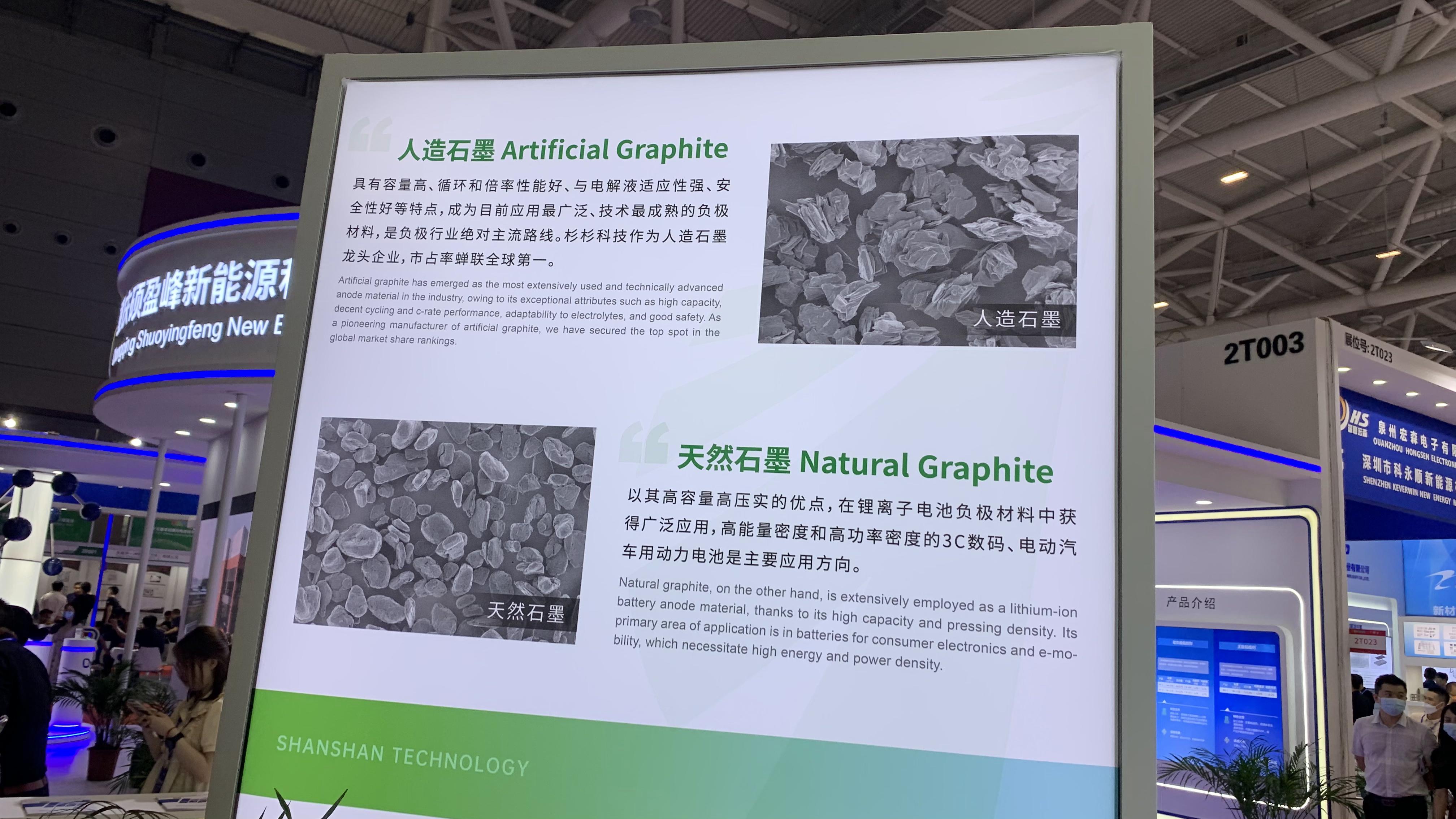
The issue is further complicated by China’s overwhelming dominance in graphite production and processing. According to BloombergNEF, China accounted for approximately two-thirds of the 180,000 tonnes of graphite products imported into the U.S. last year.
The U.S. currently lacks the refining and processing capacity to produce battery-grade graphite at the scale and quality required by EV manufacturers. This puts American companies at a disadvantage, especially as they seek to meet domestic content requirements under federal incentive programs.
In fact, Tesla, which operates a large-scale battery manufacturing facility in Nevada in partnership with Panasonic, publicly opposed the tariff. The EV giant argued that Chinese graphite remains critical to its production line because “U.S. industry is not developed enough to meet the quality standards and quantities required.”
Industry Trade-Offs: National Security vs Economic Burden
Proponents of the tariffs, including the American Active Anode Material Producers group, argue that they are essential for building a resilient domestic supply chain. They see the move as a step toward decoupling from Chinese critical mineral dependencies, especially in light of geopolitical tensions and supply chain disruptions triggered by COVID-19 and recent global conflicts.
However, critics warn that the immediate consequence will be higher costs for consumers and reduced competitiveness for American EVs.
The U.S. government faces a trade-off: safeguarding national security and encouraging local industry development versus maintaining affordability and momentum in the EV adoption curve. The EV sector is a cornerstone of the Biden administration’s green energy strategy, and any policy that significantly raises prices or deters production could hinder climate goals and undermine American leadership in clean technology.
Uncertain Future for Battery Manufacturers
The tariff, if finalized in December, would force battery manufacturers to rapidly adjust their supply chains. This could include:
- Sourcing graphite from alternative regions such as Mozambique, Canada, or Australia, though these markets remain underdeveloped.
- Investing in domestic processing capacity, which could take several years and billions of dollars.
- Partnering with non-Chinese suppliers for synthetic graphite, which is typically more expensive than its natural counterpart.
Some companies have already begun to diversify. Syrah Resources, for instance, operates a natural graphite mine in Mozambique and is developing a processing facility in Louisiana, partially funded by the U.S. Department of Energy.
But such alternatives remain insufficient in the short term, and the prospect of widespread industry reshoring may not materialize fast enough to avoid supply disruptions.
Conclusion: Ripple Effects Across the EV Ecosystem
The proposed 160% tariffs on Chinese graphite are more than just a trade measure—they represent a significant shift in how the U.S. approaches strategic battery material sourcing.
While the intent is to boost domestic production and reduce reliance on foreign supply chains, the near-term consequences may include higher vehicle costs, slower EV rollout, and pressures on battery manufacturers already navigating thin profit margins.
With the final ruling expected by December 5, industry stakeholders are watching closely. Whether the move results in greater self-reliance or supply chain disruption, one thing is clear: the role of graphite in the energy transition is no longer just technical—it’s political and economic as well.