Ford Motor Company has reached a new milestone in its European electrification strategy by officially starting battery pack assembly at its Cologne plant in Germany. The move represents a major step toward vertical integration for its electric vehicle (EV) production, specifically for the all-electric Ford Explorer and Ford Capri—two models built on the Volkswagen Group’s MEB platform.
While the technological advancement marks progress on paper, the reality on the ground is more complex. Amid lower-than-expected EV sales, rising labor unrest, and internal austerity measures, Ford’s ambitious “Factory of the Future” is facing real-world challenges that extend far beyond automation and logistics.
Vertical Integration: From VW to In-House
Until recently, Ford relied entirely on Volkswagen’s drivetrain technology—including electric motors and battery systems—for its MEB-based EVs. The batteries for both the Explorer and Capri had been manufactured by Skoda in the Czech Republic. However, Ford has always intended to bring battery production in-house, and now that vision has materialized with the opening of its battery assembly line at the Cologne site.
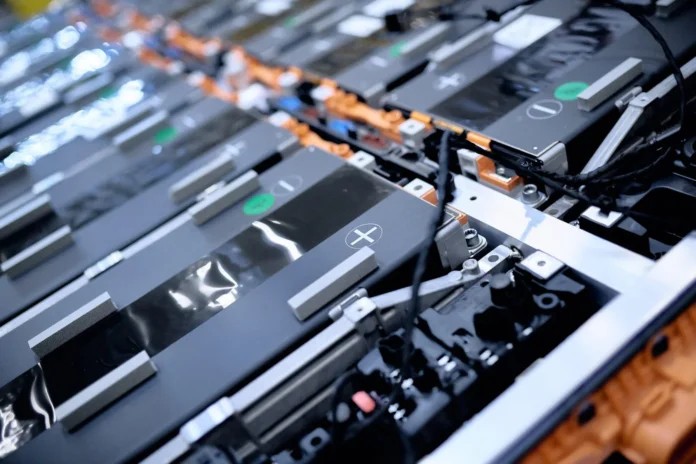
The facility, once used for internal combustion engine manufacturing, has been fully retooled to produce high-voltage batteries. It now assembles three battery configurations—52 kWh, 77 kWh, and 79 kWh—for use in the Explorer and the recently revealed Capri.
This new production line is nothing short of state-of-the-art. Stretching over 2 kilometers, it features 180 robots tasked with critical operations such as welding, gluing, and bolting of battery enclosures. Each battery pack contains up to 12 modules and more than 2,775 components, all of which are processed on an automated, fully digitalized line.
Factory of the Future: Logistics, Quality, and Efficiency
The battery assembly project is part of Ford’s broader $2 billion investment to modernize the Cologne plant, transforming it into a flagship for the company’s global “Factory of the Future” concept. By integrating battery production under the same roof as final vehicle assembly, Ford aims to optimize its supply chain, improve manufacturing quality, and reduce logistics-related emissions.
In addition to production efficiency, the new facility is designed to simplify operations and foster employee upskilling. Advanced training programs are in place to help workers adapt to the high-tech environment, a key component in maintaining long-term competitiveness in a rapidly evolving EV market.
Cologne is not the only site playing a strategic role in Ford’s electric transformation. The company is also ramping up electric drive unit production at Halewood in the UK, while EV production capacities are expanding in Craiova (Romania) and Kocaeli (Turkey) via Ford Otosan.
Labor Tensions and Sales Troubles: A Reality Check
Despite these futuristic aspirations, the reality at the Cologne plant is sobering. In May 2025, workers at the site went on strike for the first time in the facility’s nearly 100-year history. The reason? Mounting frustration over Ford’s austerity measures, including job cuts and short-time working (Kurzarbeit).
The labor unrest is symptomatic of a deeper issue: the Explorer and Capri models, despite being technically advanced, are underperforming in the European EV market. Sales figures have consistently missed internal forecasts, and Ford is also losing market share in the combustion engine segment produced at its other plants.
This dual pressure has forced Ford to adopt cost-cutting measures to stabilize operations. While the U.S. parent company pledged up to €4.4 billion in capital support for its German subsidiary in March 2025, it simultaneously withdrew a critical financial guarantee, leaving many employees and industry watchers questioning Ford’s long-term commitment to its European operations.
Strategic Questions: Is Vertical Integration Enough?
Ford’s decision to build its own battery packs marks a clear departure from reliance on Volkswagen components and reflects an industry-wide trend toward supply chain sovereignty in EV manufacturing. However, with consumer demand failing to match expectations, the real question is whether these infrastructure investments are being deployed in a stable, sustainable business environment.
Some analysts argue that Ford’s product strategy in Europe has been too dependent on the MEB platform and that its EV offerings lack sufficient differentiation from Volkswagen’s own models. Others point to broader market challenges, such as slowing EV adoption across Europe due to high prices, inconsistent charging infrastructure, and regulatory uncertainties.
In this context, while Ford’s advanced battery line may enhance quality and lower costs over time, it cannot by itself resolve fundamental demand-side issues or worker dissatisfaction. Even the best-designed factory risks becoming an underutilized asset if sales do not rebound.
Balancing Automation with Human Capital
The notion of the “Factory of the Future” emphasizes digitization, automation, and lean manufacturing. Yet, the recent strike at the Cologne plant serves as a poignant reminder that human capital remains an irreplaceable asset, even in highly automated environments.
Ford’s challenge now is to better align its high-tech aspirations with social responsibility and workforce engagement. This includes providing transparent communication, equitable transition programs for displaced workers, and mechanisms to share the benefits of modernization.
Conclusion: A Pivotal Juncture for Ford Europe
As Ford forges ahead with battery production in Cologne and broader EV initiatives across Europe, the stakes could not be higher. The company must not only prove that it can manufacture EVs efficiently but also that it can sell them profitably and ethically—without alienating its workforce or diluting brand identity.
The coming months will be critical in determining whether Ford’s Cologne transformation becomes a blueprint for successful EV transition or a cautionary tale of misaligned expectations and market misfires. What’s clear is that technical innovation alone isn’t enough; strategic vision, labor relations, and consumer trust will be just as important in shaping Ford’s electric future.