Toyota Motor Corporation has once again postponed construction of its electric vehicle battery plant in Fukuoka Prefecture, Japan, marking the second delay for this project. Fukuoka Governor Seitaro Hattori confirmed the news on November 7, 2025, following a meeting with Toyota President Koji Sato.
Background and Reasons for the Delay
Earlier this year, Toyota purchased a 280,000-square-meter plot of land in Fukuoka Prefecture, where it planned to build a facility to produce advanced electric vehicle batteries. The initial site agreement was expected to be signed in April 2025, but Toyota pushed back construction by several months, citing slower-than-expected demand for electric vehicles. The agreement was then scheduled to be finalized in fall 2025, but that timeline has now been abandoned.
According to Nikkei reports, Toyota will review and adjust the plan over the next year. Toyota has once again blamed slowing EV demand for the delay, but this decision stands in stark contrast to the actual performance of the global electric vehicle market.
Global Electric Vehicle Market Continues to Grow
Despite Toyota’s claims of slowing demand, global electric vehicle sales are actually continuing to rise. According to Rho Motion data, global EV sales topped 2 million units in a single month for the first time in September 2025. For the first nine months of 2025, EV sales increased 26% year-over-year.
Even with the US ending its $7,500 federal tax credit, global EV adoption rates are expected to continue growing in the coming years. This has led the industry to question Toyota’s justification of insufficient demand for postponing the project.
Toyota’s EV Strategy Adjustments
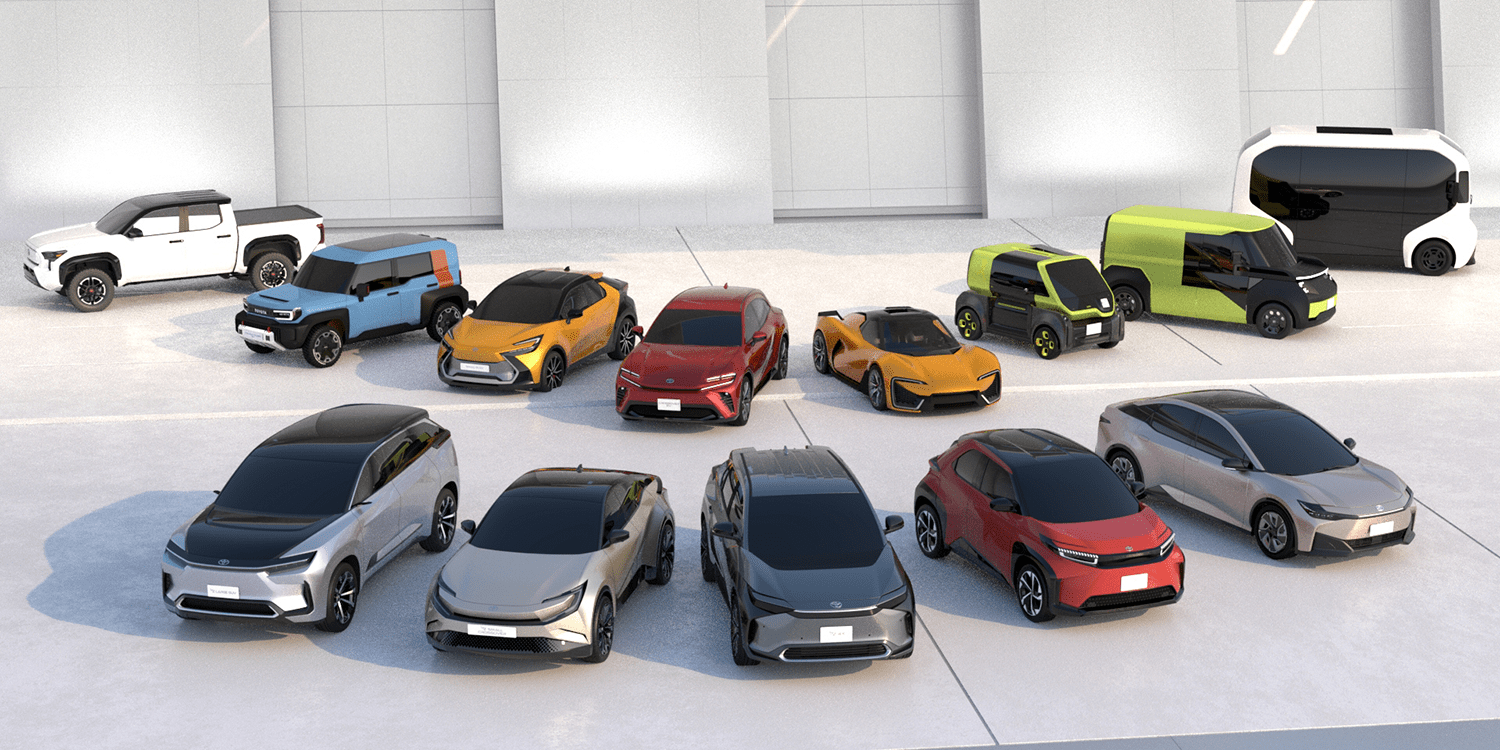
Toyota has significantly scaled back its electric vehicle sales targets. The company initially planned to sell 1.5 million EVs annually by 2026, reduced that target to 1 million in 2023, and has recently cut it further to just 800,000 units—nearly half of the original goal.
This series of adjustments reflects Toyota’s cautious approach to EV transformation. As the world’s largest automaker, Toyota has long focused on hybrid technology, a sector the company pioneered in the late 1990s.
Solid-State Battery Development Progress
Despite the Fukuoka plant delay, Keiji Kaita, president of Toyota’s Carbon Neutral Advanced Engineering Development Center, confirmed at the recent Japan Mobility Show that the company remains “on schedule” to launch its first solid-state battery-powered EV by 2028.
Toyota has established a partnership with Sumitomo Metal Mining Co. to mass-produce cathode materials for solid-state batteries, targeting production in fiscal year 2028. The two companies have been conducting solid-state battery research since 2021 and have overcome the issue of cathode material degradation during charge-discharge cycles.
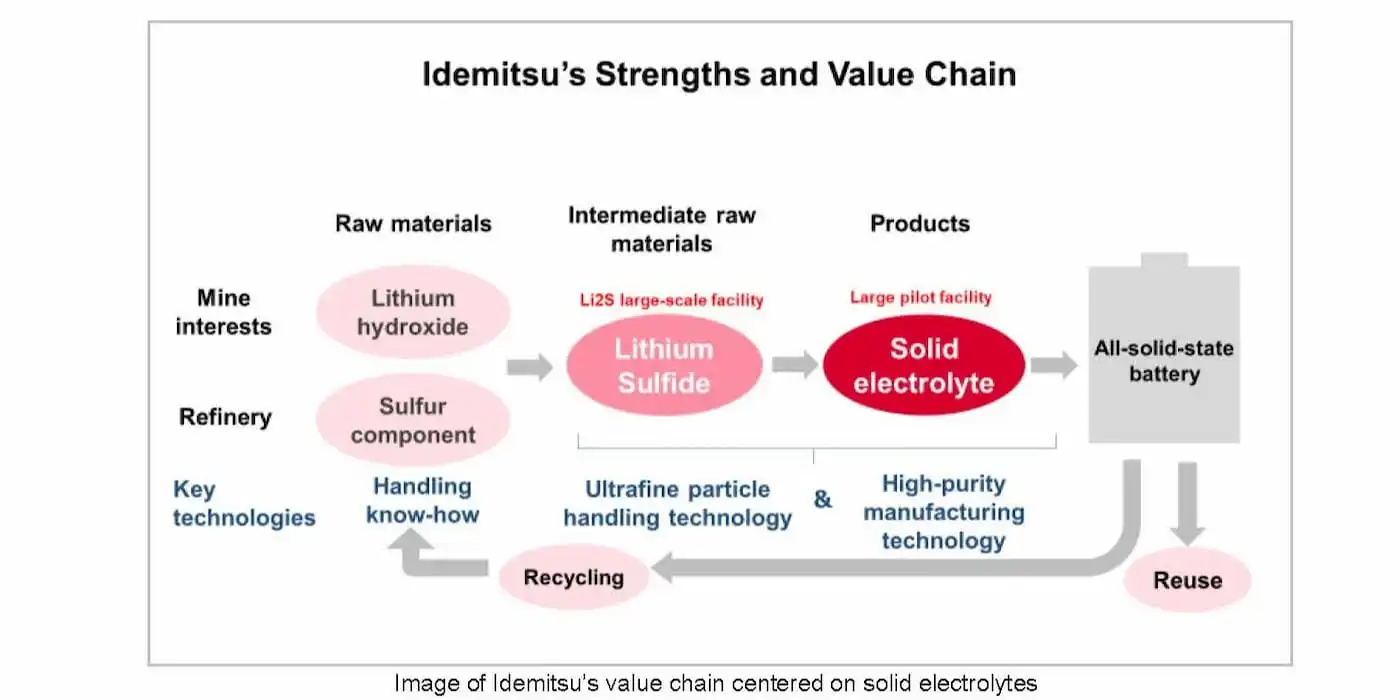
Toyota is also collaborating with Japanese oil giant Idemitsu Kosan to develop lithium sulfide, a key raw material for all-solid-state batteries. Idemitsu is constructing a large-scale production facility capable of producing 1,000 metric tons of lithium sulfide annually, aiming to begin mass production of all-solid-state batteries in 2027.
Solid-State Battery Technology Advantages
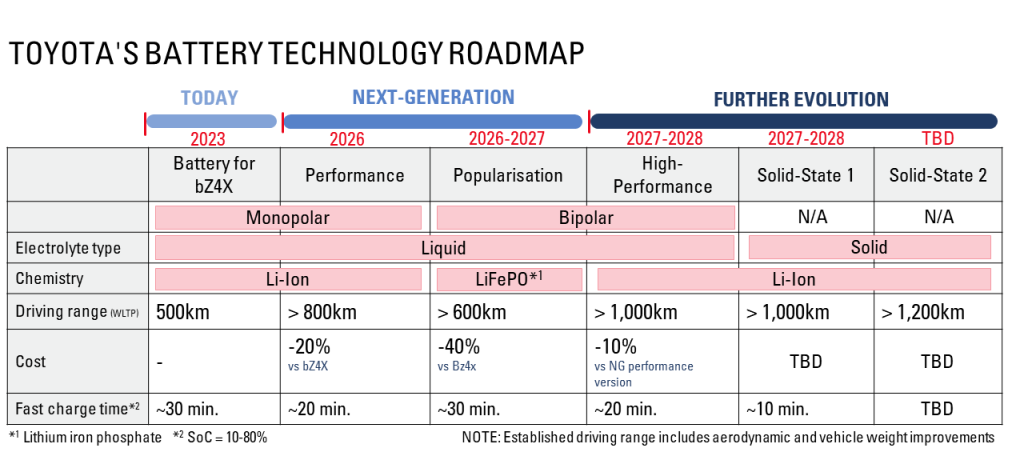
Toyota claims its solid-state battery prototype can deliver 1,200 kilometers of range with charging times under 10 minutes. Compared to traditional lithium-ion batteries, solid-state batteries could last four times longer, meaning the carbon footprint during production could be reduced to one-quarter.
Solid-state batteries use solid electrolytes instead of liquid electrolytes, which can improve safety and energy density. This technology is considered a revolutionary breakthrough for the electric vehicle industry, potentially significantly improving driving range, charging times, and battery lifespan.
The Gap Between Promises and Reality
Toyota has been making promises about solid-state batteries for nearly a decade. The company initially planned to introduce solid-state EV batteries in 2020, then pushed it to 2023, then 2026, and now says it will be around 2028. If Toyota doesn’t delay again, mass production is likely closer to the end of the decade.
This pattern of repeated delays has raised industry questions about whether Toyota can deliver on its promises. Meanwhile, competitors have made substantial progress. Mercedes-Benz announced in February 2025 that it “put the first car powered by a lithium-metal solid-state battery on the road,” and a month later drove an EQS equipped with solid-state batteries for nearly 1,200 kilometers.
Japan’s Battery Industry Strategy
Toyota’s partnerships with Sumitomo and Idemitsu are part of Japan’s broader strategy to reduce dependence on China and South Korea and establish a domestic EV battery supply chain. Several Japanese companies, including Toyota, are investing approximately 1 trillion yen ($7 billion) in building EV battery production facilities in Japan.
Japan’s Ministry of Economy, Trade and Industry has approved Toyota’s domestic solid-state battery production plans, indicating government support for this technology development. These investments and policy support reflect Japan’s attempt to regain an advantage in the next-generation EV battery technology race.
Intensifying Competitive Pressure
While Toyota continues to delay key projects, its competitors are advancing next-generation EV battery technologies. Volkswagen, Mercedes-Benz, Hyundai, BMW, and Honda are all actively developing solid-state battery technology.
Chinese automaker Chery recently claimed its solid-state battery prototype achieves 600 Wh/kg energy density, targeting 1,300 kilometers of range with pilot production in 2026 and mass rollout in 2027. Nissan, despite facing severe financial challenges, has opened a solid-state battery pilot production line and targets fiscal year 2028 for commercialization.
Market Impact and Future Outlook
The delay of Toyota’s Fukuoka battery plant could impact its expected operational start date in 2028. The plant was originally planned to produce Toyota’s next-generation batteries, which promise ranges exceeding 1,000 kilometers.
Analysts point out that in addition to demand factors, rising raw material costs are another reason Toyota is reconsidering factory construction. The time required to ensure the quality and reliability of new technology has also prompted Toyota to delay the launch of next-generation electric vehicles.
Despite the challenges, Toyota has not completely abandoned its EV strategy. Toyota’s $14 billion battery plant in North Carolina will begin shipping batteries next month. In the Chinese market, Toyota is doubling down, launching the bZ3X this month, its cheapest EV in the region, to compete with domestic leaders like BYD.
Governor Hattori emphasized that Toyota does not intend to completely cancel the battery plant construction plan but needs time to reassess and adjust its strategy. This indicates that despite the delay, Toyota remains committed to building an EV battery production facility in Fukuoka to contribute to local economic development and job creation.