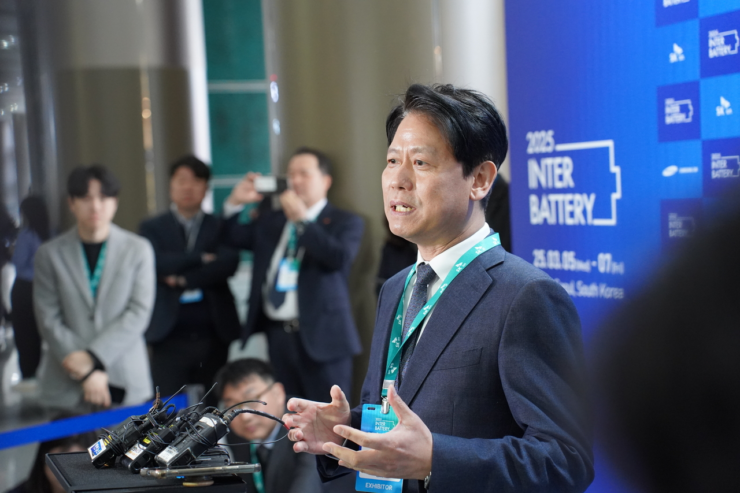
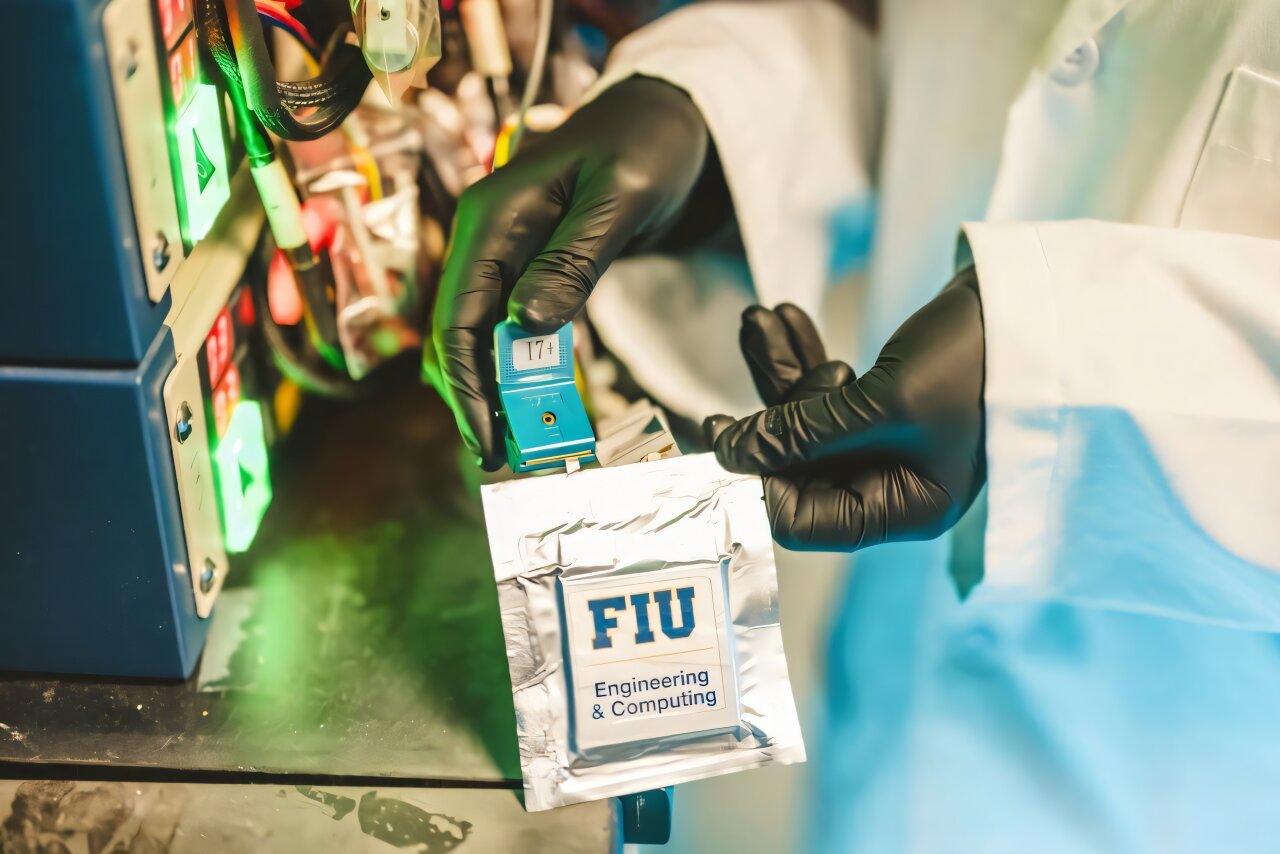
The quest for more efficient and powerful battery technology is at the forefront of scientific research and industrial development. As electric vehicles (EVs) become increasingly popular and renewable energy storage becomes crucial, the demand for high-performance batteries grows exponentially. One of the most promising advancements in this field is the development of lithium metal anodes, which offer significant improvements over traditional battery technologies. South Korea is at the forefront of these innovations, with companies like LG Energy Solution (LGES) and others leading the charge in unlocking the potential of lithium metal anodes.
The Limitations of Traditional Battery Technology
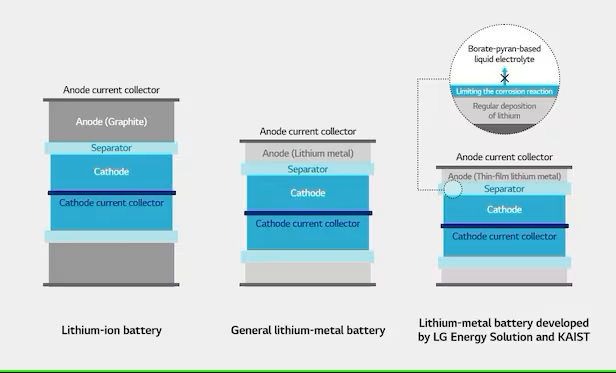
For decades, lithium-ion batteries have been the standard for energy storage. These batteries consist of a cathode, an anode, and an electrolyte that facilitates the movement of lithium ions between the two electrodes. The traditional anode material has been graphite, which is effective but has inherent limitations. Graphite-based anodes store lithium ions in microscopic spaces within the graphite structure, which limits their energy storage capacity and poses challenges for achieving higher energy density.
The Advantages of Lithium Metal Anodes
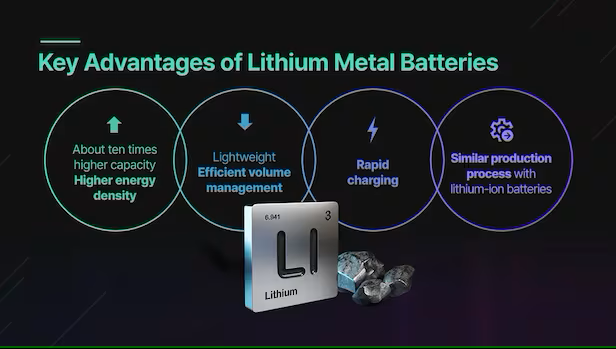
Lithium metal anodes represent a quantum leap forward in battery technology. Instead of using graphite as the anode material, these batteries use pure lithium metal as the current collector. This change drastically increases the theoretical energy storage capacity of the battery. The theoretical lithium storage capacity of metal anodes is more than ten times that of graphite-based anodes, promising up to a 40–50% increase in energy density compared to conventional lithium-ion batteries.
Higher energy density translates to longer battery life and reduced size for the same amount of energy storage. This innovation could enable electric vehicles to travel over 900 kilometers on a single charge, significantly enhancing their appeal and usability. Additionally, lithium metal anodes offer faster charging times—capable of reaching 80% capacity in just 15 minutes—a significant improvement over current EV batteries.
The Challenges of Lithium Metal Anodes
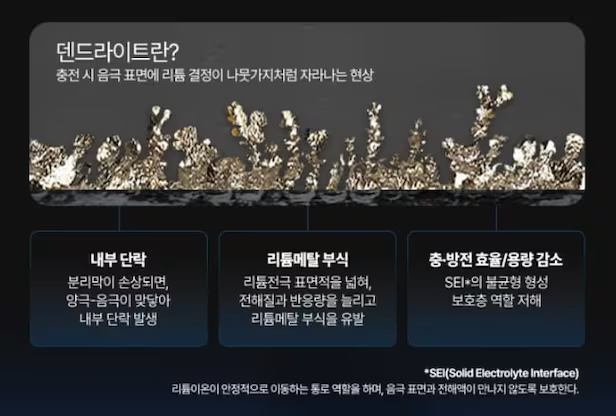
Despite their advantages, lithium metal anodes face a critical challenge: dendrite formation. Dendrites are sharp, tree-like crystalline structures that can form on the surface of the anode during charging. If these dendrites grow unchecked, they can penetrate the separator between the anode and cathode, causing internal short circuits and posing serious safety risks.
Addressing this issue is crucial for the commercialization of lithium metal anodes. Researchers are exploring various solutions, including modifying the electrolyte composition, developing new separator materials, and optimizing the battery architecture to minimize dendrite formation.
South Korea’s Leadership in Lithium Metal Anode Technology
South Korean companies are at the forefront of lithium metal anode research and development. LG Energy Solution (LGES), a global leader in battery technology, is actively working on advancing this innovative material. LGES aims to develop lithium metal batteries for small-scale systems by 2027, with future plans to expand into high-capacity applications like electric vehicles.
Other South Korean companies are also making significant strides in this field. EcoPro is collaborating with Hydro-Québec to establish a production line for lithium sulfide by 2026, which will support the development of solid-state batteries using lithium metal anodes. POSCO Future M is another key player entering the market through its research institute, N.EX.T Hub, aiming to enhance its competitive edge by diversifying its product portfolio to include lithium metal anodes.
The Potential Impact on Renewable Energy and EVs
The advancements in lithium metal anode technology hold immense potential for both electric vehicles and renewable energy storage. Higher energy density batteries would enable longer续航 for EVs, reducing the frequency of charging stops and addressing range anxiety for consumers. In the context of renewable energy, more efficient battery storage systems are essential for capturing and retaining energy from intermittent sources like solar and wind power.
Conclusion
The development of lithium metal anodes represents a major breakthrough in battery technology, offering significant improvements in energy density and charging speed. South Korea’s leadership in this field underscores its commitment to driving innovation and maintaining its position at the forefront of clean energy technologies. As researchers continue to address the challenges associated with dendrite formation, the widespread adoption of lithium metal anodes could revolutionize the way we store and use energy in the coming years.
By investing in these cutting-edge technologies, countries like South Korea are not only enhancing their industrial capabilities but also contributing to a more sustainable and electrified future. The next generation of batteries is on the horizon, and it looks set to transform industries and shape the global energy landscape.