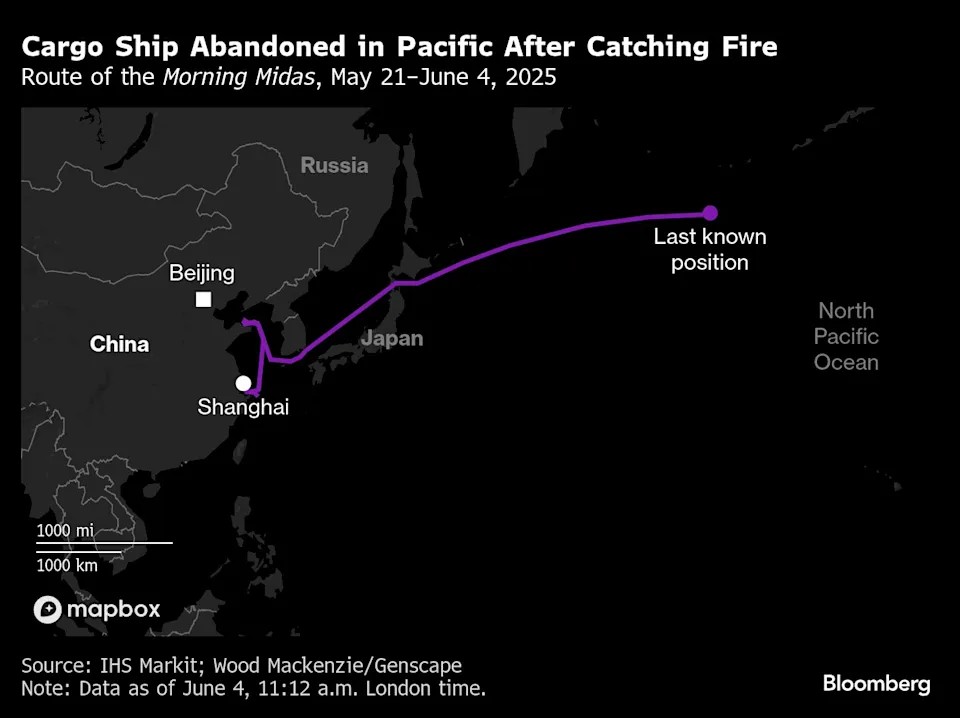
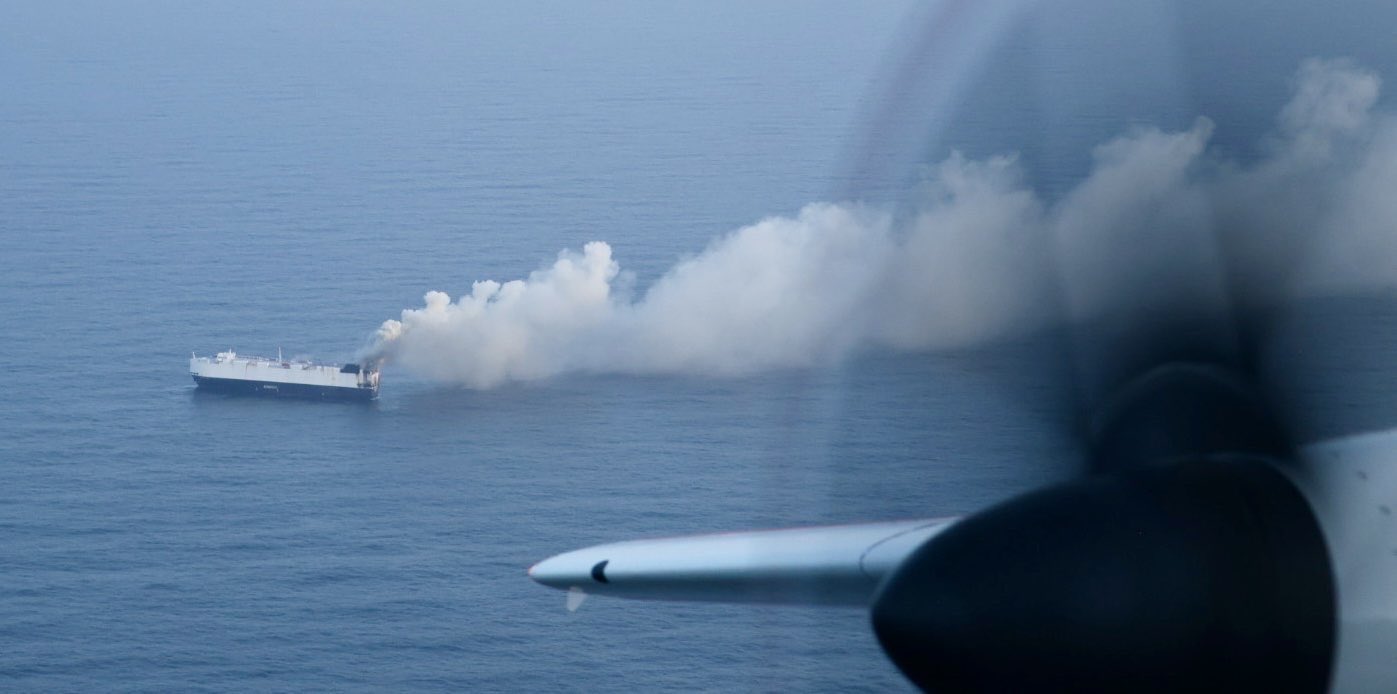
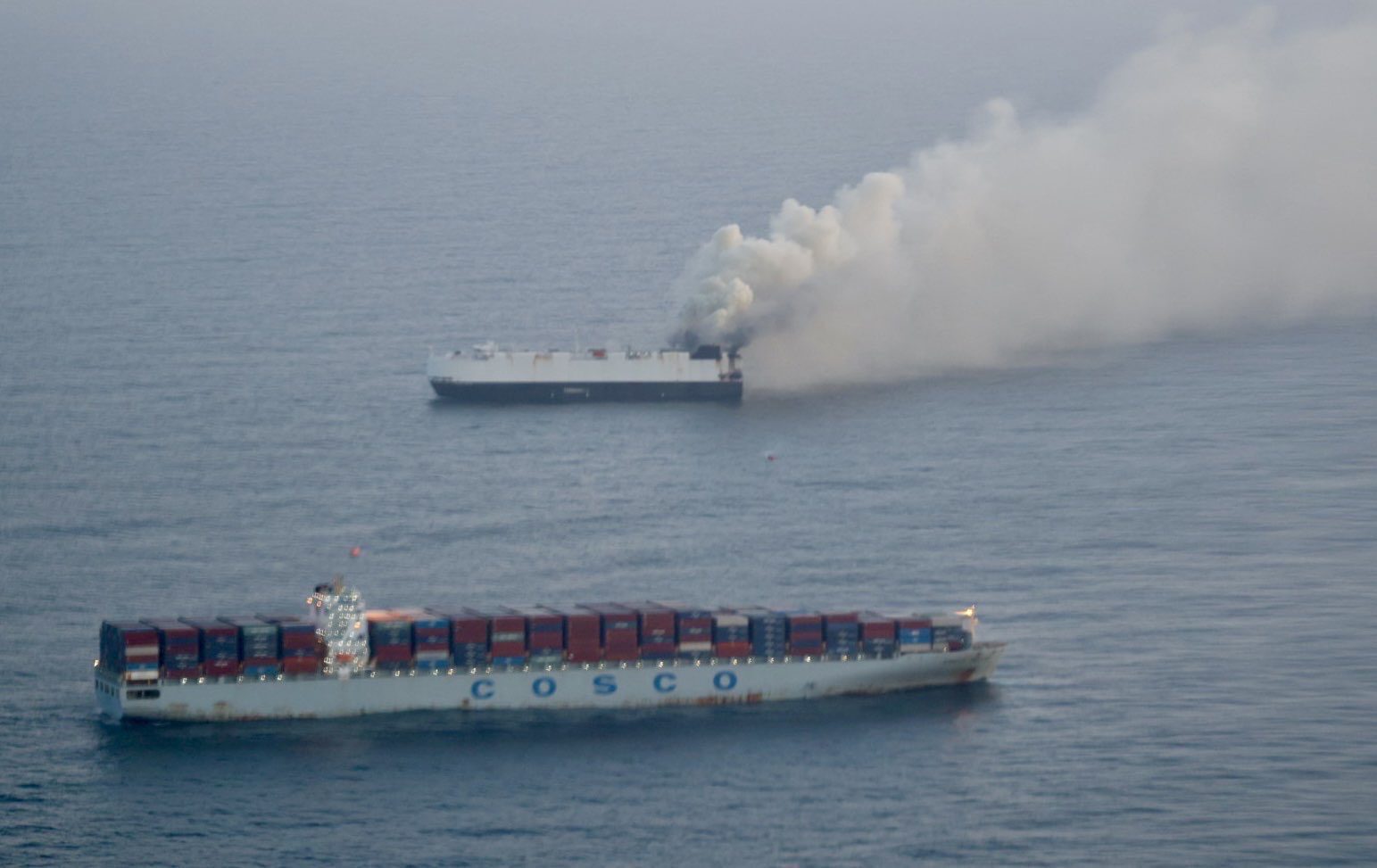
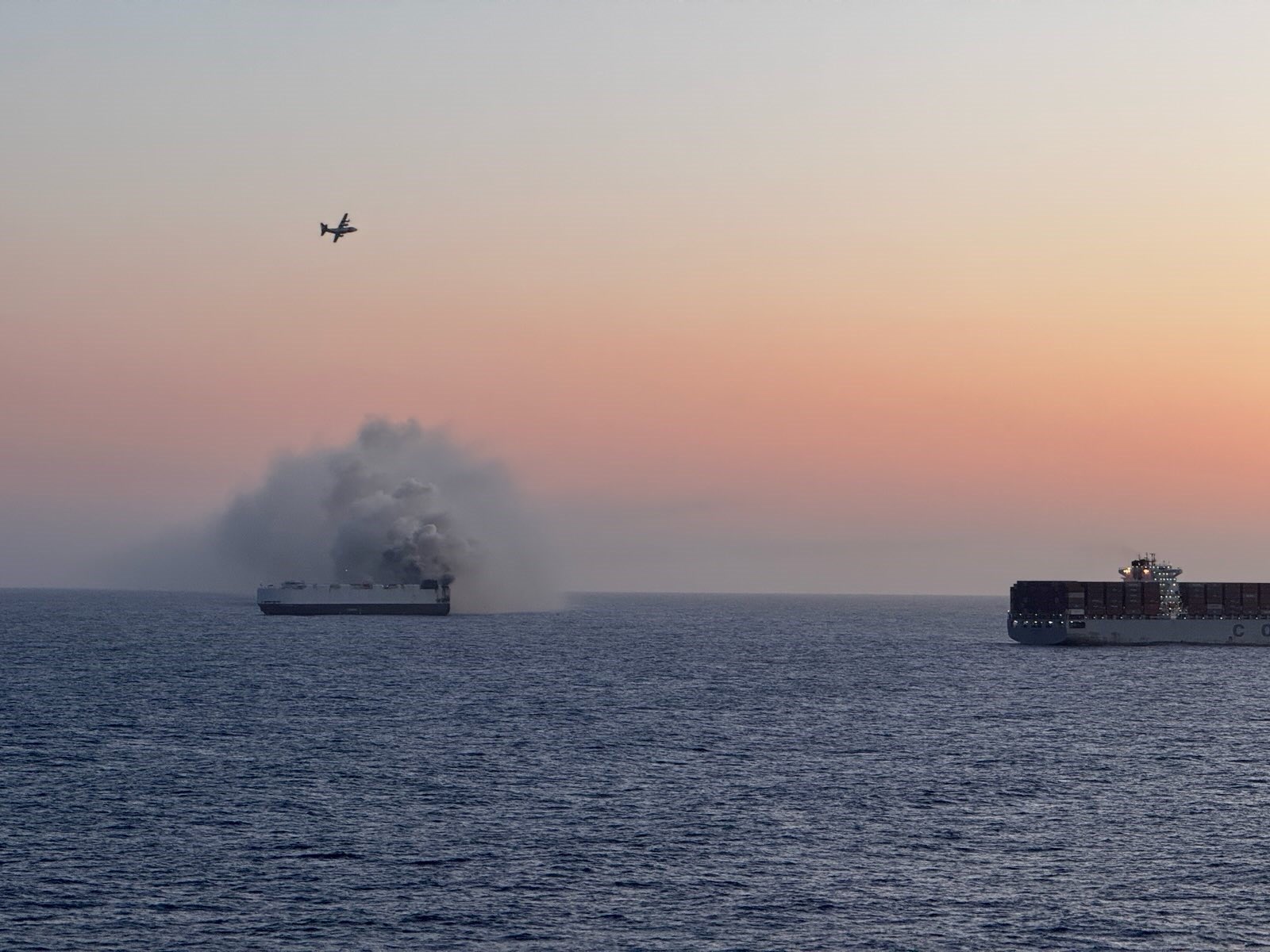
On June 4, 2025, a large cargo ship named Morning Midas caught fire in the middle of the Pacific Ocean while en route to Mexico. The vessel, managed by Zodiac Maritime, was carrying approximately 3,000 vehicles, including 800 electric vehicles (EVs). What started as a smoke report on one of the ship’s decks rapidly escalated into a severe fire, forcing the 22 crew members aboard to abandon ship. Thankfully, all crew members were safely rescued by the U.S. Coast Guard and transferred to a nearby commercial vessel. However, the ship remained adrift and engulfed in flames, with the fate of the cargo hanging in uncertainty.
This incident marks yet another high-profile case that draws attention to a rising threat: the maritime transport of electric vehicles and the hidden dangers posed by lithium-ion batteries. As the global adoption of EVs accelerates, so too does the frequency of incidents that underline the need for better fire safety, ventilation systems, and emergency protocols aboard vehicle carriers.
Fire Aboard the Morning Midas: What We Know So Far
The Morning Midas departed from Yantai Port in China on May 26 and made stops at Nansha and Shanghai ports before setting off across the Pacific Ocean toward Mexico. Days into its journey, thick smoke began billowing from one of the decks where electric vehicles were stored. Despite immediate attempts to contain the fire, the flames quickly grew out of control—likely fueled by the lithium-ion batteries onboard.
According to Zodiac Maritime, the crew initiated standard fire suppression protocols, but the efforts were ultimately unsuccessful. The U.S. Coast Guard was alerted and acted swiftly to evacuate all crew members, emphasizing that no injuries were reported. However, the shipping company has withheld details regarding the owners of the vehicles involved, and little is known about the specific brands or models among the 800 EVs aboard.
Thermal Runaway: Why EV Fires Are So Dangerous at Sea
Electric vehicle fires are fundamentally different from those involving internal combustion engine (ICE) vehicles. When a lithium-ion battery overheats, it can enter a state called thermal runaway—a feedback loop where rising temperatures cause further chemical reactions, resulting in sustained and intensified fires. These fires can burn for hours, are extremely hard to extinguish, and can re-ignite even after appearing to be under control.
In the confined, steel-lined, and poorly ventilated environments of vehicle carriers, such fires become even more perilous. Unlike an open parking lot or city street, cargo ships stack vehicles tightly, limiting airflow and access to fire zones. This makes traditional firefighting techniques insufficient. In some cases, it may take up to 8,000 gallons (over 30,000 liters) of water just to cool down a single burning battery pack.
Fire can also quickly spread from one vehicle to another in a chain reaction. The result is an inferno that not only endangers the cargo but also risks the entire ship, its crew, and maritime ecosystems.
A Pattern of Destruction: Not an Isolated Incident
The Morning Midas is not the first cargo ship to fall victim to the explosive dangers of electric vehicle shipping. In 2022, a vessel carrying approximately 4,000 cars caught fire in the Atlantic Ocean. Despite firefighting efforts and attempts to tow the ship to safety, it eventually sank with its cargo. A year later, in 2023, another fire broke out on a ship carrying around 3,000 vehicles near the Dutch coast, further demonstrating that these incidents are not flukes—they are part of a troubling trend.
These events collectively spotlight the critical vulnerabilities in current maritime shipping protocols, particularly when it comes to high-value, high-risk cargo like EVs.
The Insurance Industry Raises the Alarm
Insurance giant Allianz released a report just last month highlighting the emerging dangers associated with transporting lithium-ion batteries. The report warns that the global shipping industry is largely underprepared for the challenges presented by this technology. With EV adoption skyrocketing, the risk profile of maritime transport has changed dramatically—yet the safety measures in place are still catching up.
“Electric vehicles introduce a new layer of complexity to fire risk management,” Allianz stated. “Their batteries are not only more volatile but also significantly increase the financial loss potential per shipment.”
Insurers are now reassessing their exposure, with some even considering higher premiums or stricter underwriting conditions for cargo involving EVs. In extreme cases, insurers might restrict or deny coverage altogether unless vessels meet new safety compliance standards.
Shipping Industry’s Response: Too Little, Too Late?
In response to recent incidents, the maritime industry has begun updating its safety protocols. Last year, a major maritime safety organization released updated guidelines on managing fires involving lithium batteries. These include recommendations for enhanced onboard detection systems, segregated storage for EVs, and specialized fire suppression materials capable of cooling high-energy battery fires.
However, many experts argue that the changes have been incremental at best. Cargo ships currently in operation were largely designed for the ICE era and lack the architectural and technological adaptations needed to safely accommodate EVs.
Furthermore, retrofits are costly, and shipping companies are hesitant to invest without regulatory mandates or clear financial incentives. This has created a lag between risk recognition and effective mitigation.
The Path Forward: Innovation and Regulation
To make EV shipping safer, stakeholders across the supply chain—automakers, shipbuilders, insurance companies, and regulatory agencies—must collaborate on systemic reforms. Some proposed measures include:
- Dedicated EV decks with enhanced ventilation and heat-detection systems.
- Pre-loading battery diagnostics to screen for thermal instability before transport.
- Specialized fireproof containment zones that isolate vehicles in case of ignition.
- Mandatory crew training for lithium battery fire scenarios.
Moreover, international maritime organizations like the International Maritime Organization (IMO) are under pressure to standardize safety regulations for transporting high-energy batteries across seas. Without such frameworks, the risk of future catastrophes remains high.
Conclusion: A Smoldering Issue Demands Urgency
The Morning Midas fire is not just another maritime accident—it is a burning warning sign of the urgent need to adapt global shipping practices to the realities of electrification. As the EV revolution accelerates, the maritime industry must not lag behind. Failing to act now could mean more fires, more losses, and potentially, more lives at risk.
The rise of electric vehicles has the potential to reduce global carbon emissions significantly. But as their reach extends to sea-based logistics, new challenges arise that cannot be ignored. If lithium-ion battery shipping risks are not proactively addressed, the environmental and financial benefits of EVs could be overshadowed by a wave of maritime disasters.