BASF Launches One of Europe’s Largest Black Mass Plants in Germany to Boost Battery Recycling Capacity
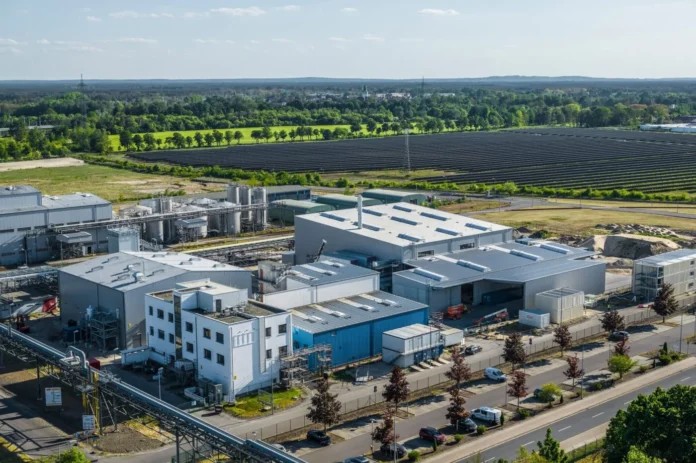
BASF has officially commissioned its state-of-the-art black mass production facility in Schwarzheide, Brandenburg, Germany, marking a major milestone in Europe’s transition toward a sustainable battery recycling ecosystem. With a processing capacity of up to 15,000 tons of spent lithium-ion batteries and production scrap per year, the Schwarzheide facility is one of the largest of its kind on the continent. This equates to recycling the battery materials from approximately 40,000 electric vehicles annually, a significant contribution to the circular economy.
Delays and Realization
The project, first announced in June 2022, was originally scheduled to commence operations in early 2024. Despite the delay, the plant is now fully operational and forms part of BASF’s broader European battery materials strategy. It complements the company’s existing cathode active materials (CAM) production lines and a prototype metal refinery, all located at the Schwarzheide site.
This trifecta of facilities enables BASF to cover a wide spectrum of the battery lifecycle—from cathode material production to recycling end-of-life batteries. BASF’s investment demonstrates a long-term commitment to battery material circularity and aligns with the increasing regulatory and environmental pressures driving sustainability in the European Union.
What is Black Mass?
Black mass is a term used to describe the powdery residue obtained from mechanically processing used lithium-ion batteries. After a series of steps including dismantling, crushing, and sorting, non-metallic and easily separable components like aluminum and plastic are removed, leaving behind the black mass. This material is rich in valuable and finite battery metals such as lithium, cobalt, nickel, and manganese.
The recovery of these materials is critical to reducing reliance on virgin resources and supporting the growing demand for battery raw materials. BASF applies hydrometallurgical processes, involving water and chemical treatments, to extract and purify individual metals from the black mass. These recovered materials are then reintroduced into the battery supply chain, particularly in the manufacture of new cathode materials.
Strategic Importance and EU Battery Regulation Compliance
Dr. Daniel Schönfelder, President of BASF’s Battery Materials Division, emphasized the strategic importance of the Schwarzheide black mass plant:
“Our new Black Mass plant is another proof of our commitment to the battery materials and recycling industry, which remains one of the most significant growth opportunities in the chemical industry and for BASF Battery Materials.”
The facility is also tailored to help meet the European Union’s Battery Regulation requirements, which mandate increasing levels of recycled content in new batteries and place significant emphasis on raw material recovery efficiency. By closing the materials loop, BASF provides its customers with solutions that are not only environmentally sustainable but also aligned with regulatory compliance.
Collaboration Across Europe: BASF and Stena Recycling
To support its recycling initiative, BASF has forged a strategic partnership with Stena Recycling, one of the leading recycling companies in Europe. Under an agreement finalized in early 2024, Stena Recycling’s facility in Halmstad, Sweden handles the collection, assessment, and pre-treatment of end-of-life batteries and production scrap.
Once processed, the pre-treated material—black mass—is transported to BASF’s Schwarzheide facility for further refining. The collaboration’s long-term goal is to transfer these processes to BASF’s upcoming commercial-scale metal refinery, enabling high-efficiency recovery of critical battery metals at industrial scale. The partnership highlights the importance of regional integration and coordination within the European battery recycling value chain.
The CATL Partnership and European Battery Ecosystem
BASF’s recycling efforts are further enhanced through a strategic partnership with CATL (Contemporary Amperex Technology Co. Limited), the world’s largest lithium-ion battery manufacturer. Announced in 2021, the collaboration focuses on active cathode materials development and battery recycling and supports both CATL’s localization strategy in Europe and BASF’s global expansion.
CATL’s own battery manufacturing facility near Erfurt, Germany, opened in 2023, aligns well with BASF’s infrastructure in Schwarzheide. The companies are working in tandem to establish a sustainable and localized battery supply chain, from raw material recovery to final cell production. As demand for electric vehicles surges, such closed-loop models become not only environmentally responsible but also economically vital for securing Europe’s battery independence.
BASF’s Comprehensive Value Chain Coverage
BASF is now among the few companies in Europe that can claim full coverage of the battery recycling value chain. This includes:
- Collection of end-of-life batteries and production scrap
- Discharging and dismantling of battery packs
- Mechanical pre-treatment to generate black mass
- Hydrometallurgical refining of black mass to extract critical raw materials
- Integration with CAM production for battery manufacturing
By leveraging both its internal infrastructure and an external network of specialized partners, BASF is building a resilient, scalable, and sustainable recycling model for lithium-ion batteries in Europe.
Environmental and Economic Impacts
Battery recycling has far-reaching implications beyond resource conservation. According to studies, producing metals from recycled black mass reduces greenhouse gas emissions by up to 60% compared to mining new materials. Furthermore, recycling localizes supply chains, reduces geopolitical risks, and cushions manufacturers against volatile raw material prices.
BASF’s Schwarzheide facility, therefore, not only creates local jobs and drives innovation but also plays a pivotal role in Europe’s Green Deal and net-zero ambitions. The initiative also sets an example for other chemical and material giants to follow, signaling a shift toward closed-loop systems in the energy transition era.
Looking Ahead
With a fully operational black mass production facility, an upcoming metal refinery, and established partnerships across Europe, BASF is positioned at the heart of Europe’s battery sustainability transformation. As regulations tighten and raw material shortages loom, companies that invest in closed-loop battery recycling and material circularity will hold a distinct strategic advantage.
In the words of BASF leadership, the Schwarzheide black mass plant is not just a facility—it’s a cornerstone of Europe’s battery future.