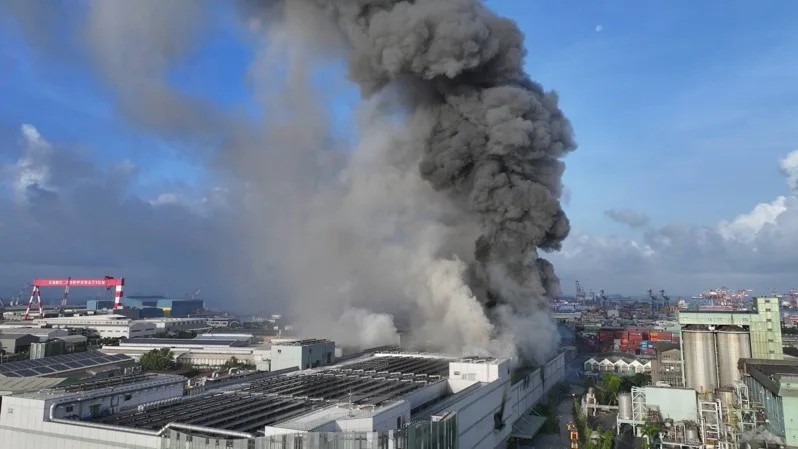
On the early morning of July 14, thick smoke rose above Kaohsiung’s Xiaogang District as a fire broke out at TCC Group’s subsidiary, Molicel’s Sanyuan Energy Technology battery factory. Located on Changchun Street, this facility is Taiwan’s first giga-scale battery plant, specializing in high-power lithium nickel-cobalt-manganese (NCM) batteries primarily for electric vehicles (EVs).

The fire erupted around 5:04 AM, reportedly following a loud explosion heard by night-shift workers. While the source of the fire is still under investigation, initial reports indicate it originated from the warehouse where half-finished batteries were undergoing their first charge cycle. The rapid spread of flames forced an immediate evacuation. In total, 16 individuals—12 employees and 3 firefighters—suffered injuries ranging from smoke inhalation to minor burns. Fortunately, all were conscious upon hospital admission and are expected to recover.
Swift Response and Firefighting Challenges
High-risk materials within the plant made firefighting efforts exceptionally difficult. Upon arrival, emergency services dispatched 46 fire trucks and 91 personnel. Robots and cranes were also deployed to enter hazardous areas and assist with water line setup. However, conventional water-based firefighting methods proved ineffective. The facility stored vast quantities of lithium-ion batteries and raw materials—some of which, like metallic lithium, react violently with water.
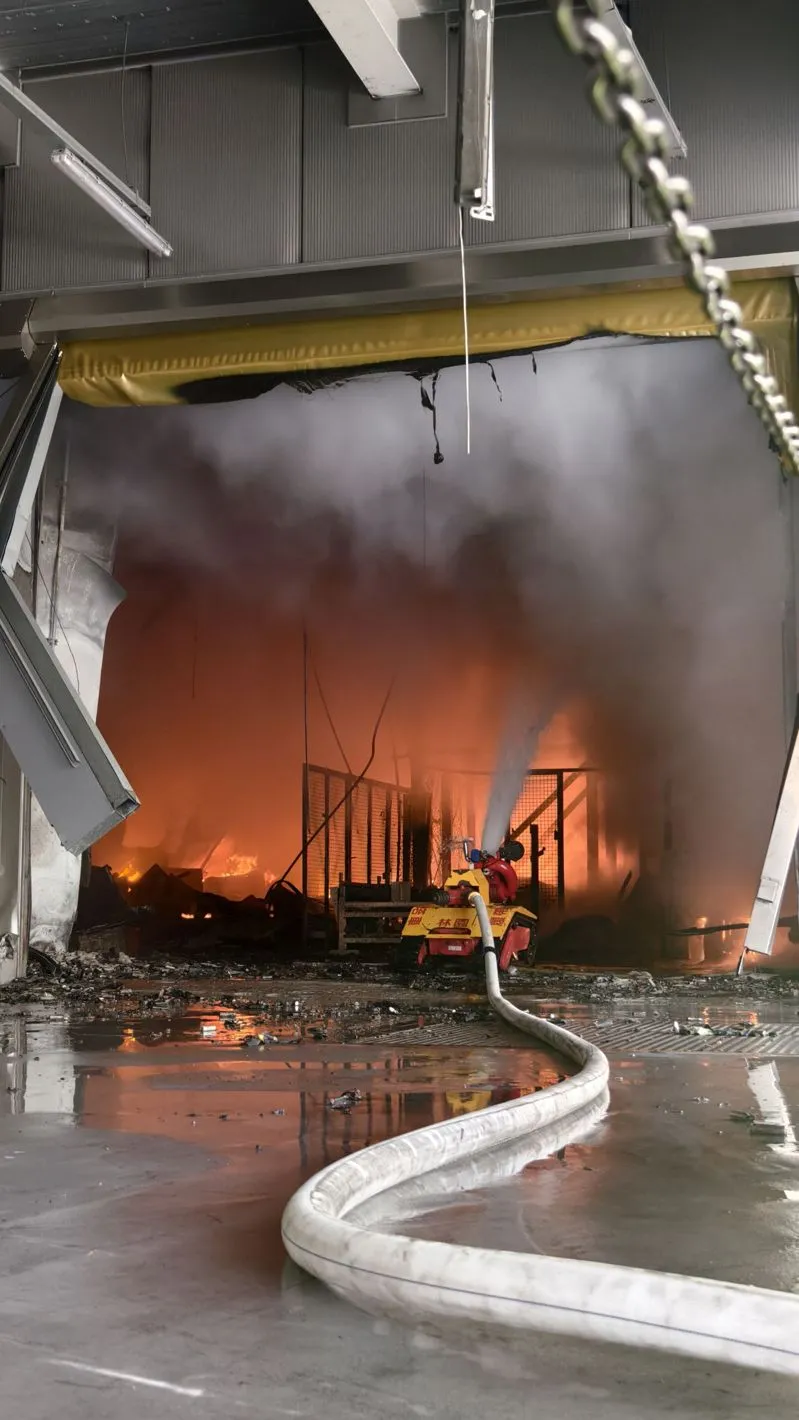
Instead, responders resorted to using dry powder and sand to smother the fire and prevent oxygen from fueling further combustion. The fire was eventually contained, with no visible flames remaining. A temperature monitoring phase followed to ensure there were no flare-ups or hidden embers.
Lithium Battery Plants: A Growing Safety Concern
The incident underscores a growing concern in the global EV supply chain: the fire risk associated with lithium battery production. Battery materials, including lithium, nickel, cobalt, and manganese, are highly reactive. In NCM batteries, especially when stored as powder, the potential for thermal runaway, dust explosions, and oxygen release under high heat is significant.
These risks were tragically exemplified in 2024, when a similar fire at South Korea’s Aricell battery plant resulted in 23 deaths and 8 injuries. That disaster prompted many Asian battery makers to upgrade fire safety measures—introducing dust collection systems and nitrogen blanketing solutions to reduce ignition risks.
Despite these upgrades, battery production remains a high-risk industrial activity. The Kaohsiung fire highlights the need for continuous review and enhancement of factory safety protocols, especially as the global demand for EV batteries accelerates.
Taiwan’s First Giga Battery Factory
Molicel, established in 1998, has become one of the world’s leading producers of rechargeable lithium-ion batteries. Its Kaohsiung facility—Taiwan’s first giga-scale battery plant—began commercial operation in 2023. With an annual production capacity of 1.8 GWh, it primarily manufactures high-nickel cylindrical cells for global clients such as Dyson and Mini.
The factory was developed on the site of TCC’s former paper mill, and its strategic pivot reflects broader industry trends. Molicel has been transitioning from high-cobalt to high-nickel chemistries to meet growing performance demands in EVs and power tools.
Plans are also underway to redevelop another facility in Southern Taiwan Science Park, further scaling up Molicel’s production capabilities. However, in the wake of this fire, operational risk and infrastructure safety will likely come under tighter scrutiny.
Government and Public Response
In response to the incident, Taiwan’s Environmental Protection Bureau issued an air quality warning for the Xiaogang area. Given the northeast wind direction at the time, nearby residents were advised to close windows, limit outdoor activities, and wear protective masks.
TCC Group, the parent company of Molicel, issued a formal statement confirming that the sprinkler system was triggered automatically at the fire’s onset. The company is fully cooperating with local authorities on the investigation and has initiated an internal damage assessment. According to their disclosure, the facility is insured, though total losses have yet to be determined.
Despite the incident, TCC assured that factory staff had been fully evacuated at the first sign of danger and that environmental monitoring is ongoing. Company shares briefly dipped to NT$22.9 in early trading, reflecting investor concern, though no long-term impacts on operations have been announced yet.
The Road Ahead: Strengthening Safety in the EV Ecosystem
As the EV industry continues its rapid growth, the Kaohsiung fire is a stark reminder of the safety vulnerabilities embedded within the battery manufacturing sector. Fire risks not only endanger lives and property but also threaten supply chain stability and public trust.
Moving forward, manufacturers must adopt stricter fire prevention designs, such as flameproof enclosures, oxygen-reduction systems, and intelligent monitoring for early thermal runaway detection. Governments, for their part, should mandate more rigorous fire safety inspections, especially in facilities storing large volumes of reactive materials.
For Taiwan, this incident could be a turning point. As it positions itself as a critical player in the global EV supply chain, ensuring robust safety standards will be crucial—not only to protect workers and communities but also to maintain international confidence in its manufacturing reliability.
Conclusion
The fire at Molicel’s Kaohsiung plant illustrates the dual-edged nature of high-tech progress: while the push for EV adoption fuels economic transformation, it also brings complex safety challenges. The global battery industry must treat safety not as an afterthought, but as a foundational pillar of its future.
With rising demand, expanding gigafactories, and new chemistries on the horizon, the time for proactive safety modernization is now. Taiwan—and the world—cannot afford another wake-up call.