On September 23, 2025, the Suwon District Court in South Korea delivered a final verdict on the internationally shocking Aricell lithium battery factory fire case. The company’s CEO Park Soon-kwan was sentenced to 15 years in prison for violating the Serious Accidents Punishment Act and the Occupational Safety and Health Act, among other regulations. This ruling sets the heaviest penalty record since South Korea’s industrial safety law implementation, marking an unprecedented strict stance on corporate safety accountability.
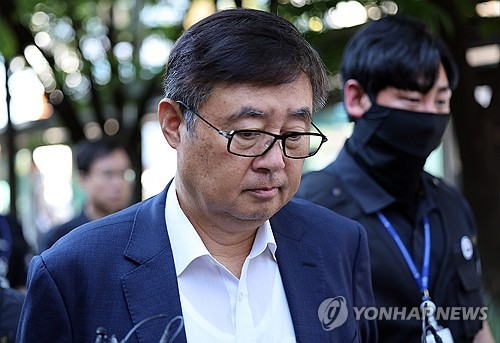
Unprecedented Harsh Verdict Shakes South Korean Society
The Suwon District Court determined that Park Soon-kwan, as the company’s leader, failed to ensure necessary safety measures were in place. The judge explicitly stated that the fire was “not an unpredictable accident” under the company’s operating conditions at the time. Notably, Park Soon-kwan’s son, who served as a senior company executive, was also sentenced to 15 years in prison.
This marks the heaviest sentence since South Korea’s Serious Accidents Punishment Act took effect in 2022. The law stipulates that company owners or CEOs can face at least one year in prison or fines up to 1 billion won (approximately $717,000) when fatal industrial accidents occur. Previously, according to South Korean media reports, the longest sentence under this law was only two years, making this 15-year heavy sentence demonstrate an unprecedented emphasis on corporate safety responsibility by South Korea’s judicial system.
Fire Tragedy: 35,000 Batteries Explode in Chain Reaction Within 42 Seconds
On the morning of June 24, 2024, at approximately 10:30 AM, an unprecedented industrial fire broke out at the Aricell lithium battery manufacturing factory located in Hwaseong, Gyeonggi Province, South Korea. Surveillance footage showed that it took only 42 seconds from when batteries began smoking to complete explosion. The factory’s 35,000 lithium batteries exploded in a chain reaction, with the fire burning for over five hours.
This catastrophic fire ultimately killed 23 workers, including 17 Chinese nationals, with another 8 seriously injured. The victims primarily died from suffocation. Firefighters took 22 hours of difficult firefighting efforts to completely control the blaze, leaving only ruins at the scene.
Serious Corporate Safety Management Negligence Exposes Systemic Problems
Court proceedings revealed serious deficiencies in Aricell’s safety management. Investigators found that the company failed to implement proper safety protocols, did not provide adequate worker training, heavily relied on temporary workers, and ignored warning signs of dangerous product defects while rushing to meet deadlines.
Even more shocking, prosecutors alleged that Aricell executives made modifications to the factory that made it difficult for workers to escape during the fire, including installing false walls in evacuation routes. The court explicitly stated in its verdict: “Park Soon-kwan was found to have violated his duty to ensure safety and health by failing to safely maintain evacuation exits and routes.”
The investigation also uncovered deeper systemic issues. Starting in 2021, when the company began providing relevant battery products to the South Korean military, it consistently used deceptive methods such as substituting testing products to pass safety inspections, with shoddy production processes and poor management that ultimately led to defective battery products catching fire and causing the tragedy.
Prosecutors’ Harsh Condemnation: Putting Profit Over Human Lives
During the trial, prosecutors harshly condemned Park Soon-kwan for “putting profit over human lives with no remorse” in their sentencing recommendation. Prosecutors initially sought a 20-year prison term for Park Soon-kwan. Although the final sentence was 15 years, it still set the heaviest penalty record under South Korea’s industrial safety law.
It’s worth noting that Park Soon-kwan had previously issued a public apology but denied allegations of safety lapses at the factory. However, the court clearly rejected this defense, believing that corporate management must bear full responsibility for this preventable tragedy.
Landmark Ruling for South Korea’s Industrial Safety Law
This verdict is not only significant for Aricell but also represents an important turning point in South Korea’s industrial safety regulation. South Korea implemented the Serious Accidents Punishment Act in 2022, aimed at strengthening worker protection through criminal prosecution to hold employers accountable.
South Korean President Lee Jae-myung previously stated that despite introducing laws aimed at holding employers accountable through criminal prosecution, not enough was being done to protect workers from being killed or injured on the job. According to government data, 589 people died in work-related accidents last year, highlighting the severity of South Korea’s industrial safety issues.
Aricell Company Background and Industry Impact
Aricell is a lithium battery manufacturer under South Korea’s SK Group, established in 2020 as a joint venture between SK Innovation and SK IE Technology. The company mainly produces lithium batteries for sensors and wireless communication equipment, with an annual production capacity of 5GWh, accounting for approximately 1.25% of South Korea’s total annual battery production capacity.
The company was ordered to completely shut down for rectification after the accident, and three company executives were charged with violating the Occupational Safety and Health Act and the Serious Accidents Punishment Act. This accident not only caused irreparable losses to victims’ families but also seriously damaged the image of South Korea’s lithium battery industry.
International Impact and Continued Attention
This fire accident attracted international attention due to the involvement of 17 Chinese nationals among the victims. The Chinese government attached great importance to this incident, demanding that South Korea make every effort to treat the injured, properly handle the aftermath, and thoroughly investigate the cause of the accident.
This heavy sentence not only reflects the South Korean judicial system’s emphasis on industrial safety but also sends a strong signal to the international community: no company can pursue profit maximization at the cost of worker safety. This verdict may have far-reaching effects on industrial safety standards throughout East Asia, pushing related companies to place greater emphasis on safe production.
As global demand for lithium batteries continues to grow, this accident also reminds the entire industry that while pursuing capacity expansion, worker safety must be prioritized. The 15-year heavy sentences for Park Soon-kwan and his son will become an important warning in South Korea’s industrial safety history, sounding the alarm for safe production for all corporate managers.