In a bold leap toward decarbonizing industrial transportation, Australian mining giant Fortescue has unveiled the working prototype of its highly anticipated Infinity Train—a fully battery-electric locomotive that recharges itself using regenerative braking and gravity. The company has now successfully completed a real-world 1,100-kilometer (approximately 685-mile) journey from Perth to its mining operations in Pilbara, marking a critical milestone in Fortescue’s roadmap to achieving Real Zero emissions.
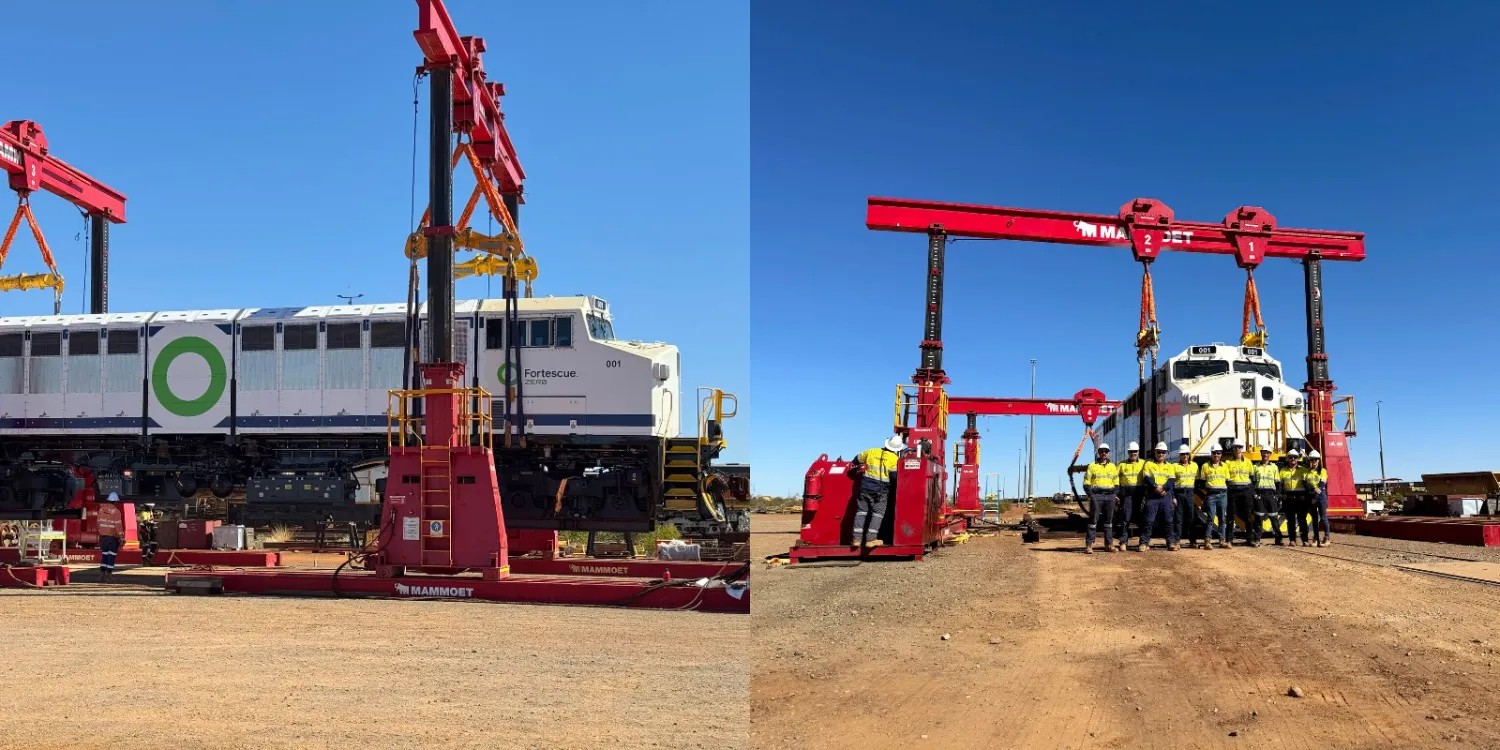
First introduced as a concept in March 2022, the Infinity Train is the product of a joint development between Fortescue and Downer Group, specialists in locomotive engineering. The goal was ambitious: to build the world’s first self-charging iron ore train, eliminating the need for fossil fuels or even external charging stations. Two years later, that vision is now a reality.
A World First: Regenerative Braking Meets Industrial Scale
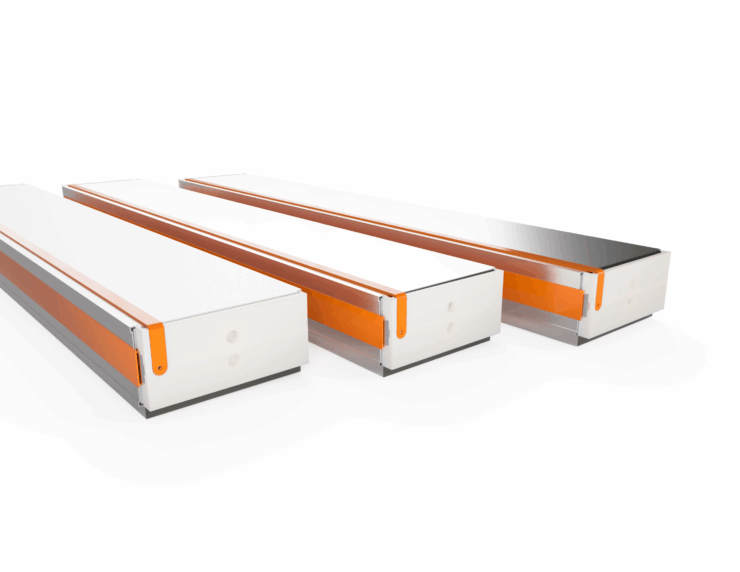
The Infinity Train works on a deceptively simple yet ingenious principle: gravity. As the fully-loaded train descends from mining sites toward port facilities along Fortescue’s 385-mile private rail network, the regenerative braking system captures the energy generated from braking. This electricity is stored in large battery packs onboard the locomotive.
Once the iron ore is offloaded, the energy stored during the descent is used to power the now-empty train on its return journey uphill, back to the mine. In essence, the train is charging itself—making it a nearly self-sufficient zero-emission transport solution.
“This achievement represents a major step in Fortescue’s journey to Real Zero,” said Ellie Coates, CEO of Fortescue Zero. “We’re thrilled to see our battery electric locomotive prototype arrive in the Pilbara without a single drop of diesel.”
Environmental Impact: A Clear Step Toward “Real Zero”
The environmental implications of deploying the Infinity Train are significant. Fortescue estimates that replacing its current diesel-powered rail operations with the Infinity Train will cut diesel consumption by over 82 million liters per year—equivalent to around 21 million gallons.
In terms of carbon emissions, this translates to a reduction of approximately 235,200 tons of CO₂ annually, accounting for 11% of Fortescue’s total Scope 1 emissions. This single change pushes the company notably closer to its target of reaching “Real Zero”—a state of zero fossil fuel usage across all operations.
By eliminating external fuel needs and minimizing emissions at scale, Fortescue is not just optimizing its operations; it is redefining sustainability benchmarks for the global mining industry.
Engineering Resilience Meets Environmental Intelligence
Heavy-haul rail systems like Fortescue’s are traditionally powered by diesel locomotives due to the high power requirements and challenging terrains. The Infinity Train, however, proves that electric mobility—when paired with intelligent energy recovery and storage—can not only match but potentially outperform fossil-fuel systems in demanding industrial applications.
The project leverages years of locomotive expertise from Downer Group and Fortescue’s in-house innovations in battery technology, system integration, and mining logistics. The result is a train that requires no external charging infrastructure, no renewable energy supply, and no compromise in performance.
This makes the Infinity Train a blueprint for sustainable freight rail systems, particularly for industries operating in remote or off-grid locations.
Scalability and Broader Implications
While Fortescue’s Infinity Train is tailored for its own iron ore operations, the broader implications are immense. The model can potentially be adapted for:
- Mining companies seeking low-carbon logistics
- Freight rail networks in mountainous regions
- Ports and terminals requiring green transport links
- Intermodal supply chains aiming to decarbonize
Moreover, the success of Infinity Train underscores a powerful reality: zero-emission industrial transport is no longer theoretical. It is happening now, and it is scalable.
As policymakers and industry leaders worldwide look for actionable solutions to meet net-zero commitments, innovations like Fortescue’s locomotive serve as tangible proof of concept—showing that heavy-duty operations can become sustainable without sacrificing efficiency or profitability.
A Strategic Win for Fortescue—and the Planet
Fortescue’s Infinity Train is more than a prototype—it’s a technological milestone and a strategic pivot. By drastically reducing fuel dependency, Fortescue strengthens its resilience to volatile energy markets while also enhancing its environmental credentials in a carbon-conscious global economy.
It also adds momentum to Fortescue’s broader Green Energy strategy, which includes transitioning all mining equipment, shipping, and processing systems to renewable-powered, zero-emission operations.
With the successful rollout of the Infinity Train prototype, Fortescue has made it clear: the future of industrial freight is clean, efficient, and self-sustaining.
Conclusion: The Gravity of Innovation
By harnessing the simplest force in nature—gravity—Fortescue has achieved one of the most complex sustainability breakthroughs in modern rail transport. The Infinity Train not only rewrites the rules for electric freight locomotives but also raises the bar for what’s possible in green logistics.
As the world races to decarbonize, Fortescue’s Infinity Train offers a compelling lesson: sometimes the best way forward is to let gravity do the work—literally and metaphorically.