As the global electrification movement gains momentum, the limitations of traditional battery design are becoming more evident. Current battery modules—glued or welded into rigid assemblies—offer structural integrity, but come with major drawbacks: they are difficult to repair, nearly impossible to recycle, and prone to safety concerns such as thermal propagation. An Austrian company, Resch, has developed a disruptive solution that not only addresses these issues but also offers significant cost savings.
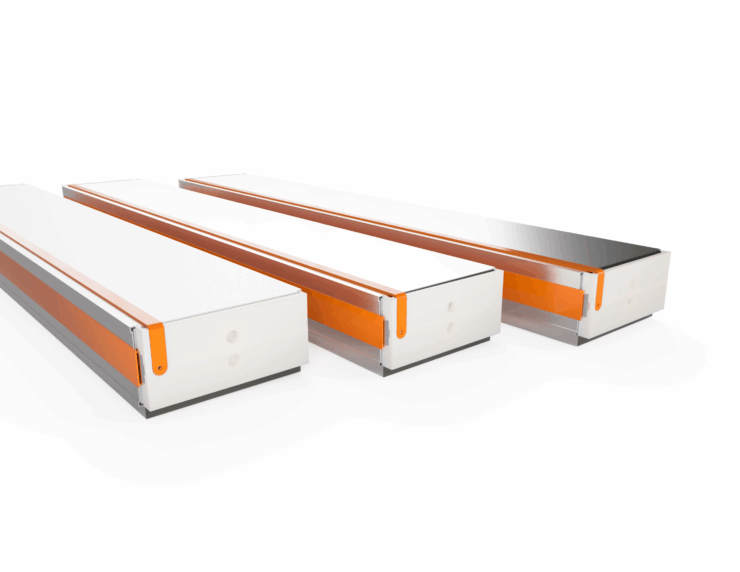
The Resch Battery Module represents a paradigm shift in electric battery technology. Developed by the family-run business based in St. Stefan im Rosental, southeast Styria, Austria, the innovation foregoes adhesives and welding entirely. Instead, Resch uses a mechanical plug-in system for battery cells, allowing them to be removed and replaced individually. Think of it like “Lego for batteries,” as the company’s managing director Gerald Resch puts it.
A Revolutionary Approach to Battery Engineering
Traditional battery packs are sealed units. Whether used in electric vehicles (EVs) or stationary energy storage systems, these batteries are difficult to disassemble. The inability to isolate and replace faulty cells results in entire modules being discarded, contributing to both high costs and environmental waste.
Resch’s modular system is designed to counter this. By using mechanical connections rather than permanent bonds, the new modules can be opened, repaired, and reused. This design facilitates component-level maintenance, significantly extending battery lifespans and reducing material waste. Moreover, it aligns perfectly with emerging circular economy models and sustainability goals across the auto and energy sectors.
Another huge benefit is compatibility. The Resch module is cell-type agnostic, meaning it can support all common battery cell formats. From cylindrical to pouch cells, the starting plate accommodates a wide range of components, making it versatile across industries and applications.
Cost Reduction and Production Efficiency
While the technology’s sustainability aspects are compelling, the economic advantages are even more striking. Resch claims that their system enables cost reductions of up to one-third in serial production compared to conventional battery modules.
This is made possible by:
- Elimination of expensive adhesives and welding operations
- Easier assembly processes
- Modular scalability
- Reduced material waste and defective module disposal
The company’s in-house capabilities further bolster these efficiencies. With design, machining, friction stir welding, and additive manufacturing all handled under one roof, Resch ensures tight control over quality and innovation. Their R&D investment ratio of 18%—significantly above the industry average—demonstrates a strong commitment to continuous improvement.
Additionally, the entire system has been engineered for full automation, meaning it can support both small-scale and large-scale production with minimal human intervention. This scalability makes Resch’s design appealing for not just boutique EV startups but also mass-market automakers.
Safety Built into the Structure
In battery design, thermal propagation remains a critical concern. When one cell overheats, it can trigger a chain reaction, igniting adjacent cells and causing severe damage or even fires. This danger is particularly pronounced in large EV battery packs and industrial storage systems.
Resch tackles this issue head-on with a two-layer safety design:
- A folding mechanism that channels flammable gases and debris downward, away from adjacent cells.
- A separation barrier that thermally insulates each cell to prevent heat transfer.
This built-in fire mitigation system offers a layer of protection typically absent in conventional modules, reinforcing the system’s suitability for high-voltage and safety-sensitive applications.
Industrial and Cross-Sector Applications
Resch’s innovation has already attracted attention across Central European automotive manufacturers, many of whom are in talks to explore series production partnerships. Gerald Resch confirms that discussions are “promising” and that new entrants to the EV industry—who are not locked into legacy battery architectures—are especially interested.
Beyond automotive, the potential applications are vast:
- Aviation and aerospace: where weight, repairability, and safety are paramount.
- Marine vessels: demanding modular and maintainable power solutions.
- Stationary energy storage: where modularity can support capacity scaling and long-term maintenance.
- Industrial robotics and machinery: with variable power needs and upgrade paths.
By offering a flexible, safe, and recyclable battery platform, Resch positions itself as a key enabler of the global energy transition.
Conclusion: Redefining the Battery Supply Chain
As Europe seeks to strengthen its independence from Asian battery manufacturing dominance, companies like Resch are proving that innovation and manufacturing excellence can come from within the continent. Their modular battery design challenges long-standing conventions and delivers economic, environmental, and functional value.
By simplifying construction, enabling recyclability, and reducing costs, Resch is not only solving technical problems but is also offering a market-ready battery solution that aligns with future regulatory and customer demands.
In a world accelerating toward electrification, Resch Battery Modules offer a blueprint for how smart design and industrial strategy can create products that are not just better—but fundamentally different in all the right ways.