November 21, 2025 – The combined energy storage capacity of the European Union, United Kingdom, Norway, and Switzerland is expected to reach 100 GW this month, according to a new analysis released by LCP Delta and Energy Storage Europe at the Enlit Europe conference. This historic milestone represents enough capacity to meet the peak electricity demand of Germany and the Netherlands combined.
Diversified Technology Mix Shows Robust Development
As of early November, Europe’s deployed energy storage capacity reached 99.3 GW and is expected to officially cross the 100 GW threshold by month’s end. From a technology perspective, pumped-hydro storage (PHS) continues to dominate with 50.6 GW of installed capacity, accounting for more than half of the total, including 500 MW added this year in Belgium and Austria.
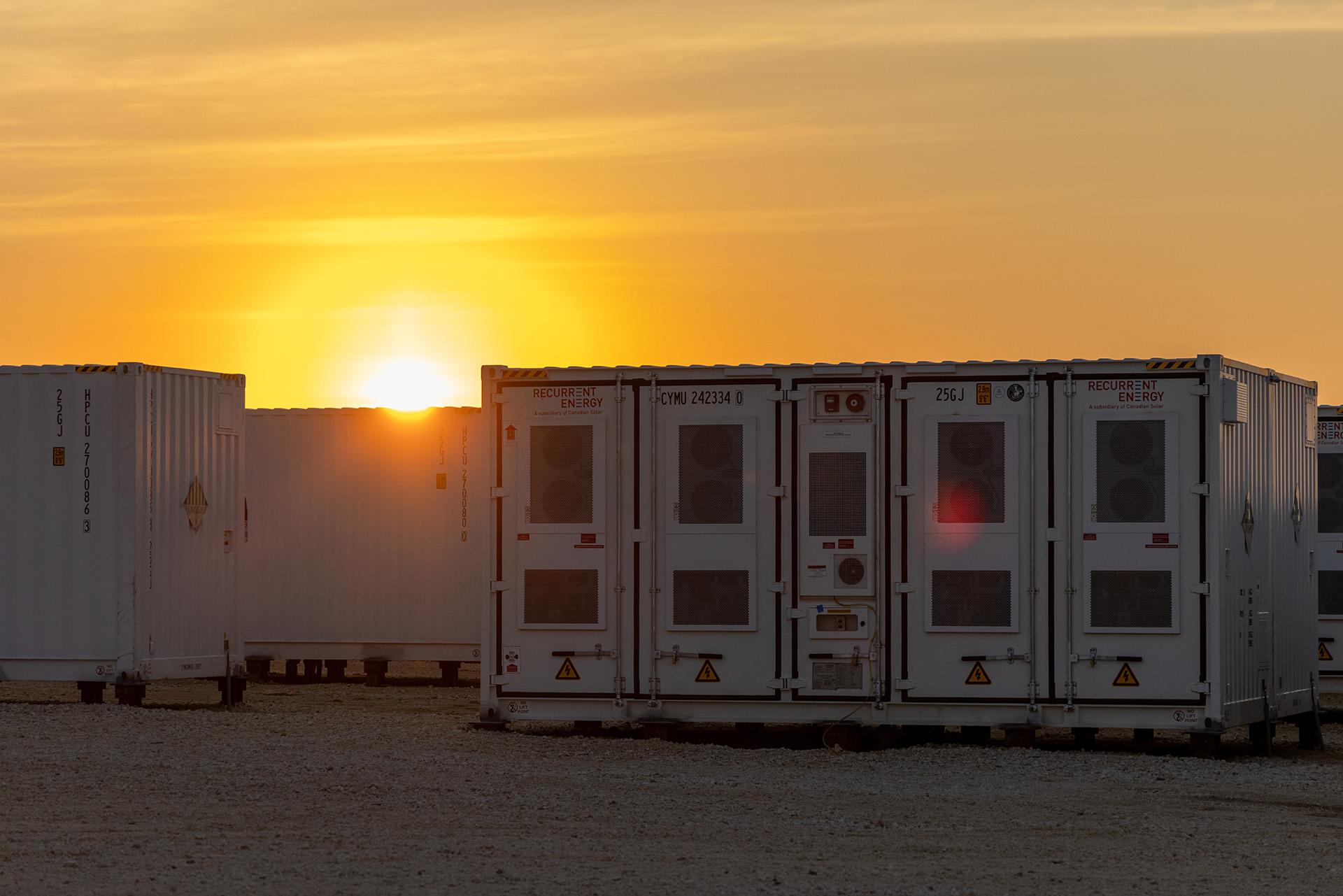
Battery storage demonstrates even more rapid growth momentum, adding over 4 GW of utility-scale capacity in 2025 alone. Commercial and industrial (C&I) storage has grown steadily as businesses deploy storage systems to reduce energy costs, improve efficiency, and optimize renewable energy utilization. Residential battery storage, after peaking in 2022-2023, is now stabilizing. With costs continuing to fall and targeted support schemes in place, several countries are maintaining steady progress.
Storage Capacity Expected to Exceed 215 GW by 2030 with 20-Fold Increase in Annual Deployment
Looking ahead, Europe’s energy storage market shows remarkable growth prospects. According to projections by LCP Delta and Energy Storage Europe:
- Total installed capacity: Will exceed 215 GW by 2030, representing 115% growth from current levels
- Battery storage: Standalone capacity will surpass 160 GW, becoming the primary growth driver
- Deployment speed: By the end of 2030, annual deployment will reach 20-25 GW, more than 20 times the installation rate of the 2020s
- Segment outlook:
- Utility-scale storage will see strong growth, supported by improving economics, targeted auctions, and support schemes across countries
- Residential battery storage is expected to recover from 2027, supported by a rebounding PV market, rising electrification of homes and transport, dynamic tariffs, and new financing models
- C&I storage will become increasingly mainstream, with policy, revenue streams, grid rules, and tariffs shaping deployment
C&I Storage Emerges as New Growth Engine with 55% CAGR
The commercial and industrial storage market shows particularly impressive performance. In the first half of 2025, European C&I storage shipments reached 4 GWh, surging 93% year-over-year. Research firm SPIR forecasts that Europe’s C&I storage market will achieve a compound annual growth rate (CAGR) of 55% between 2025 and 2030.
Key drivers of this robust growth include:
- Surging electricity demand from AI data centers
- Favorable government policy support
- Significantly improved economic viability of storage solutions
- Typical project internal rates of return (IRR) reaching 16.88%, with payback periods shortened by 30%
Germany and France have emerged as core growth markets, with over 75% of engineering, procurement, and construction (EPC) contractors optimistic about business prospects for the next six months.
Unprecedented Policy Support with Multiple Countries Launching Targeted Incentives
European governments are accelerating storage deployment through robust policy frameworks:
- Czech Republic: Offers 35% investment cost subsidies for C&I storage installations
- Greece: Launched a €154 million funding program to support commercial storage projects
- Spain: Andalusian region allocated €70 million specifically for independent energy storage
- Germany: Extended VAT exemption policies from residential storage to include C&I applications
- EU level: The “Green Deal” mandates renewable energy to constitute 45% of total energy production by 2030, creating a foundational driver for storage investments
These policies complement evolving electricity market mechanisms. Spain’s spot market now exhibits intraday price differentials of up to €169.47/MWh, creating substantial arbitrage opportunities for storage assets.
Industry Experts: Storage is Key Enabler of Europe’s Energy Transition
Silvestros Vlachopoulos, Energy Storage Research Lead at LCP Delta, stated: “Reaching 100 GW of installed energy storage across Europe is a key moment for the market. It not only unlocks more space for renewables on the grid today but sets the stage for even faster growth in the coming years. Keeping investors and developers engaged will be essential to scaling projects and providing the flexibility needed for Europe’s 2030 targets.”
Jacopo Tosoni, Head of Policy at Energy Storage Europe, added: “Energy storage is Europe’s fastest-growing clean technology. With the right policies, energy storage can maximize our homegrown green energy while lowering bills for households and industry alike. It has the potential to become the engine of Europe’s competitiveness.”
Tosoni also highlighted storage’s importance for grid stability. In 2022, re-dispatching costs for managing grid congestion in Europe amounted to approximately €5 billion. Without further flexibility measures, European Commission projections suggest these costs could soar to €103 billion by 2040.
Enlit Europe Conference Focuses on Energy Transition with Over 15,000 Professionals
This significant report was released at Enlit Europe 2025, held November 18-20 in Bilbao, Spain. As Europe’s leading energy industry conference, the event brought together over 15,000 energy professionals from more than 140 countries, along with 700+ exhibitors and 500+ expert speakers.
The conference covered all key aspects of the energy transition, including renewable energy, smart grids, hydrogen, energy storage, digitalization, and policy regulation. Attendees engaged through interactive workshops, panel discussions, and live demonstrations to explore industry innovations, establish collaborative networks, and gain valuable insights into the energy future.
Large-Scale Storage Projects Accelerate with Record-Breaking Capacities
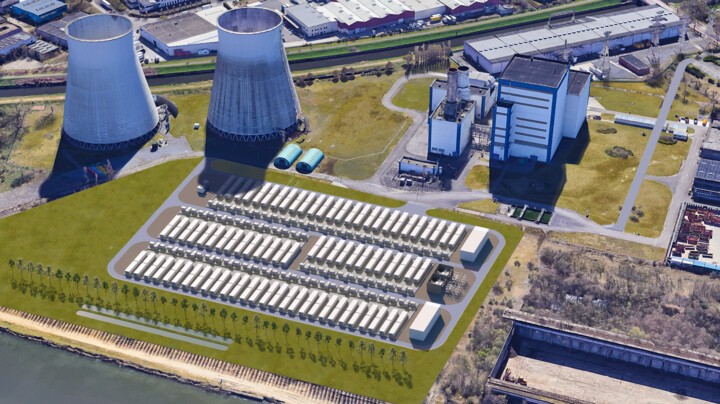
European storage project scales are rapidly expanding. Germany’s LEAG is building Europe’s largest battery storage project, GigaBattery Jänschwalde, with 1 GW/4 GWh capacity, scheduled for completion in 2027-2028. In the UK, Fidra Energy’s Thorpe Marsh project reaches 1.4 GW/3.1 GWh, while Statera recently completed the 300 MW/600 MWh Thurrock Storage project.
Netherlands-based Giga Storage is developing a 700 MW/2.8 GWh project in Belgium and a 1.2 GWh project in the Netherlands, having recently acquired a 350 MW/1.4 GWh development project in Germany. Poland, considered one of Europe’s fastest-growing country markets, sees utility PGE beginning construction on a 981 MWh storage project.
Technology Innovation and Business Model Evolution Progress in Parallel
As the market rapidly develops, storage technology and business models continue to innovate:
- Technical advances: Lithium-ion battery energy density exceeds 260 Wh/kg, system costs down 18%, 215 kWh C&I storage cabinets cost approximately $110/kWh
- Business models: Leasing, virtual power plants (VPPs), and smart city integration applications continuously expand
- AI optimization: Through AI-driven peak-valley arbitrage strategies, some users report 18% additional revenue increases
- Hybrid applications: Solar + storage system costs reduced to $0.097/kWh, 70% cheaper than diesel generation
Conclusion: Europe’s Storage Industry Enters Golden Era of Development
Europe’s energy storage capacity surpassing 100 GW represents more than a numerical milestone—it marks a crucial step in Europe’s energy system transformation toward decarbonization, digitalization, and decentralization. With continued policy support strengthening, technology costs declining, and business models maturing, Europe’s storage industry is entering an unprecedented golden era of development.
By 2030, energy storage will become the core infrastructure supporting Europe’s large-scale renewable energy deployment, ensuring grid stability, and driving the energy transition. For the global storage industry, Europe’s rapid market development not only creates enormous commercial opportunities but also provides valuable experience and demonstration effects for energy transitions in other regions.