he global shift towards electrification is undeniable. From passenger vehicles to heavy-duty trucks and construction equipment, the demand for electric alternatives is surging. However, this transition isn’t without its challenges. One significant hurdle is the availability of reliable and sufficient power infrastructure to support the growing number of electric vehicles and equipment. Traditional grid connections aren’t always feasible or adequate, particularly in remote locations, during large-scale events, or at logistics depots with limited grid capacity. Recognizing this critical need, Volvo Energy has introduced a groundbreaking solution: the PU500 Battery Energy Storage System (BESS), a mobile power unit designed to overcome these limitations and accelerate the adoption of electric mobility.
Introducing the Volvo Energy PU500 BESS
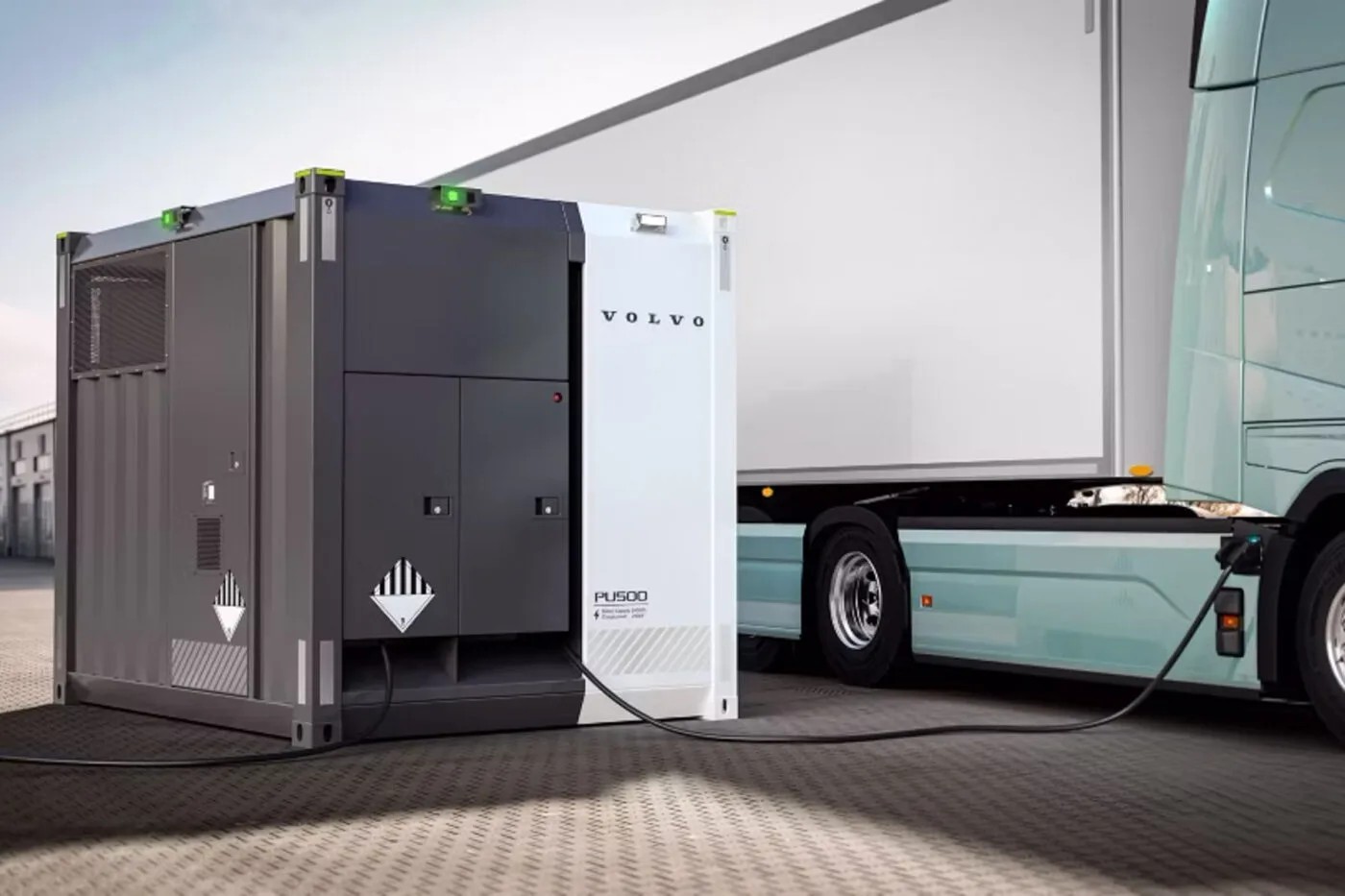
The PU500 is more than just a battery; it’s a complete, containerized power solution. Housed within a standard ten-foot shipping container, the unit is designed for ease of transport and deployment. Available in two configurations, offering either 450 kWh or 540 kWh of energy storage, the PU500 is engineered to provide a flexible and adaptable power source for a wide range of applications. Its dimensions (2.4 x 3.0 x 2.7 meters) and weight (approximately 7.5 tonnes) are optimized for logistical efficiency, allowing for seamless integration into various operational environments.
Key Features and Functionality: A Deep Dive
The PU500’s defining characteristic is its integrated 240 kW DC fast charger. This feature transforms the unit from a simple energy storage system into a powerful charging hub for electric vehicles. This capability is particularly valuable for construction sites, events, and logistics operations where rapid charging is essential to maintain productivity. According to Volvo Energy, a heavy-duty electric vehicle can be charged in approximately 1.5 hours using the PU500’s 240 kW output, although the actual charging time will depend on the vehicle’s battery size and charging capabilities. The system’s capacity allows for charging up to three electric lorries or 20 electric cars with a single battery charge, making it a versatile asset for businesses relying on electric fleets.
Beyond its charging capabilities, the PU500 also functions as a buffer storage unit. In areas with unreliable grid connections or fluctuating power demands, the unit can store excess energy and discharge it when needed, ensuring a consistent and stable power supply. This is particularly beneficial for remote construction sites where grid power may be intermittent or insufficient to handle peak loads.
Technical Specifications and Adaptability
The PU500’s adaptability is further enhanced by its compatibility with a wide range of electric equipment. Equipped with an integrated CCS2 charger, the unit can power trucks, passenger cars, and various other electric machinery, regardless of brand. This universal compatibility eliminates the need for specialized charging infrastructure and simplifies the transition to electric operations.
Furthermore, the PU500 offers the option of three-phase AC charging with up to 63 amps (44 kW AC), providing an alternative charging method for equipment that may not be compatible with DC fast charging. This flexibility ensures that the PU500 can cater to a diverse range of power requirements.
The “Power Boosting” Feature: Addressing Grid Constraints
A particularly noteworthy feature of the PU500 is its “power boosting” capability. This allows the unit to continue charging even when the mains power is low, and simultaneously charge vehicles or machinery quickly if required. This is invaluable in remote locations or situations where grid power is unreliable, providing a consistent and dependable energy source when other solutions fall short. This feature underscores Volvo Energy’s commitment to providing robust and resilient power solutions for challenging environments.
Digital Services and Remote Monitoring
Recognizing the importance of efficient management and control, Volvo Energy is preparing to introduce digital services that will allow customers to remotely monitor and control the operation of the PU500. This will enable real-time tracking of energy usage, battery status, and charging performance, allowing for proactive maintenance and optimization of power management strategies.
Quotes and Perspectives from Volvo Energy
Niklas Thulin, Head of the BESS product range at Volvo Energy, emphasizes the unit’s universal compatibility: “With an integrated CCS2 charger, the PU500 is designed to power trucks, passenger cars, and various other electric machinery, regardless of brand. This universal compatibility eliminates the need for specialized charging infrastructure and simplifies the transition to electric operations.”
Elisabeth Holm, Volvo Energy’s spokesperson, added, “The PU500 is more than just a battery; it’s a complete, containerized power solution designed to address the growing demand for reliable and sustainable power in a rapidly electrifying world.”