On October 9, 2024, the National Energy Administration of China released the “Distributed Photovoltaic Power Generation Development and Construction Management Measures (Draft for Comments).” The draft emphasizes that distributed photovoltaic (PV) projects must participate in the electricity market according to national regulations. The country is committed to establishing and improving mechanisms that support the continued development of new energy sources. Distributed PV projects can participate independently or be aggregated through microgrids, integrated energy systems combining generation, grid, load, and storage (source-grid-load-storage integration), or virtual power plants (VPPs), in order to fairly compete in various power market transactions, including energy and ancillary services.
The management measures also stipulate that general commercial and industrial distributed PV systems with a total installed capacity of up to 6MW can choose to use either the self-consumption or self-consumption with surplus power fed into the grid model, but cannot rely solely on full grid feed-in. For larger systems above 6MW, full self-consumption is mandatory, requiring project investors to install reverse current prevention devices to ensure all generated electricity is consumed onsite.
These new regulations are set to profoundly impact the development model of commercial and industrial PV. Against this backdrop, integrated PV and energy storage solutions, represented by advanced product portfolios such as Trina Solar’s offerings, and investment opportunities in this sector have become a focal point of industry attention.
New Requirements Highlight the Role of Energy Storage
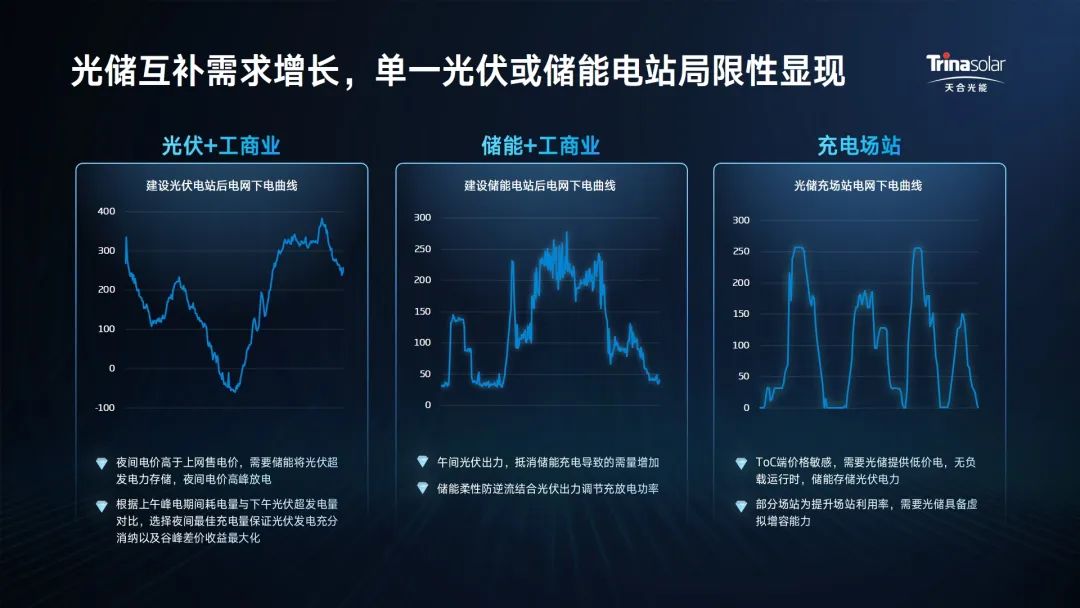
The requirement for full self-consumption in large commercial and industrial PV projects highlights the need for increased self-consumption of electricity within industrial parks. Energy storage technology plays a vital role in electricity systems by acting as a buffer and regulator. It stores excess electricity generated during PV peak periods and provides power during times of high demand or when external power supply is insufficient. This helps optimize the distribution and efficient use of electricity.
Trina Solar’s integrated PV and energy storage solutions not only improve the economic efficiency of PV generation but also enhance the stability and reliability of internal grids within industrial parks. This can also reduce the need for grid retrofits, leading to further cost savings.
Trina Solar’s Comprehensive Solutions to Meet New Regulatory Demands
In response to the new regulatory environment, which poses fresh challenges and requirements for large commercial and industrial PV development, Trina Solar, a leader with the capability to provide holistic solutions, has anticipated the limitations of single-function PV power stations. The company offers a variety of user-side scenario solutions to meet evolving customer needs and enhance value.
1. PV-Storage Integration Systems
Through the optimized configuration of Trina’s top-tier N-type modules and high-efficiency energy storage products based on in-house developed battery cells, users can store electricity during PV peak generation and low electricity price periods. This stored energy can then be used to power industrial parks during times of high demand, high electricity prices, or external grid shortages. Such systems improve power consumption within the park, reduce PV curtailment, and lower reliance on external grids, ultimately driving down electricity costs.
2. Virtual Power Plants (VPP)
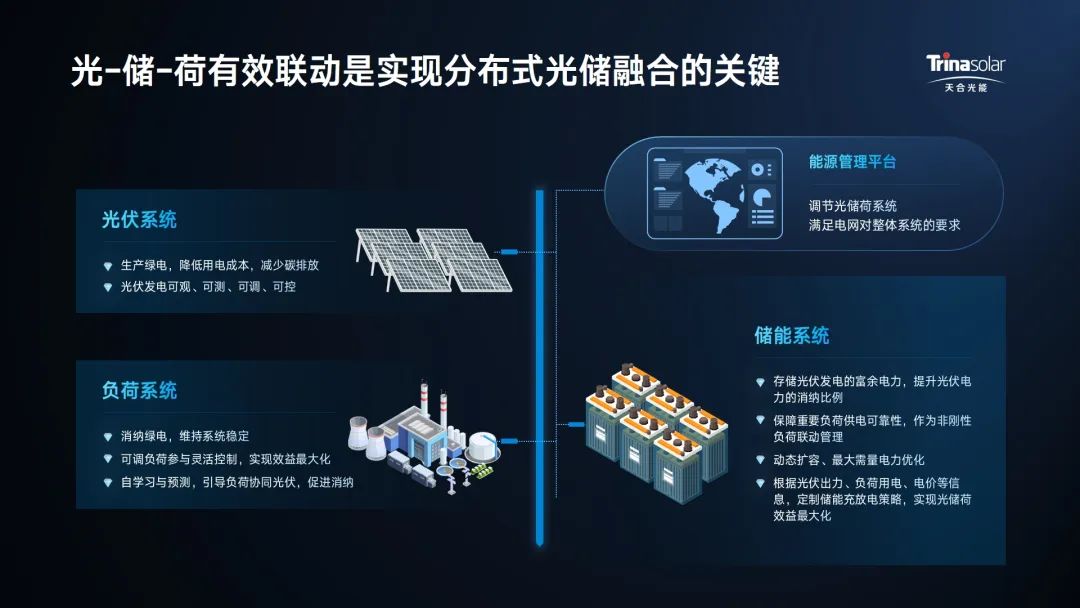
Trina Solar’s self-developed energy management system, intelligent PV-storage cloud platform, and energy smart control system aggregate distributed energy resources such as PV, energy storage, and controllable loads, for centralized management and dispatch. In areas where connecting distributed PV is challenging, VPPs can serve as an effective solution by optimizing the use of distributed energy through coordinated management and control.
3. Source-Grid-Load-Storage Integration
The source-grid-load-storage integration model combines renewable energy sources (wind and solar), external grids, controllable loads, and intelligent storage through Trina Solar’s energy smart control system, boosting the flexibility and stability of the power system. In the commercial and industrial sector, this model can facilitate the integration of renewable energy with green industries such as green computing, green fuels, green mining, and green metallurgy, significantly improving energy efficiency and renewable energy consumption.
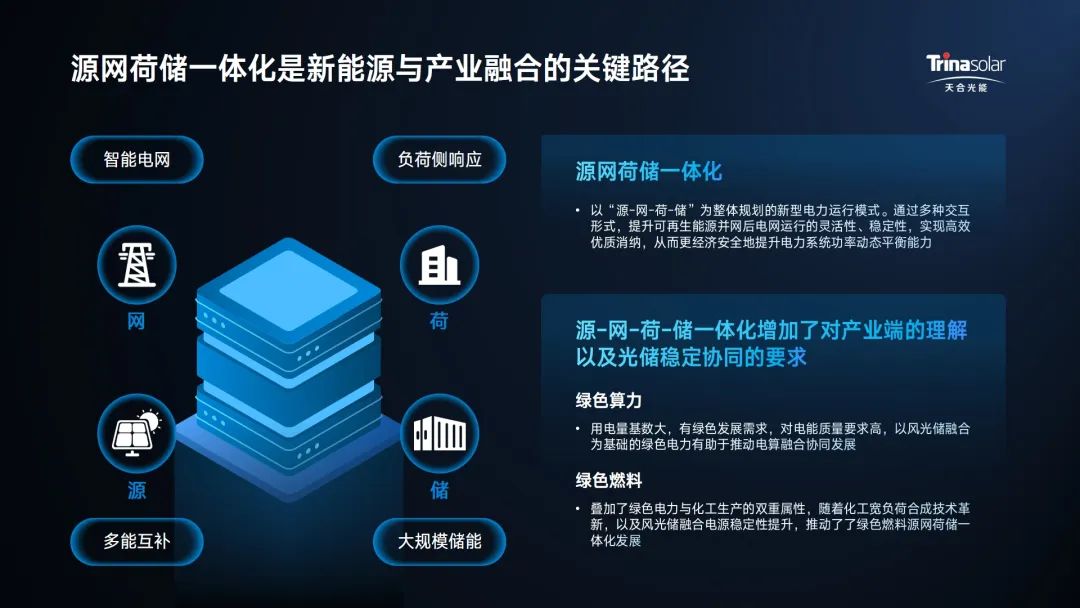
4. Intelligent Energy Management
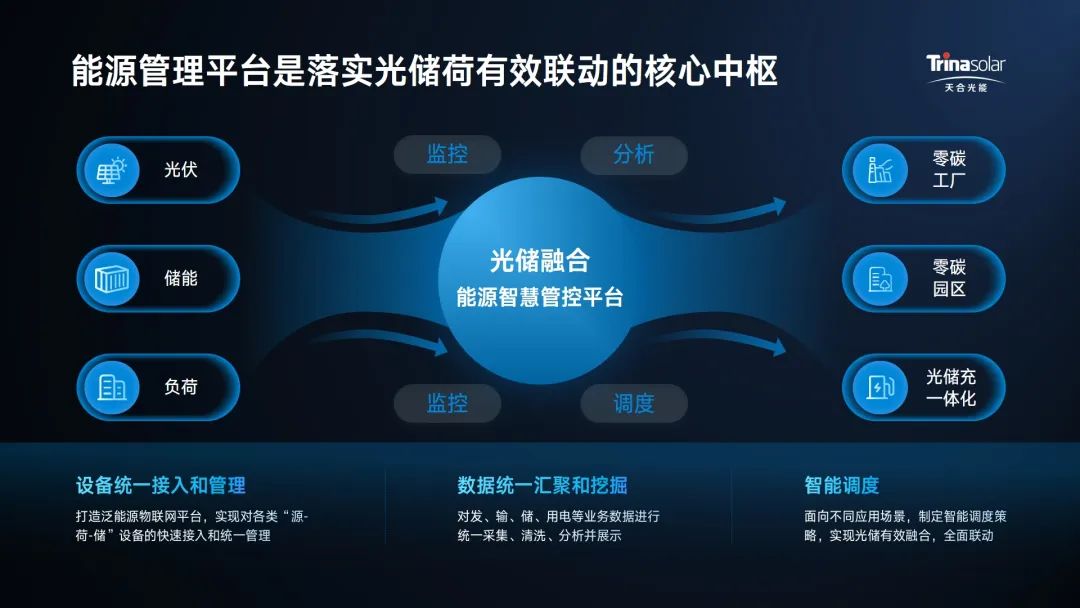
Trina Solar’s in-house developed energy management platform is the core hub for effective interaction between PV, storage, and load systems. Through real-time monitoring and system coordination, the platform optimizes the charging and discharging strategies of PV-storage systems to maximize benefits.
Seizing New Opportunities in Energy Storage
In the short term, the new regulations signify that large-scale commercial and industrial PV project development will face new challenges. The traditional model of full grid feed-in will no longer be applicable, and developers must rethink project design and operational strategies. However, challenges often come with opportunities. By configuring Trina Solar’s advanced storage systems and strengthening PV-storage integration, developers can not only comply with new policy requirements but also significantly enhance the power consumption capacity of industrial parks. This will help balance grid loads, increase energy efficiency, and drive cost reductions for enterprises.
Through continuous innovation and application of cutting-edge technologies, Trina Solar remains committed to providing flexible, efficient, and sustainable energy solutions for various PV, storage, and integrated projects. The company continues to support enterprises and society in their green energy transition.
Conclusion
The release of new distributed PV regulations creates fresh opportunities for the energy storage market. Trina Solar’s advanced integrated PV-storage solutions are well-positioned to address the emerging needs of commercial and industrial customers. By enhancing self-consumption and optimizing power usage within industrial parks, these solutions not only align with the latest regulatory framework but also support enterprises in achieving cost savings and efficiency improvements. As Trina Solar continues to innovate, it remains a key player in driving the adoption of green energy solutions across various industries.