Struggling to Build a Sustainable Battery Industry, Europe Relies on Foreign Players—At What Cost?
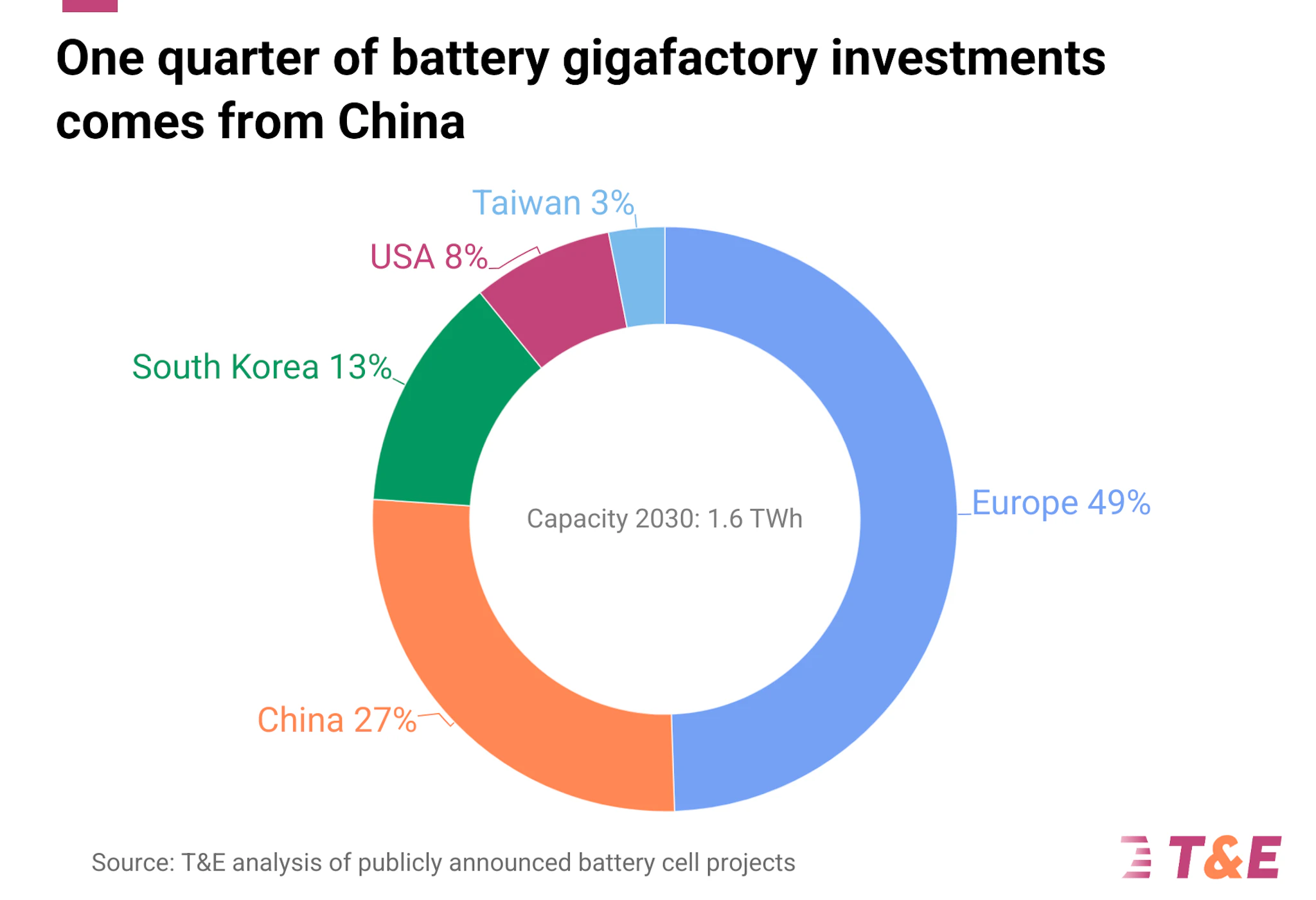
Europe’s ambitious goal to become a global leader in the battery industry is facing significant challenges. While local efforts struggle to succeed, more than 90% of electric vehicle (EV) and storage batteries in the EU are produced by South Korean and Chinese companies. Additionally, nearly 40% of announced battery gigafactories are operated by these foreign giants, which dominate the technology and are better positioned for success. European automakers are increasingly partnering with Chinese battery leaders to secure supply, raising concerns about Europe’s ability to develop local expertise and avoid becoming merely an assembly plant for foreign companies.
A recent study commissioned by Transport & Environment (T&E) highlights critical issues surrounding the environmental and social conditions of foreign battery facilities in Europe, particularly the CATL factory in Hungary and the LG Energy Solutions plant in Poland. These plants have received significant subsidies from their respective governments, often sourced from the European post-COVID recovery fund, yet no environmental or social conditions were attached by the European Commission, nor were audits performed to ensure compliance.
Key Findings: Environmental Breaches and Lack of Transparency
- Subsidies Without Accountability
The CATL factory in Hungary and the LG plant in Poland have collectively received at least €900 million in state aid subsidies. While these investments aim to boost Europe’s battery production, the lack of public data has forced T&E to rely on external experts for analysis. This opacity raises concerns about accountability and sustainability. - Environmental Violations
Both facilities have exceeded EU air pollution limits for NMP (a toxic substance used in cathode manufacturing), breaching the Industrial Emissions Directive. In Hungary, additional issues were identified regarding insufficient water management plants and energy supply. - Poor Working Conditions
The study also revealed poor working conditions in the Hungarian battery industry, further exacerbating concerns about the social and environmental impact of these facilities. - Lack of Technology Transfer
Analysis of partnerships like VW-Gotion and CATL-Stellantis revealed no EU-wide or national requirements for technology transfer, local content, or other key conditions. While companies like VW have invested heavily in Gotion, holding 26.47% shares, experts argue that the partnership focuses on securing LFP battery supplies rather than transferring knowledge or intellectual property to Europe. - Spanish CATL-Stellantis Partnership
The Spanish government provided €300 million in subsidies for the CATL-Stellantis gigafactory, worth around €4 billion. However, no conditions were attached to ensure technology or skills transfer, leaving negotiations solely between Stellantis and CATL.
The Risks of Relying on Foreign Players
Europe’s growing dependence on foreign battery manufacturers raises significant economic, environmental, and strategic concerns:
- Technological Dependence
Europe risks losing control over critical battery technologies, which are essential for its EV transition and energy storage systems. This could undermine efforts to achieve climate neutrality by 2050. - Environmental Impact
The lack of enforceable environmental standards for foreign facilities threatens to compromise EU sustainability goals. Polluting factories in Hungary and Poland could set a dangerous precedent. - Economic Vulnerability
Relying on foreign supply chains makes Europe vulnerable to global market fluctuations and potential disruptions, such as those caused by geopolitical tensions.
T&E’s Call for Action
To address these challenges, T&E has proposed several measures:
- Strengthen Local Production Capacity
Invest in European battery manufacturing to reduce reliance on foreign suppliers. This includes supporting R&D and creating a robust domestic supply chain. - Establish Clear Standards and Regulations
Introduce mandatory environmental and social standards for all battery facilities, ensuring transparency and accountability. Subsidies should only be granted to companies that meet these criteria. - Promote Technology Transfer
Require foreign manufacturers to share technology and knowledge with European partners, fostering本土 expertise and innovation. - Enhance Transparency and Monitoring
Ensure public access to information about subsidies and environmental compliance for all battery facilities. Regular audits should be conducted to hold companies accountable. - Strengthen Strategic Autonomy
Recognize the strategic importance of batteries in the energy transition and prioritize Europe’s ability to compete globally without relying on external actors.
The Road Ahead: A Choice Between Leadership and Dependency
Europe stands at a crossroads. While partnering with foreign battery manufacturers may seem like a quick fix, the long-term risks of technological dependence, environmental degradation, and economic vulnerability are too great to ignore. By investing in本地 production, enforcing stricter standards, and fostering innovation, Europe can ensure its leadership in the global battery industry while safeguarding its climate goals.
The time to act is now. Europe must take bold steps to secure its future—not as an assembly plant for foreign companies—but as a global leader in sustainable battery technology.