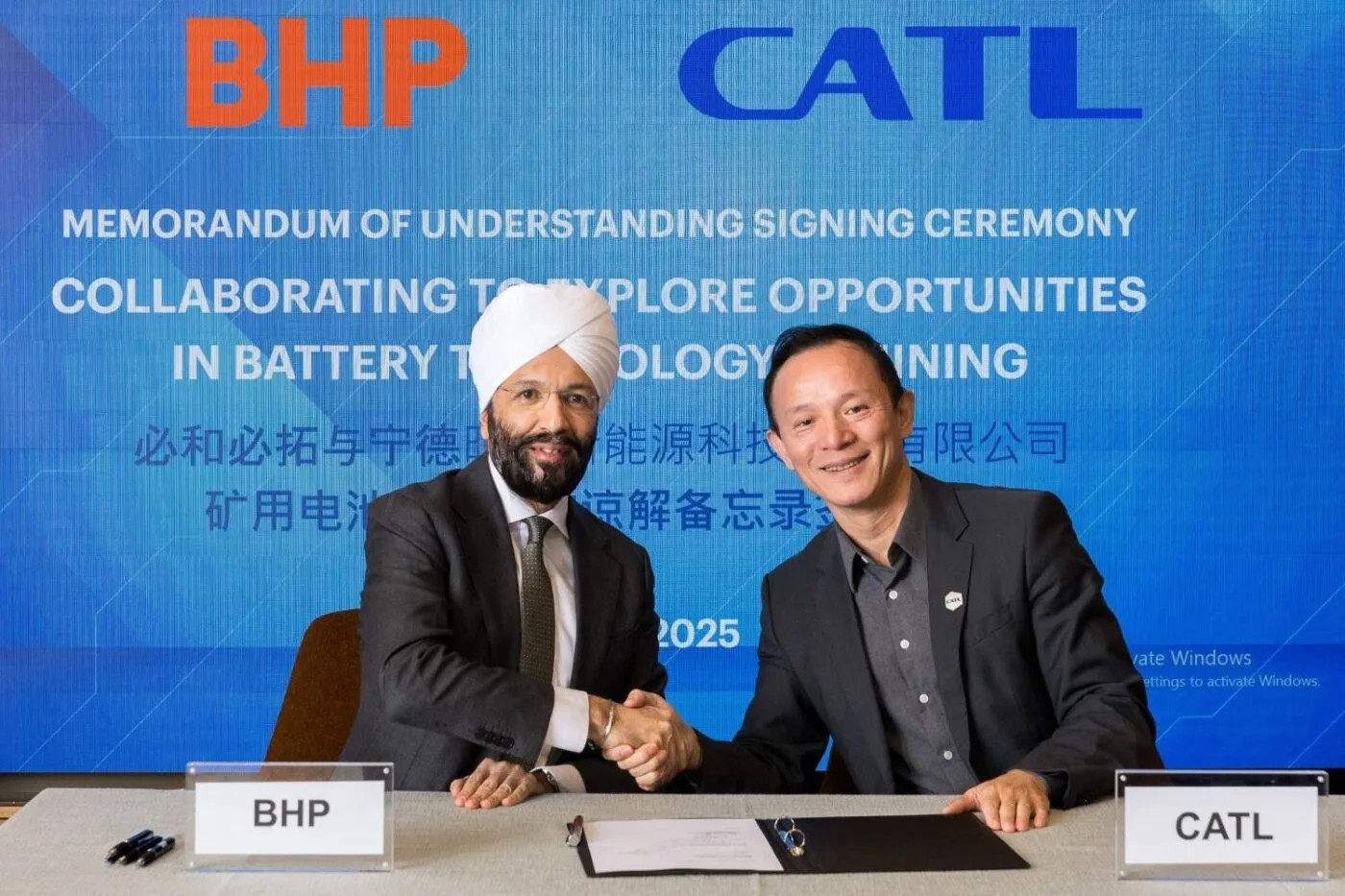
In a move that underscores the mining industry’s accelerating commitment to sustainability and innovation, global resource giant BHP has announced a strategic partnership with leading battery technology company CATL (Contemporary Amperex Technology Co. Limited). The collaboration is aimed at advancing battery innovation, electrifying mining operations, and establishing circular, low-carbon value chains—supporting BHP’s broader goal of achieving net-zero greenhouse gas emissions by 2050.
A Shared Vision for a Decarbonized Future
The alliance between BHP and CATL represents a major step forward in the transformation of the traditionally carbon-intensive mining sector. According to a joint statement, the partnership will identify and implement pathways for electrifying mining operations, integrating cutting-edge battery technology, and improving battery recycling—particularly through the strategic use of BHP’s copper operations.
“This relationship is another step towards meeting BHP’s decarbonisation ambitions and driving transformative change within the global resources industry,” said Rashpal Bhatti, BHP’s Chief Commercial Officer. “CATL is a leader in battery innovation, energy storage, and recycling. By collaborating with companies like CATL, we’re actively working to shape a more productive and sustainable mining industry.”
Tan Libin, head of overseas business for CATL, echoed the sentiment: “We are excited to collaborate with BHP, a global leader sharing our commitment to driving the energy transition towards a zero-carbon future. Together, we aim to show how advanced battery technologies can decarbonize mining operations and accelerate a sustainable and efficient future.”
Mining Electrification: A Strategic Imperative
The electrification of mining operations has become a strategic imperative as companies around the world strive to meet emissions targets and reduce their environmental footprint. Traditional diesel-powered mining vehicles are among the largest contributors to greenhouse gas emissions within the industry. Replacing these with battery-electric alternatives is a key opportunity for decarbonization.
BHP has already taken proactive steps in this direction. In 2021, the company partnered with Komatsu to explore electric mining trucks. That same year, Tritium adapted its DC fast chargers specifically for rugged mining environments—installing the first unit at a BHP site in Queensland, Australia. These initiatives laid the groundwork for a more ambitious shift toward full fleet electrification.
By 2022, BHP had placed additional orders for electric mining vehicles from Swedish equipment maker Sandvik. The company also announced plans to electrify its entire fleet of mining trucks in Chile by 2023, signaling a long-term commitment to low-carbon operations across multiple continents.
The new partnership with CATL represents a strategic deepening of these electrification efforts, bringing the world’s foremost battery innovator into the fold to accelerate deployment and maximize performance.
Circular Economy and Battery Recycling
Another pillar of the BHP-CATL collaboration is a shared commitment to building a circular economy—specifically through enhanced battery recycling. With the mining industry poised to produce massive volumes of electric batteries for its vehicles and infrastructure, responsible end-of-life management has become a top priority.
CATL brings to the table its leadership in battery lifecycle management, including second-life battery applications and closed-loop recycling processes. By leveraging BHP’s copper operations, the two partners intend to create a vertically integrated recycling loop in which critical materials like copper can be recovered and reused to produce new battery cells.
This model not only reduces the environmental burden of battery disposal but also improves resource efficiency and supply chain resilience—two critical factors in the era of energy transition and raw material scarcity.
Copper: A Strategic Material in the Energy Transition
Copper is at the heart of the green energy transition, serving as a vital conductor in everything from EVs to renewable energy grids. As one of the world’s largest copper producers, BHP is uniquely positioned to play a dual role—both as a miner of critical materials and a stakeholder in sustainable battery manufacturing.
The BHP-CATL alliance aims to capitalize on this advantage by integrating copper recovery into battery recycling processes. This initiative enhances the value chain, reduces dependency on virgin materials, and aligns both companies with the principles of circular resource management.
Scaling Innovation Across the Mining Sector
Beyond electrification and recycling, the BHP-CATL partnership is also about scaling innovation. By joining forces, the companies plan to develop and pilot new technologies that can be replicated across BHP’s global mining operations—and potentially adopted by the broader industry.
This includes optimizing battery design for heavy-duty use, tailoring charging solutions for remote mining locations, and leveraging real-time data to monitor battery health and efficiency. The partnership opens the door to collaborative R&D, faster deployment cycles, and smarter solutions for one of the world’s most resource-intensive sectors.
Driving Long-Term Value Through Sustainability
In an industry long defined by its environmental impact, BHP is signaling a decisive pivot toward sustainability and technological leadership. By aligning with CATL, a global pioneer in clean energy storage, the company is sending a strong message to investors, regulators, and the public: decarbonization is not just a regulatory obligation—it’s a value-creating strategy.
Tan Libin of CATL emphasized this point: “Through this collaboration, we are not only enabling greener mining operations but also generating long-term value through innovation. We believe that our partnership with BHP will set a new standard for how global mining companies approach energy transition and sustainability.”
Conclusion: A Blueprint for the Future of Mining
The BHP-CATL partnership is more than a corporate alliance—it is a blueprint for the future of mining. As the world races to decarbonize and electrify, resource companies must become active agents of change rather than reactive participants. This collaboration demonstrates what’s possible when battery innovation meets mining expertise, and when sustainability is treated as a strategic priority rather than an afterthought.
With growing demand for EVs, renewable energy, and sustainable materials, the pressure is on the mining sector to evolve. Through partnerships like this, the industry can lead rather than lag in the global effort to build a cleaner, smarter, and more resilient economy.