CMBlu Energy, a renewable energy company, has successfully delivered its first operational system using its Organic SolidFlow battery technology. The system has been installed at a 15MW hybrid wind and solar park in Schattendorf, Austria. The purpose of the system is to optimize the park’s output by shifting renewable production from peak generation times to peak consumption times. This will contribute to the goal of achieving climate neutrality, energy independence, and price independence by 2030 in the Burgenland state of eastern Austria.
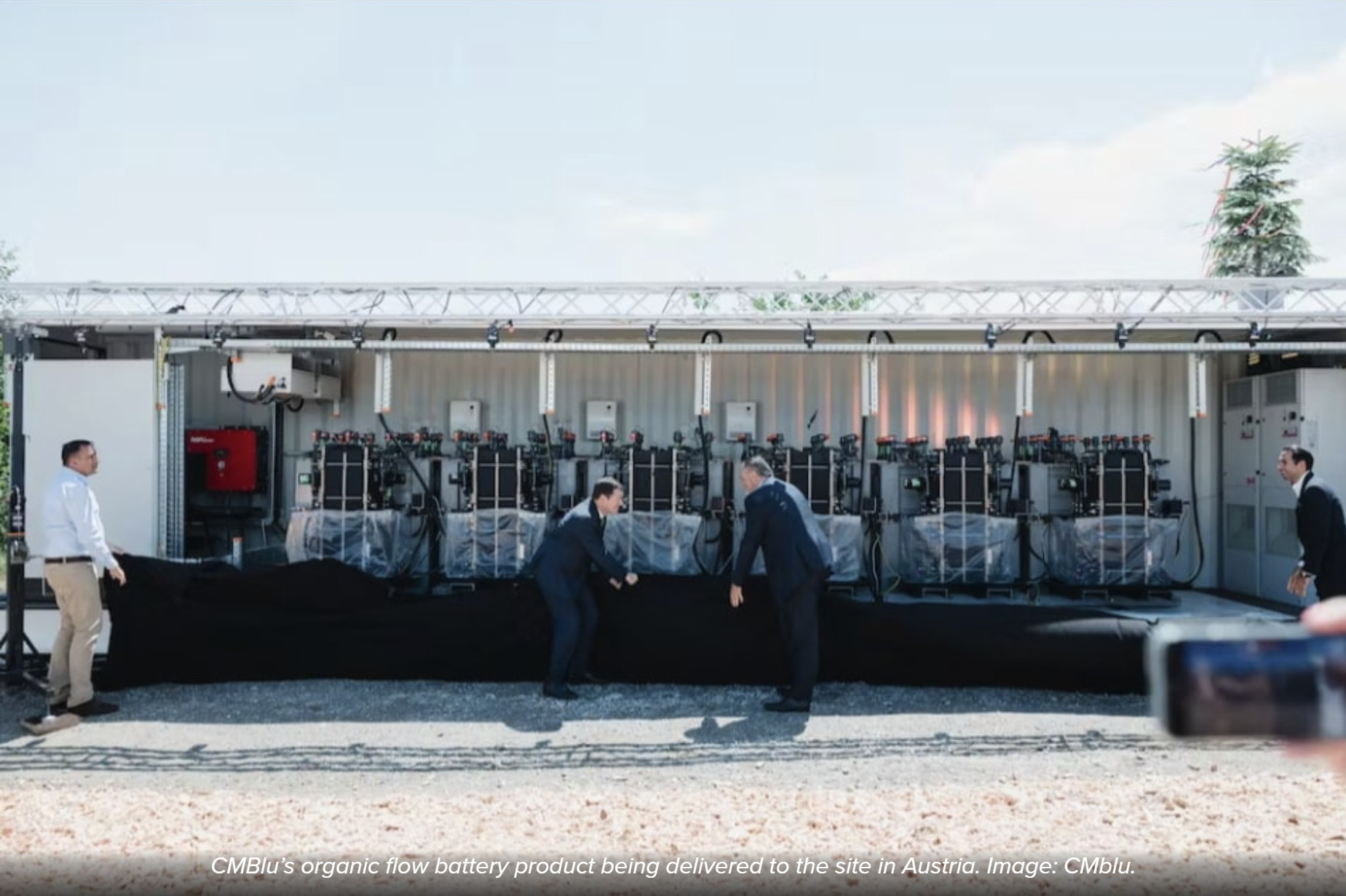
CMBlu Energy’s choice to use their Organic SolidFlow battery technology aligns with their commitment to obtaining energy from natural and fair sources. The company aims to create a European model for 100% renewable energy, avoiding the reliance on lithium-ion energy storage that may contribute to exploitation through mining in other continents.
The CEO of CMBlu, Dr. Peter Geigle, expressed his satisfaction with the successful delivery of the system and emphasized the importance of testing the technology in various applications. The company plans to deliver further storage systems with a total capacity of 300 MWh to Burgenland in the coming weeks.
In a separate development, Xcel Energy, a US utility company, and Ambri, a liquid metal battery company, have settled on a 300kWh system size for a pilot project. The project aims to test Ambri’s technology at the Solar Technology Acceleration Center (SolarTAC) in Colorado. The 300kWh system will be tested for 12 months, starting in early 2024, and is expected to come online in late 2024. The project will integrate multiple generation sources, including solar and wind, using the GridNXT Microgrid Platform.
Xcel Energy’s involvement in testing Ambri’s system highlights the potential value of integrating innovative storage technologies into their renewable portfolio. Xcel Energy is also deploying large-scale projects using the iron-air battery technology from Form Energy.
Another noteworthy development is the order received by Japan-based company NGK Insulators from BASF Stationary Energy Storage. NGK Insulators’ proprietary sodium-sulfur (NAS) battery technology will be used in a demonstration project in the Republic of Maldives. The project aims to build a decarbonized seawater desalination system on the island of Gaafaru Atoll. The NAS battery system, with a capacity of 250kW/1,450kWh, is expected to be energized in July 2024. NGK’s technology was selected for its environmental resistance and past operational achievements in off-grid and remote island microgrid projects.
The developments in renewable energy storage technologies, such as CMBlu Energy’s Organic SolidFlow battery, Ambri’s liquid metal battery, and NGK Insulators’ sodium-sulfur battery, are significant steps towards achieving greater efficiency and reliability in renewable energy systems. These advancements contribute to the global objective of transitioning to 100% renewable energy and reducing carbon emissions.
In another noteworthy development, US utility company Xcel Energy and liquid metal battery company Ambri have finalized the size of a pilot project at 300kWh. The project aims to test Ambri’s technology at the Solar Technology Acceleration Center (SolarTAC) in Colorado. The 300kWh system will undergo a 12-month testing period, starting in early 2024, and is expected to be operational by late 2024. The project will integrate multiple generation sources, including solar and wind, utilizing the GridNXT Microgrid Platform.
Xcel Energy’s participation in testing Ambri’s system highlights the potential value of integrating innovative storage technologies into their renewable energy portfolio. In addition to this project, Xcel Energy is also deploying large-scale projects using Form Energy’s iron-air battery technology.
These developments in renewable energy storage technologies, including CMBlu Energy’s Organic SolidFlow battery, Ambri’s liquid metal battery, and Form Energy’s iron-air battery, represent significant progress towards achieving greater efficiency and reliability in renewable energy systems. These advancements contribute to the global objective of transitioning to 100% renewable energy and reducing carbon emissions.