XPeng Aeroht Secures $100 Million to Propel Flying Car Mass Production
XPeng Aeroht, the electric aviation division of Chinese EV manufacturer XPeng Motors, has announced a major financial milestone as it secured an additional $100 million in Series B2 funding. The announcement, made on Weibo, highlights rapid progress in the development of the company’s most ambitious project to date—the Land Aircraft Carrier, a modular flying car aimed at revolutionizing urban and regional air mobility.
This funding round adds to the $150 million raised during the initial B1 phase in August 2024 and follows a $500 million Series A round in 2021, which had already pushed the company’s valuation beyond $1 billion. As of now, XPeng Aeroht’s total external funding tops $750 million, solidifying its position as one of the most well-capitalized flying car developers globally.
The Land Aircraft Carrier: A Futuristic Leap in Mobility
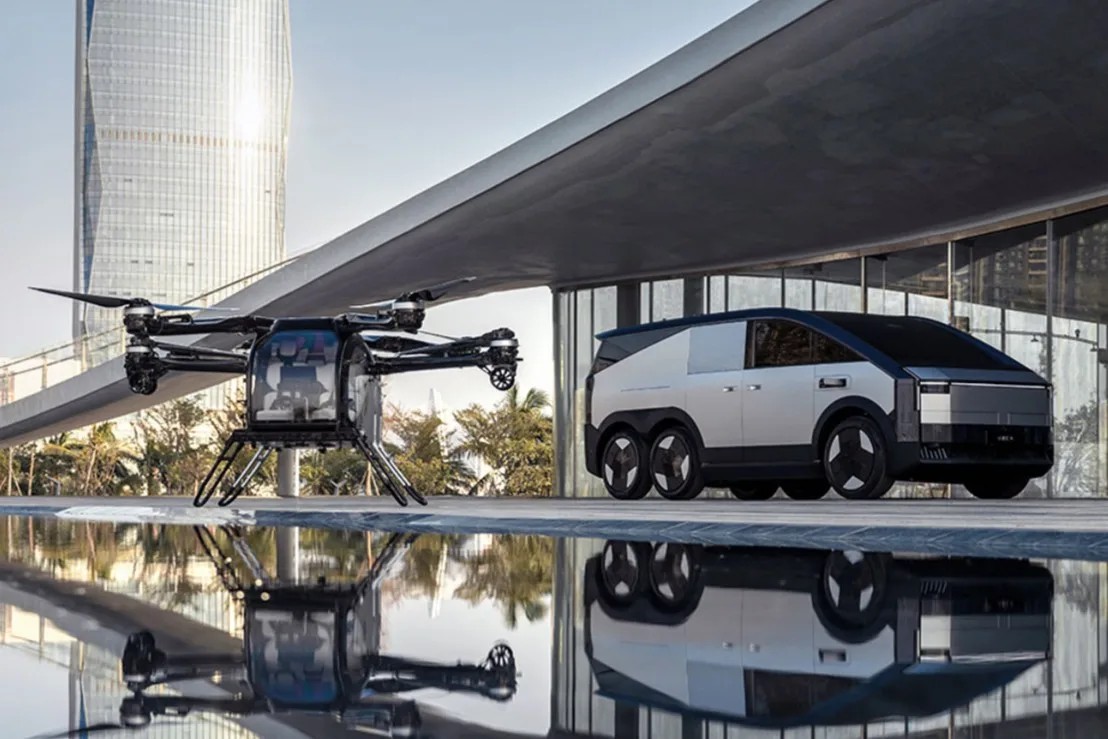
At the core of XPeng Aeroht’s vision is the Land Aircraft Carrier—a dual-module, range-extended electric flying car that combines a road-going three-axle van with an eVTOL (electric vertical takeoff and landing) aircraft stored on board. First unveiled in October 2023, the vehicle embodies a seamless transition between land and air travel. The van serves not only as a ground transport module but also as a mobile charging station for the two-seater eVTOL it carries.
Described by XPeng as resembling a “lunar exploration vehicle,” the concept offers a futuristic and versatile form of mobility for both urban and off-road environments. The ground module can host up to five people and is expected to operate independently when the eVTOL is deployed for short-range aerial transportation.
Production Advances: Factory Nears Completion
Chairman and CEO He Xiaopeng confirmed that the factory designated for mass production of the modular flying car has already been topped out and is on track for full completion by Q4 2025. This timeline aligns with XPeng Aeroht’s goal to begin deliveries in 2026, setting a new benchmark for commercial readiness in the electric flying car space.
The production plant will play a central role in scaling the manufacturing process of the Land Aircraft Carrier, using automated assembly lines tailored for both the van and eVTOL components. By merging aviation-grade engineering with automotive mass production efficiencies, XPeng Aeroht aims to meet consumer demand at scale while maintaining high safety and quality standards.
Pre-Orders and Pricing Strategy
XPeng Aeroht has already signed its first pre-order contracts, a signal that consumer interest in next-gen mobility is very real. The vehicle is expected to retail for under 2 million yuan (approximately €250,000), making it significantly more affordable than traditional helicopters or luxury aircraft, while offering added ground utility.
This pricing strategy aligns with XPeng’s vision to make flying vehicles accessible to a broader market—not just elite customers. As production ramps up, the company anticipates further reductions in cost through economies of scale and technological refinement.
IPO in Sight: Financial and Strategic Positioning
The influx of Series B2 funding comes amid increasing speculation that XPeng Aeroht is preparing for an initial public offering (IPO). Last month, the company appointed Du Chao as its first Chief Financial Officer (CFO)—a strategic move commonly viewed as a precursor to a listing.
According to reports from Bloomberg and local Chinese media, XPeng is evaluating IPO venues in Hong Kong and the United States. Several investment banks have reportedly been invited to pitch proposals, although no final decisions have been made.
While IPO planning progresses in the background, XPeng Aeroht has reiterated that its current priority remains on research, development, and production readiness. However, a future listing would offer Aeroht the financial firepower needed to maintain long-term leadership in the urban air mobility (UAM) space.
XPeng’s Broader Strategy: Integration with the Mobility Ecosystem
XPeng Aeroht is more than just an experimental aviation company—it operates as a core innovation arm of XPeng Motors, one of China’s most aggressive EV startups. The collaboration enables a unique integration between land-based electric mobility and next-gen aerial transport.
The company envisions a future where its eVTOL and modular vehicles connect seamlessly with XPeng’s smart cars, software platforms, and charging networks. This synergy allows XPeng Aeroht to offer a differentiated mobility experience that spans multiple dimensions—ground, air, and digital.
The strategic goal is to not only compete with traditional aviation solutions but to redefine how people move in crowded cities and remote regions alike. By tapping into XPeng’s existing manufacturing and R&D infrastructure, Aeroht gains an edge in cost control, safety testing, and consumer reach.
Global Ambitions and Competition
XPeng Aeroht is not alone in the race toward commercial flying cars. Companies like Joby Aviation, Lilium, and Volocopter are also pushing forward with their own aircraft and air taxi services. However, what sets Aeroht apart is its dual-module, consumer-facing product and close ties to a mainstream automaker.
Most competitors are focused solely on air taxis and fleet services, whereas XPeng Aeroht is aiming for a hybrid personal vehicle that can be driven on roads and flown over traffic—a practical solution that bridges regulatory, logistical, and user-experience gaps.
Its recent funding success and rapid development timeline position it as a serious contender not only in China but potentially in global markets. Although international regulatory hurdles remain, XPeng’s experience in vehicle homologation and compliance gives it a potential head start.
Conclusion: A New Era of Personal Air Mobility
XPeng Aeroht’s announcement marks a significant milestone not just for the company, but for the entire field of urban air mobility. With a modular flying car nearing production, solid financial backing, and IPO ambitions, the company is turning science fiction into commercial reality.
If Aeroht can execute on its vision—delivering a safe, affordable, and integrated flying car system by 2026—it could reshape how we think about transportation in the coming decade.
The Land Aircraft Carrier might just be the vehicle that takes XPeng—and the flying car industry as a whole—from concept to commonplace.