Vulcan Energy, an Australian-German company, has officially received the necessary authorizations to commence seismic surveys for its geothermal heat development project in Ludwigshafen, Germany, in collaboration with BASF, the world’s largest chemical producer. This project will utilize geothermal energy for renewable heat production and the extraction of lithium, contributing to Europe’s transition to sustainable energy and green electromobility.
Partnership Overview
In November 2024, Vulcan Energy and BASF signed an agreement to explore the potential of geothermal energy at BASF’s Verbund site in Ludwigshafen. While BASF focuses on utilizing geothermal heat for renewable energy, Vulcan Energy will concentrate on lithium extraction from geothermal brine. The collaboration could significantly impact both energy production and lithium supply in Europe, particularly for the electric vehicle industry.
The seismic surveys will be conducted over approximately 75 kilometers in the Vorderpfalz region of the Upper Rhine Valley, known for its geothermal resources. The 2D seismic surveys will help determine the best locations for the next stage of the project, which includes drilling geothermal wells and further exploring lithium production capabilities.
Seismic Surveys and Project Details
Vulcan Energy has obtained official permits to begin the first phase of seismic surveys, which will take place between late February and early March 2025. The surveys will focus on mapping geothermal energy sources and evaluating the viability of extracting lithium from the brine in the Upper Rhine Graben.
The 2D seismic surveys will be followed by 3D surveys, with the goal of identifying the optimal drilling sites for geothermal and lithium production. The results will guide the construction of lithium extraction plants and geothermal wells at BASF’s site.
Sustainability Goals
The primary aim of the project is to provide a sustainable, renewable energy supply to BASF’s chemical plant and surrounding areas. By using geothermal heat, BASF aims to replace fossil fuel-based energy with climate-neutral sources, contributing to the decarbonization of the chemical industry. The project also includes the potential for district heating for nearby municipalities like Ludwigshafen and Frankenthal.
Additionally, Vulcan Energy plans to utilize the thermal brine to extract lithium, an essential component for batteries in the electric vehicle industry. This will provide a local source of sustainable lithium for European battery manufacturers, reducing reliance on overseas lithium supplies.
Impact on Green Electromobility and Energy Transitio
Vulcan’s CEO, Cris Moreno, emphasizes that this project is part of a broader strategy to advance Europe’s energy transition. By leveraging geothermal resources for both renewable heat and lithium extraction, Vulcan aims to reduce Europe’s reliance on fossil fuels and help drive the transition to electric vehicles. This integrated business approach reflects Vulcan’s vision of replicating this model across the Upper Rhine Valley, forming strategic partnerships with large industrial companies like BASF to scale sustainable energy production.
The Future of Lithium Production in Europe
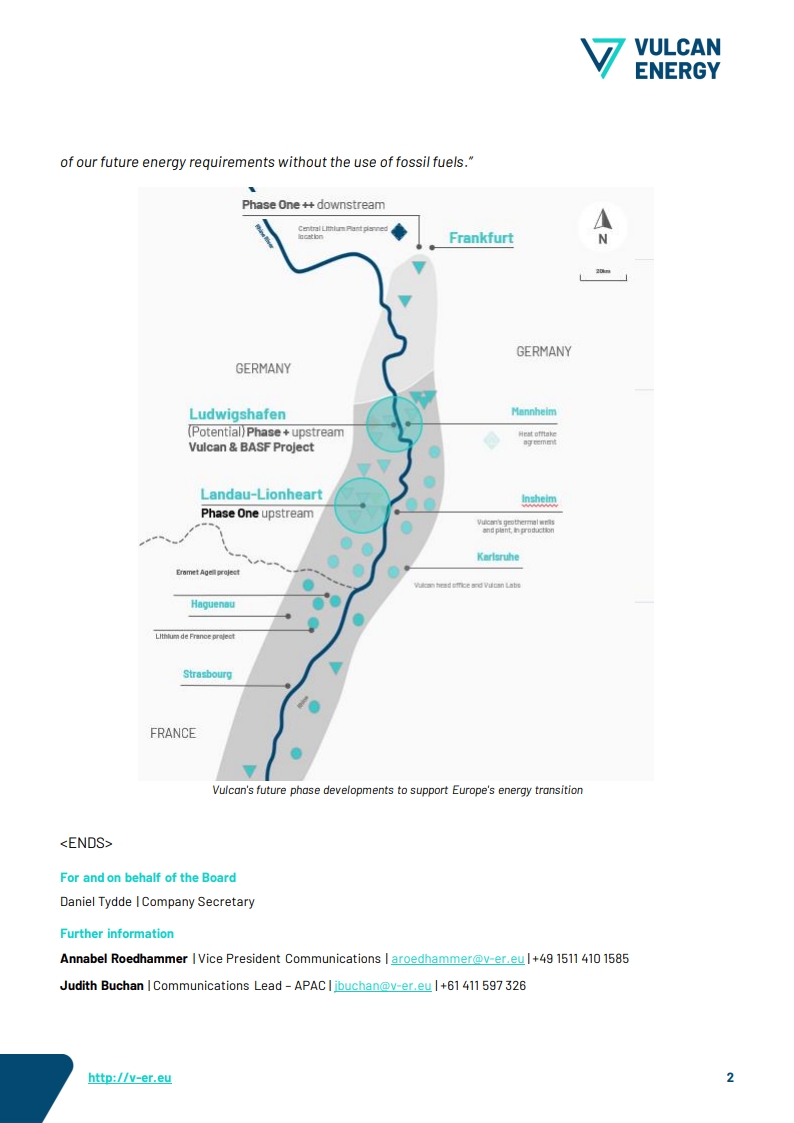
Vulcan Energy’s focus on creating a local, sustainable lithium supply for Europe aligns with its broader goal of decarbonizing the battery production process. The Upper Rhine Valley, rich in geothermal resources, is the perfect location for this venture, as it also houses Europe’s largest lithium resource.
The project’s first phase aims to produce 24,000 tonnes of lithium hydroxide annually, which will be used in the production of electric vehicle batteries. To achieve this, Vulcan has already established two test plants in Germany that refine the lithium extraction process. These plants, located in Landau and Industriepark Höchst, will serve as models for larger-scale operations on the BASF site.
Conclusion
The partnership between Vulcan Energy and BASF represents a significant step towards achieving Europe’s energy and mobility goals. The geothermal heat and lithium extraction project in Ludwigshafen will not only contribute to the decarbonization of the chemical industry but also provide a sustainable lithium supply for the rapidly growing electric vehicle market. As both companies advance through the development phases, this collaboration could set a precedent for future renewable energy and lithium extraction projects across Europe.
With the success of this project, Vulcan and BASF hope to replicate this integrated model across Europe, helping the continent transition to greener, more sustainable energy solutions.