A Wave of Procurement Initiatives Signals a Transformative Shift in Grid Reliability and Sustainability
[City, State] – March 23, 2025 – A surge in energy storage procurement initiatives across the United States is set to dramatically reshape the nation’s power grid, with utilities poised to add over 18.5 gigawatts (GW) of energy storage capacity if currently active requests for proposals (RFPs), site applications, and other utility proposals come to fruition. This unprecedented expansion reflects a growing recognition of the critical role energy storage plays in enhancing grid resilience, integrating renewable energy sources, and meeting evolving consumer demands.
The current wave of activity builds upon years of increasing interest in energy storage solutions. Utilities, regulators, and consumers alike are recognizing the value of diverse storage technologies, including electrochemical batteries, thermal storage (using ice or water), and mechanical storage designs. The focus extends beyond capacity to “duration,” the length of time an energy storage system can continuously output power, highlighting the need for flexible and long-lasting solutions.
State-Level Momentum Drives Growth
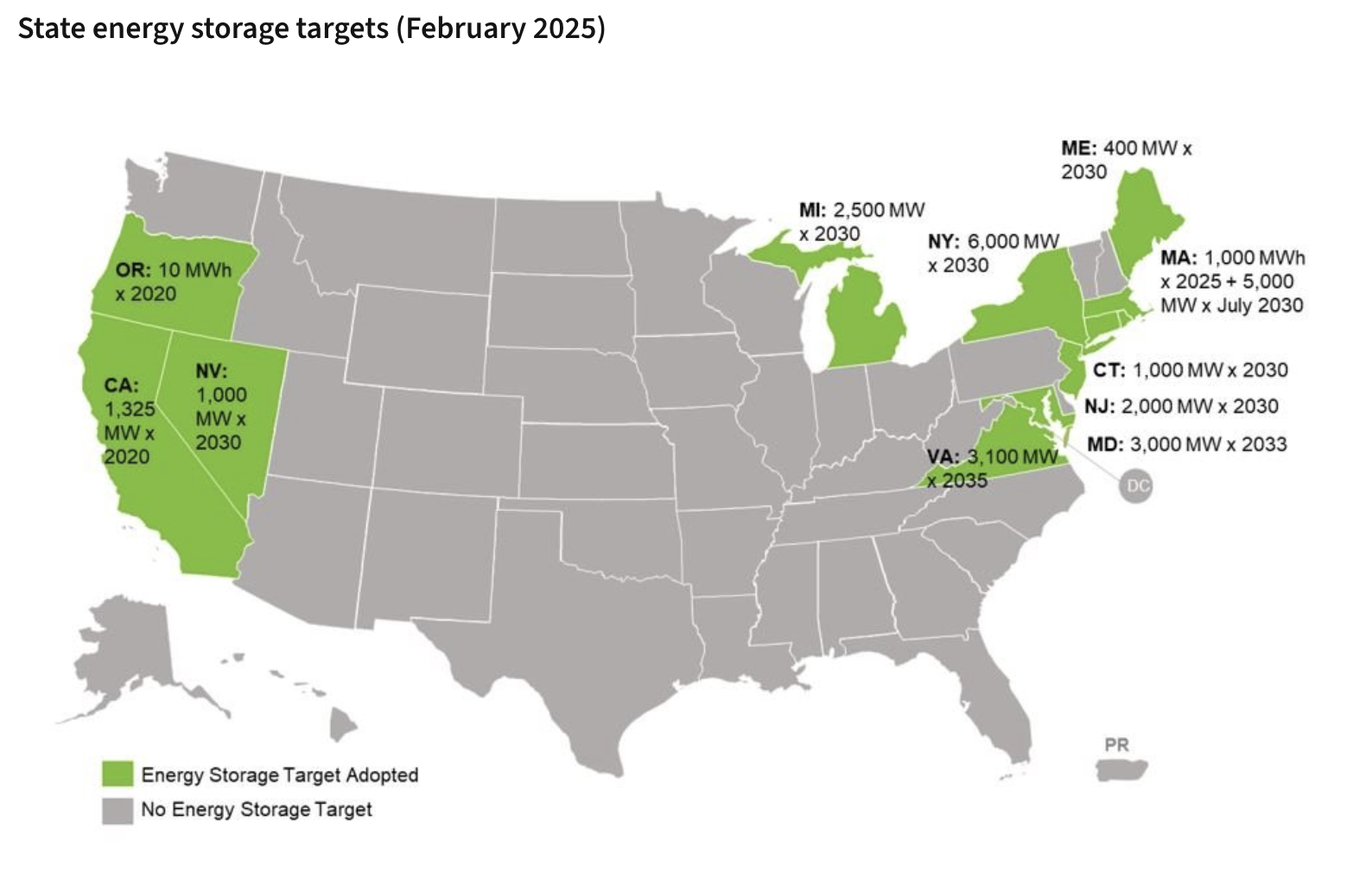
Several states are leading the charge with ambitious energy storage targets. New York remains a frontrunner, aiming for 6 GW of storage capacity by 2030. Rhode Island recently established a 600 MW goal by 2033, while Massachusetts enacted legislation requiring utilities to solicit proposals for up to 5 GW of energy storage projects. This Massachusetts law mandates a diverse portfolio, including 3.5 GW of mid-duration storage (4-10 hours), 750 MW of long-duration storage (10-24 hours), and 750 MW of multi-day storage (exceeding 24 hours). The law clearly defines storage duration categories, providing clarity for developers and utilities.
New Jersey is also actively pursuing energy storage expansion, with a pending bill aiming to codify the state’s Energy Master Plan and set a goal of 2 GW of storage projects capable of discharging for at least 24 hours by 2035. Illinois is considering multiple bills targeting 7.5 GW to 15 GW of storage capacity by 2038. While New York’s legislative efforts to double its storage targets (from 3 GW to 6 GW) stalled, the New York Public Service Commission has issued a roadmap solidifying the 6 GW goal.
Beyond Mandates: Voluntary Adoption and Grid Needs
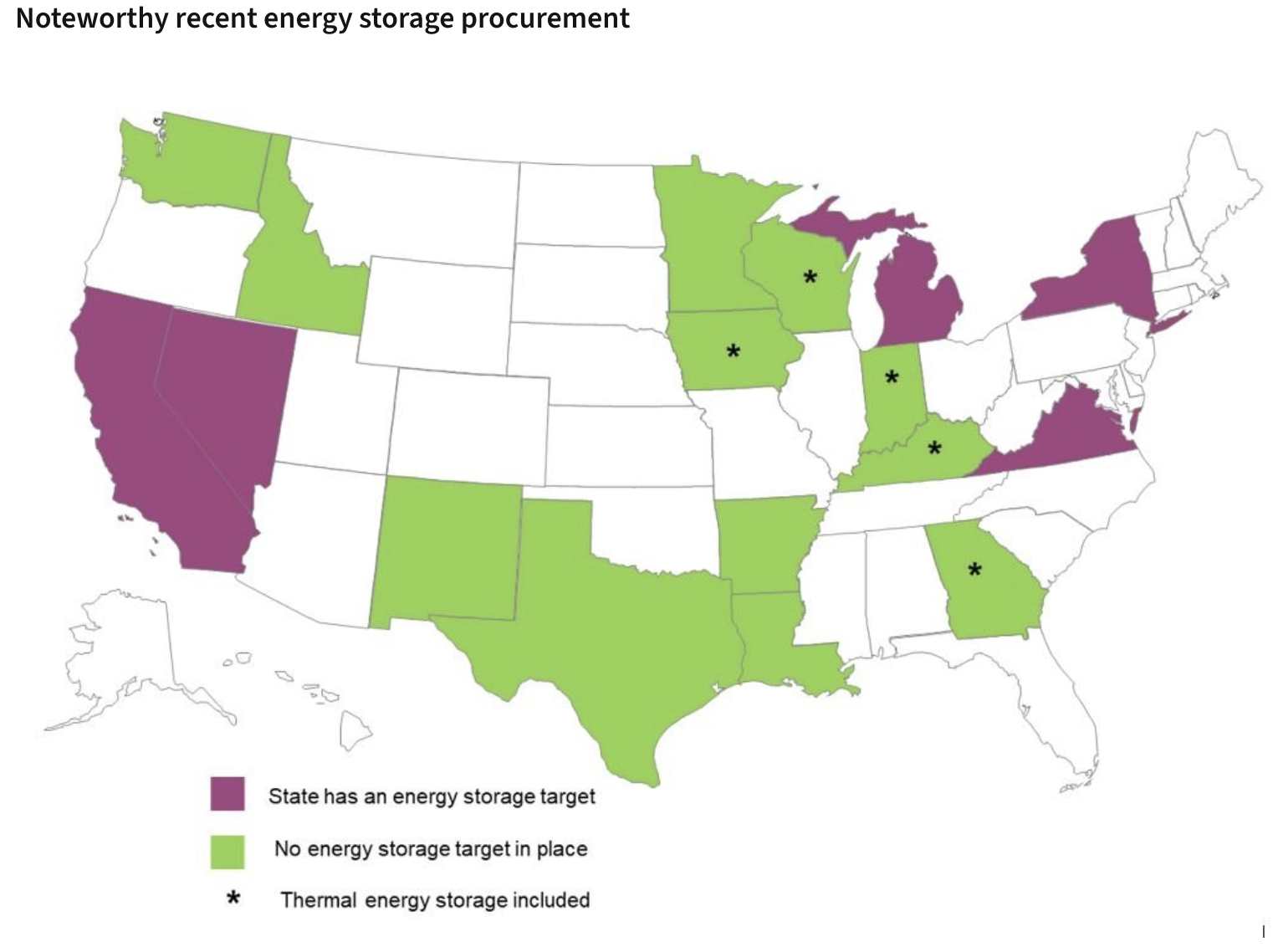
The drive for energy storage isn’t solely driven by legislative mandates. Utilities in regions without specific targets are proactively deploying storage to address critical grid needs, such as load balancing, frequency regulation, and peaking capacity. As older, less efficient coal plants and other large generators retire, the need for flexible balancing services provided by energy storage becomes increasingly vital for maintaining grid reliability. Utilities like Idaho Power and Public Service Company of New Mexico are integrating dispatchable balancing assets, including energy storage, into their capacity procurement plans.
Widespread Participation and Innovative Technologies
The enthusiasm for energy storage is evident in the robust participation in recent solicitations. Puget Sound Energy’s recent RFPs, seeking 29 MW of storage, received proposals totaling 229 MW, demonstrating significant developer interest. Beyond electrochemical storage, there’s a growing trend towards utilizing thermal energy storage to offset peak grid demand. Utilities in Georgia, Kentucky, Indiana, Iowa, and Wisconsin are exploring thermal storage solutions, such as chilled water storage, which allows for energy to be stored during off-peak hours and utilized for heating or cooling during periods of high demand, reducing reliance on expensive peak power purchases.
Geographic Diversity and Future Outlook
The expansion of energy storage is not confined to specific regions. Active or pending procurement exercises are underway in states including Arkansas, Louisiana, Georgia, Iowa, Indiana, Puerto Rico, Texas, Washington, and Wisconsin. This widespread adoption underscores the universal need for grid modernization and the versatility of energy storage solutions.
The projected addition of over 18.5 GW of energy storage capacity represents a transformative shift in the US energy landscape. As technology continues to advance and costs decline, the role of energy storage is only expected to grow, contributing to a more resilient, sustainable, and affordable energy future for all Americans. The current wave of procurement initiatives signals a long-term commitment to grid modernization and a recognition of the critical role energy storage plays in meeting the challenges and opportunities of the 21st century.