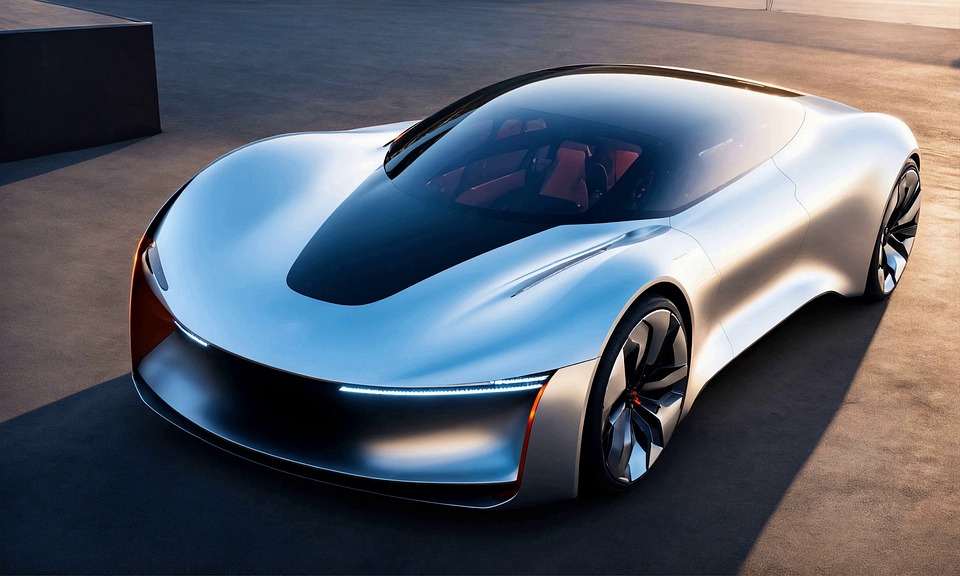
ProLogium, a Taiwanese battery technology firm, recently unveiled its groundbreaking 100% silicon composite anode battery at the Paris Motor Show, sparking excitement in the electric vehicle (EV) industry. This new battery promises an impressive 186 miles (300 km) of range with just a 5-minute charge, signifying a major leap in energy density and charging efficiency.
A Leap in Battery Performance
ProLogium’s new battery achieves an energy density of 321 Wh/kg, a massive improvement over existing EV batteries. For comparison, the 53 kWh battery pack found in the Hyundai Ioniq 6 offers an energy density of just 153 Wh/kg, while Tesla’s advanced 4680 cell is believed to have an energy density of around 232.5 Wh/kg. With ProLogium’s leap in energy density, the potential for longer-range EVs is significantly enhanced.
Not only does the new battery offer superior energy storage, but it also charges at lightning speed. ProLogium claims that it can charge from 5% to 60% in just 5 minutes, and reach 80% in a mere 8.5 minutes. This is more than 80% faster than the best EV charging technologies currently on the market, solving a major pain point for EV owners—long wait times at charging stations.
Modular Design for Easy Repairs and Recycling
In addition to its remarkable performance, ProLogium’s new battery features a modular design, making it easier to repair and recycle. This innovation could help bring down the cost of EV ownership, as battery maintenance and replacement are key factors driving up costs in the industry. By simplifying battery repair and extending the battery lifecycle, the modular design is expected to make EVs more affordable and sustainable in the long run.
Commercialization: Partnership with FEV
ProLogium is not just focused on R&D; the company is actively moving toward commercializing its energy solutions. It has partnered with German automotive drivetrain and technology firm FEV to begin manufacturing battery packs in the near future. This sets the stage for ProLogium to enter the competitive market of next-gen EV batteries, where speed, energy density, and cost-efficiency are critical factors.
The EV battery industry has seen rapid developments in recent months. Just a few weeks ago, Panasonic announced that its lightweight, compact 4680 cells would soon enter mass production. Last November, Panasonic also partnered with Washington-based Sila to integrate silicon anode technology, aiming for a 25% increase in battery energy density.
Future of EV Battery Tech
Looking beyond ProLogium’s innovations, other exciting battery technologies are emerging. A company in Sweden, for instance, is developing a carbon fiber-based battery technology that allows the battery to double as the structural material of the vehicle. This makes the battery “massless,” as its weight does not add to the vehicle’s overall mass.
With the global shift from combustion-engine vehicles to EVs accelerating, innovations like these are crucial in reducing “range anxiety,” the concern that an EV’s battery will run out before reaching a charging station. ProLogium’s battery technology could play a pivotal role in reducing this anxiety by providing quick, long-range charging solutions.
Conclusion
ProLogium’s new silicon composite anode battery is a game-changer for the EV industry. With its impressive energy density, ultra-fast charging speeds, and modular design, it addresses some of the most pressing concerns for both EV manufacturers and consumers. As the company moves toward commercialization with its partnership with FEV, this next-gen battery technology could revolutionize the future of electric vehicles.