At around 3:00 PM on August 6, 2025, a severe traffic accident involving Li Auto’s flagship electric MPV, the MEGA, occurred on an elevated highway in Hangzhou, China. The incident quickly gained traction online due to dramatic images of the vehicle catching fire and thick smoke billowing across the expressway.
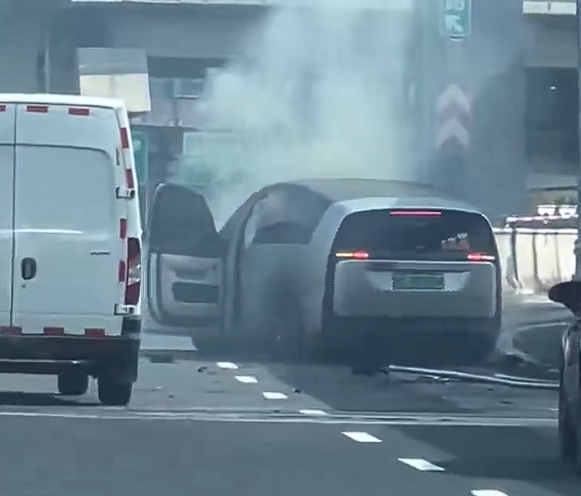
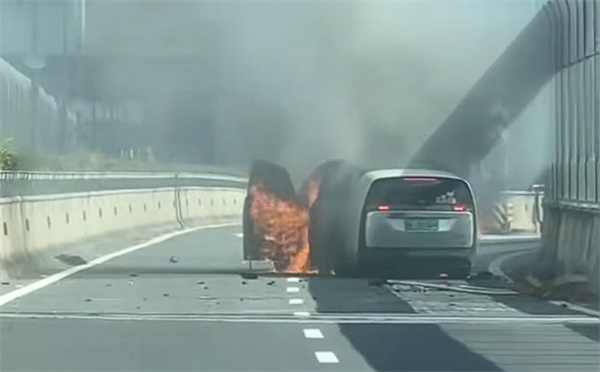
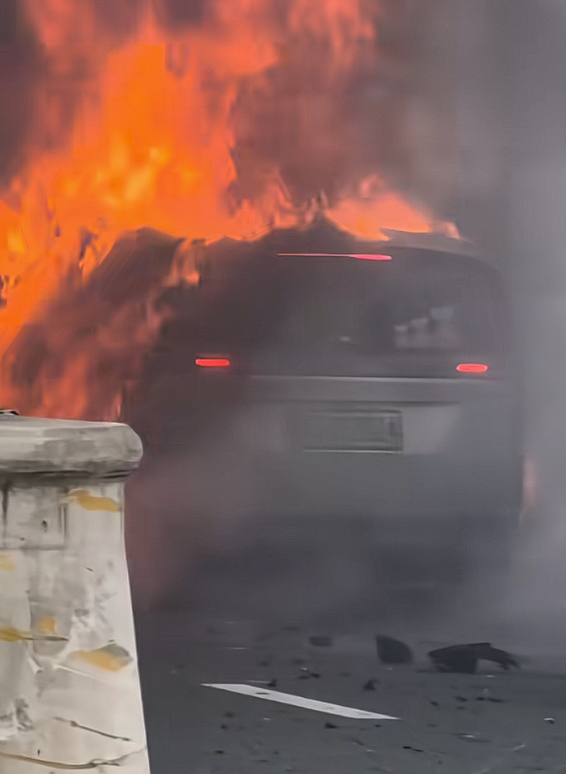
According to circulating footage and chat screenshots, the MEGA was struck by a small black sedan at an estimated speed of 80 km/h. The sedan reportedly missed an exit and suddenly veered into the MEGA’s lane, forcing it into a concrete barrier. Moments later, the MEGA began to smoke and then ignited into flames.
The fire was intense and spread rapidly, raising alarms among bystanders. However, what shocked many was the reaction of the MEGA owner, who not only escaped the vehicle safely but even went back inside to retrieve belongings. In a group chat, the owner wrote:
“Li Auto saved my life. Honestly, if it were another car, I wouldn’t have made it out.”
“The door opened easily—just like normal.”
This testimony painted a compelling picture of the MEGA’s structural integrity and escape-friendly design in the critical moments following a crash.
Li Auto’s President of Product Line, “Old Tang” (汤靖), responded promptly on Weibo. He wrote:
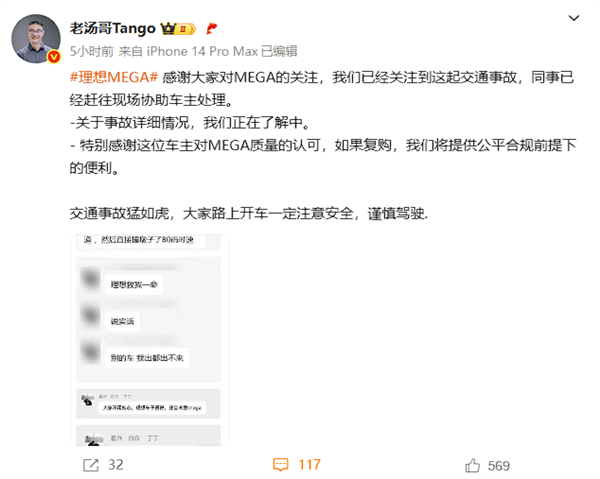
“We are aware of the incident and have already dispatched colleagues to assist the owner on-site. We are currently investigating the details of the accident.”
He also thanked the owner for their trust in the MEGA and stated that the company would consider offering purchase support under fair and compliant conditions if the owner decides to buy another vehicle.
Safety Acknowledged, But Fire Raises Concerns
The incident has sparked a broader conversation about electric vehicle (EV) fire safety. On one hand, the owner’s survival and positive feedback highlight MEGA’s robust build, effective crash protection zones, and door mechanisms that remained functional even post-impact. On the other hand, many netizens questioned why the vehicle caught fire so quickly and so violently after the collision.
Unlike internal combustion engine vehicles, EVs have a different fire mechanism. Most fires result from damage to high-voltage battery packs during collisions. If the battery cells are compromised and the cooling system fails or internal circuits short, it can trigger thermal runaway — a chain reaction of heat and fire that spreads rapidly.
Industry experts note:
“EVs are not inherently more likely to catch fire than fuel cars. But once a fire starts, the energy stored in the battery can escalate the situation much faster.”
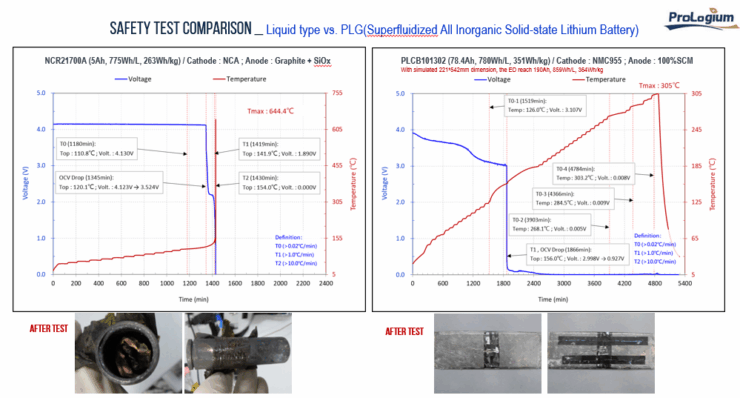
According to public data, the Li Auto MEGA is equipped with large-capacity NCM (nickel cobalt manganese) ternary lithium batteries, known for higher energy density and longer range but lower thermal stability than safer alternatives like lithium iron phosphate (LFP) batteries. While these batteries enable long-range travel, they also pose higher thermal risks in the event of severe damage.
Comparison With Fuel Vehicles
In a similar crash scenario, a fuel-powered vehicle might not ignite so quickly — or at all — unless fuel lines rupture or the tank is pierced. However, when EVs with large battery packs are involved in high-speed collisions, the potential for a fire is higher, and once started, more difficult to suppress.
That said, the MEGA’s performance in protecting the occupants and maintaining operational exits during the fire is commendable. According to the owner, the door was fully functional even after the crash. He also stated that he would still consider buying the MEGA again, showcasing a level of consumer trust rarely seen after such incidents.
Conclusion
Li Auto is still investigating the cause of the fire and has promised a full technical review and transparency in its findings. The incident underscores both the strengths and challenges of electric vehicles: while they offer innovative safety and driving features, the risks associated with battery fires must be continually addressed through better engineering and rigorous safety testing.
For now, this MEGA incident serves as a double-edged case study — an affirmation of crash safety and a cautionary tale about the urgent need for more robust battery fire prevention systems in EVs.
As EV adoption continues to rise, public scrutiny will only increase. Manufacturers must strike a critical balance between performance, range, and safety — not only in lab conditions but in real-world collisions that test the limits of vehicle engineering.