LG Chem announced today that its Platform Technology R&D team has developed a temperature-responsive Safety Reinforced Layer (SRL) designed to suppress thermal runaway. Collaborating with Professor Lee Minah’s team from the Department of Battery Engineering at POSTECH, the material underwent analysis, and safety verification was conducted in partnership with LG Energy Solution. The research findings have been published online in the September edition of Nature Communications, one of the world’s leading scientific journals.
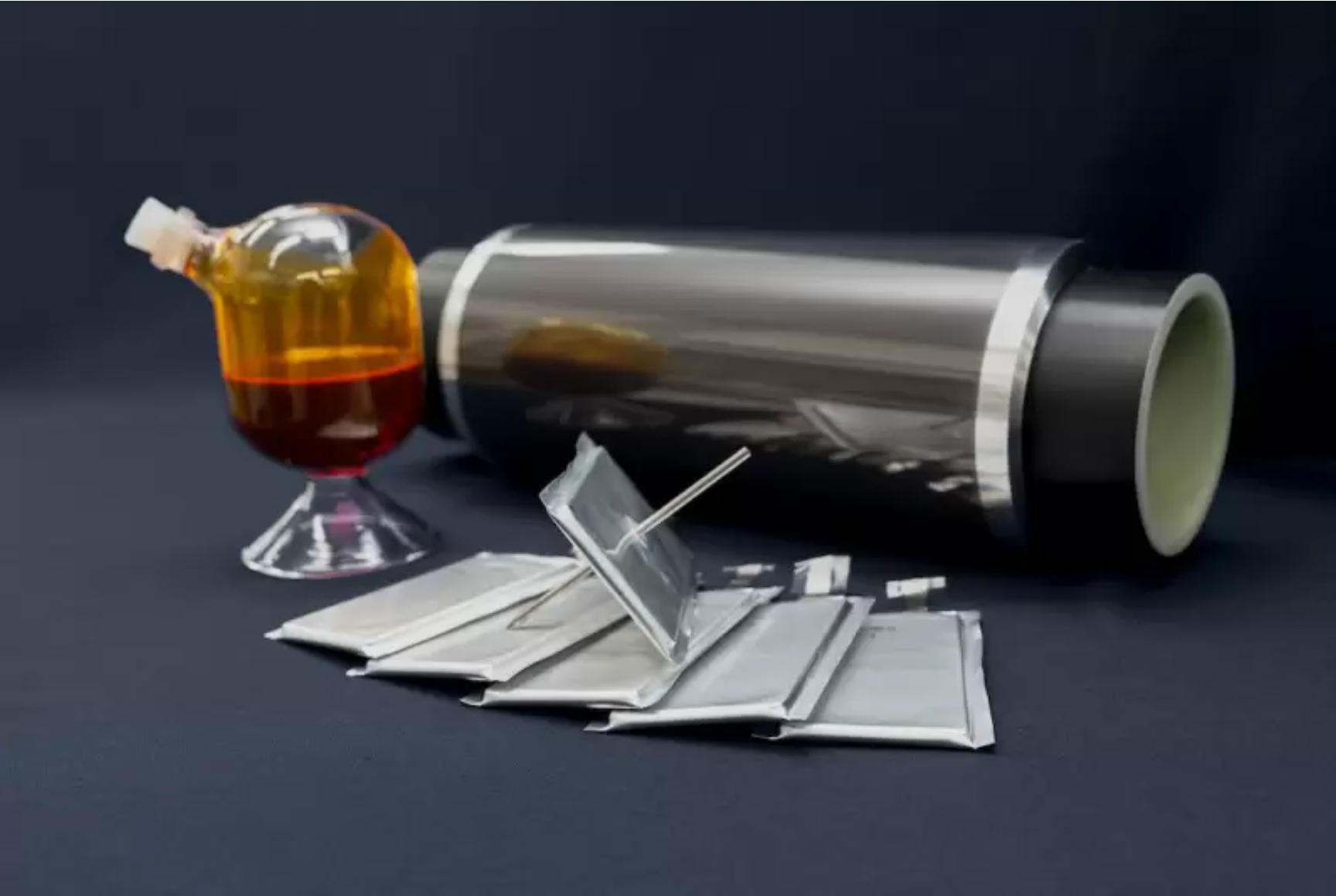
The thermal runaway suppression material developed by LG Chem is a composite that changes its electrical resistance based on temperature, acting as a “fuse” that blocks the flow of electricity in the early stages of overheating. This thermal runaway suppression material is created as a thin layer, just 1 micrometer (1μm) thick, positioned between the cathode layer and the aluminum foil current collector in the battery. When the battery temperature rises beyond the normal range of 90°C to 130°C, the material reacts to heat, altering its molecular structure and effectively suppressing current flow.
This suppression material is highly responsive to temperature, with its electrical resistance increasing by 5,000 ohms (Ω) for every 1°C rise. The maximum resistance is over 1,000 times higher than at normal temperatures, and it features reversibility, meaning the resistance decreases and returns to its original state, allowing current to flow normally again once the temperature drops.
Thermal runaway, a leading cause of electric vehicle battery fires, occurs when the cathode and anode inside the battery unintentionally come into direct contact, causing a short circuit and generating heat. Within seconds, the temperature can rise to nearly 1,000°C, leading to fire. The thermal runaway suppression material is expected to effectively prevent fires by quickly blocking the reaction path in the early stages of overheating.
In both battery impact and penetration tests, the batteries equipped with the thermal runaway suppression material either did not catch fire at all or extinguished the flames shortly after they appeared, preventing a full-blown thermal runaway event. In a penetration test involving mobile Lithium Cobalt Oxide (LCO) batteries, where a nail was used to puncture the battery, only 16% of regular batteries did not catch fire, while none of the batteries with the thermal runaway suppression material experienced any fire incidents.
In an impact test on Nickel Cobalt Manganese (NCM) batteries for electric vehicles, where a 10kg weight was dropped onto the batteries, all standard batteries caught fire. In contrast, 70% of the batteries equipped with the thermal runaway suppression material did not ignite at all, while the remaining 30% saw flames, but they were extinguished within seconds.
Previous methods often involved placing temperature-responsive materials inside the battery cell, which faced challenges like slow reaction times or reduced energy density. However, LG Chem has successfully developed a material that addresses these issues, backed by their expertise and patented material design, allowing for rapid application in mass production processes.
LG Chem has completed safety verification tests for the thermal runaway suppression material in mobile batteries and plans to continue safety testing for large-capacity electric vehicle batteries through next year. Lee Jong-Ku, CTO of LG Chem, stated, “This is a tangible research achievement that can be applied to mass production in a short period. We will enhance safety technology to ensure customers can use electric vehicles with confidence and contribute to strengthening our competitiveness in the battery market.”