As EV demand slumps and energy storage markets boom, LG Energy Solution, Samsung SDI, and SK On accelerate lithium iron phosphate battery production to capture AI data center opportunities
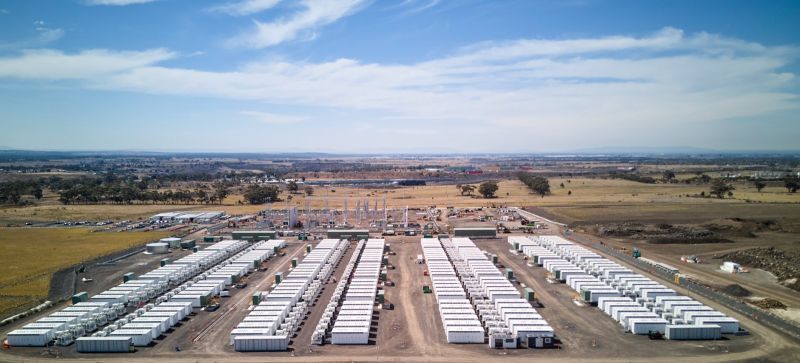
Amid a prolonged downturn in electric vehicle (EV) demand, South Korea’s three major battery manufacturers—LG Energy Solution, Samsung SDI, and SK On—are accelerating their push into mass production of lithium iron phosphate (LFP) batteries, seeking new growth opportunities in the rapidly expanding global energy storage system (ESS) market. Behind this strategic pivot lies the surging demand for energy storage driven by the rapid expansion of artificial intelligence data centers.
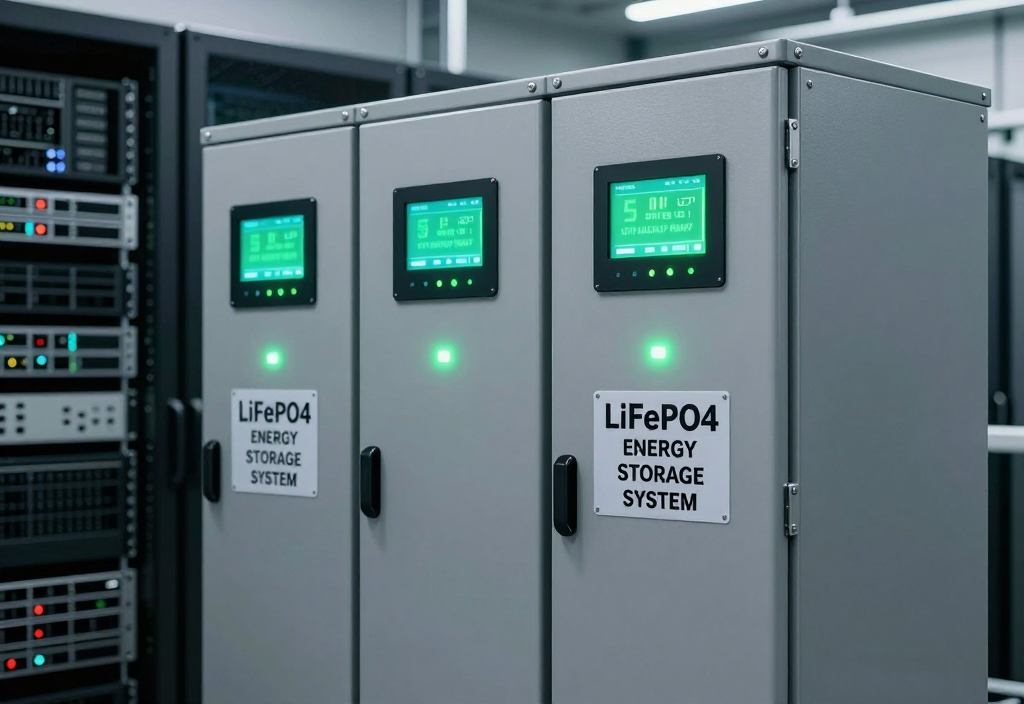
For years, Korean battery companies have focused their product portfolios on high-performance nickel cobalt manganese (NCM) ternary batteries. However, with the global energy storage system market experiencing explosive growth, they are now pivoting toward LFP battery production. Energy storage systems store electricity for later use, and their demand is rising in tandem with the expansion of AI data centers.
According to market research firm SNE Research, the global ESS market is projected to grow from 235 gigawatt-hours (GWh) in 2024 to 618 GWh by 2035—an increase of more than 250 percent. This remarkable growth prospect is prompting Korean battery giants to fundamentally recalibrate their product strategies.
Korean Companies’ LFP Production Timeline
LG Energy Solution plans to begin manufacturing LFP batteries for energy storage systems at its Ochang plant in North Chungcheong Province in 2027, with an initial annual capacity of 1 GWh. The company was the first Korean battery maker to produce LFP batteries, starting production at its Nanjing plant in China in late 2023. It subsequently expanded production to its Michigan facility in June 2024 and plans to launch LFP battery production at its Wroclaw, Poland plant in early 2025.
SK On will begin partial conversion of its SK Battery America plant production line in Georgia from the second half of 2025 to manufacture LFP batteries for energy storage systems. The company will also install a dedicated ESS battery production line with an annual capacity of 3 GWh at its Seosan plant in South Chungcheong Province.
Samsung SDI plans to secure 30 GWh of capacity by converting portions of its StarPlus Energy joint venture with Stellantis in the United States to produce LFP batteries starting in the fourth quarter of 2025. Park Jong-sun, head of strategic marketing at Samsung SDI, announced at the company’s third-quarter earnings conference call in October that the company is “developing LFP and mid-nickel prismatic batteries, with mass production targeted for 2028.” He added that although the company is entering the market late, it aims to catch up quickly and develop differentiated selling points.
LFP Battery Advantages in Energy Storage Applications
In energy storage applications, price and safety are critical factors—areas where LFP batteries excel. While NCM batteries offer higher energy density and are better suited for premium electric vehicles, LFP batteries are more cost-effective and stable due to their cubic crystal structure in the cathode material. Currently, LFP batteries account for over 90 percent of the global ESS market, making them the de facto industry standard.
Jeong Won-seok, an analyst at iM Investment & Securities, noted in a recent report: “ESS battery demand is currently only around 20 to 25 percent of EV battery demand. But unlike the EV market, which is sensitive to economic fluctuations and subsidies, the ESS business is supported by the need to expand renewable energy and stabilize power grids, which allows for steadier growth.”
AI Data Centers Driving Surging Energy Storage Demand
One of the core drivers behind this LFP transformation is the rapid expansion of artificial intelligence data centers. According to International Energy Agency (IEA) data, global data center electricity consumption is projected to double from 415 terawatt-hours (TWh) in 2024 to 945 TWh by 2030, accounting for nearly 3 percent of global electricity consumption. In the United States alone, data center electricity consumption is expected to grow from 183 TWh in 2024 to 426 TWh by 2030, an increase of 133 percent.
The massive power demands of AI workloads are fueling explosive growth in the energy storage system market. Training large AI models such as GPT-3 can consume up to 1,300 megawatt-hours of electricity, while AI-assisted searches consume ten times more energy than standard internet searches. These sustained, high-intensity energy demands make energy storage systems indispensable infrastructure for data centers.
Battery energy storage systems (BESS) can store excess electricity during peak renewable energy generation periods and release it during demand spikes, ensuring continuous and stable data center operations without relying on high-carbon backup power sources. This capability gives LFP batteries a unique advantage in AI-era energy storage applications.
The Challenge: Chinese Companies’ Market Dominance
However, Korean companies face a major hurdle: Chinese battery manufacturers’ dominance in the energy storage market. Chinese firms hold a first-mover advantage in LFP production, with Contemporary Amperex Technology Co. Ltd. (CATL), the world’s largest battery manufacturer, commanding over 30 percent of global energy storage battery shipments, while the combined share of South Korea’s three major companies remains below 10 percent.
According to InfoLink data, the top five global energy storage battery manufacturers by shipments in 2024 were CATL, EVE Energy, Hithium, BYD, and CALB. Samsung SDI and LG Energy Solution fell to 10th and 11th place respectively in 2024, down from 6th and 8th place in 2023.
One industry insider noted: “From a technical standpoint, converting existing NCM production lines to LFP isn’t difficult. But the real challenge is how to differentiate from Chinese companies that have already established dominance in the LFP space.”
Geopolitical Opportunities Emerge
Despite these challenges, opportunities are emerging. With escalating US-China tensions and tightening restrictions on prohibited foreign entities, South Korea is emerging as the only country outside of China with the capacity to mass-produce LFP batteries at scale. US automakers including Tesla and General Motors are also expanding their EV lineups using LFP batteries.
In the US market, Korean companies are gaining policy support. Starting in 2026, energy storage systems imported from China will face approximately 38.4 percent tariffs, on par with tariffs on Chinese-made electric vehicles. This provides Korean companies with a competitive advantage in the North American market.
Another industry source stated: “As battery demand continues to diversify, we plan to expand our portfolios to include both NCM and LFP products.” This diversification strategy will help Korean companies find their positioning across different market segments, maintaining their advantage in premium EV battery markets while capturing a share of the rapidly growing energy storage market.
For South Korea’s battery industry, the shift to LFP is not merely a stopgap measure responding to the EV market slowdown, but a strategic positioning to seize energy storage market opportunities in the AI era. Driven by both global energy transition and digitalization trends, this technological pivot may reshape the competitive landscape of the global battery industry.